
High-intent security demand: why most outreach happens too early
Cybersecurity firms rarely lose because companies "don’t care" about risk. They lose because they target before operational pressure creates a buying motion.
Security spend becomes actionable when growth, compliance requirements, customer trust expectations, or platform complexity is increasing faster than security maturity.
If your list is built from broad industry targeting, you will over-index on companies with no deadlines, no internal owner, and no reason to evaluate vendors this quarter.
| Too-early targeting signals | High-intent signals (vendor evaluation likely) |
|---|---|
| Generic IT titles, no cloud responsibility | Clear owner for cloud/platform, risk, or compliance outcomes |
| No hiring in security, GRC, DevSecOps | Active hiring for Security, GRC, Privacy, DevSecOps, Cloud Security |
| Static headcount, no product velocity | Headcount growth, product launches, enterprise onboarding |
| No public compliance language | SOC 2 / ISO / HIPAA / PCI / privacy / AI governance language appears |
| Locked into large enterprise programs | Mid-market teams seeking agile, specialized delivery |
LinkedoJet is built around this shift: prospect intelligence first, then structured outreach to the operators who can move a security initiative forward.
Book a Strategy Call to map your best-fit sectors and signals before you scale outreach.
Sector prioritization: where startup & boutique security providers win
Your best pipeline typically sits in cloud-heavy, compliance-exposed, scaling organizations that prefer specialized partners over large, slow security vendors.
Prioritize sectors with fast decision cycles, visible compliance pressure, and platform complexity that outpaces internal security staffing.
| Sector | Why they buy (typical trigger) | What they often need from a smaller vendor |
|---|---|---|
| SaaS / software | SOC 2, enterprise customer security review, cloud scale | Practical controls, fast remediation, engineering-friendly delivery |
| Fintech | Risk/compliance pressure, audits, partner security requirements | Cloud security + GRC coordination, evidence-ready programs |
| Healthtech / healthcare groups | HIPAA readiness, vendor risk, modernization to cloud | Security program build-out without large internal teams |
| Ecommerce / retail tech | PCI, payment changes, fraud and identity workflows | Cloud/app security plus operational guardrails |
| AI-first companies | AI governance, data exposure, model and pipeline risk | Governance + security patterns for fast-moving teams |
| Logistics / supply chain tech | Operational digitization, integrations, remote/edge systems | Risk reduction across distributed infrastructure |
| Professional services (mid-market) | Client audits, privacy requirements, remote work | Lean security ownership, pragmatic compliance support |
Book a Strategy Call to pick 2–3 priority sectors and define what “high intent” means for your offer (SOC 2 build, cloud security, DevSecOps, pen test, SOC, AI security, etc.).
Decision-maker mapping by sector: who drives implementation
Security deals close when the person with operational ownership can justify time, scope, and change. Titles matter less than responsibility.
Map three roles in each account: buyer (signs/owns budget), operational owner (implements), and influencer (shapes requirements and vendor shortlist).
| Sector | Primary buyers / sponsors | Operational owners (where delivery happens) |
|---|---|---|
| SaaS | CTO, VP Engineering, Head of Security, Founder | DevOps Lead, Platform/Infra Lead, AppSec/ProdSec Lead |
| Fintech | CISO, CTO/CIO, Risk Director, Compliance Head | Security Engineering, Cloud/Infra, GRC lead, DevSecOps |
| Healthcare / healthtech | CIO, Security Director, Compliance Head, Admin leadership | IT Ops, Infrastructure, Privacy/security program owners |
| Ecommerce | CTO, Ops Head, Compliance Lead, Founder | Platform Engineering, Payments/Identity owners, DevOps |
| AI-first | CTO, Head of AI, Founder, COO | AI Infrastructure Lead, Data/ML platform owners, Security lead |
| Logistics tech | CIO, Infrastructure Director, COO | Ops technology owners, Infrastructure, Security manager |
| Pro services | Managing Partner, COO, IT Director | IT operations owners, compliance coordinator, security lead |
For startup cybersecurity firms, the fastest route is often the operational owner who feels the pressure (cloud scaling, audit evidence, vendor questionnaires) and can pull the sponsor in once scope is defined.
Demand signal intelligence: cloud expansion, AI adoption, compliance pressure
High intent shows up as “work that must be done,” not as interest in security content.
Look for signals that create deadlines: enterprise onboarding, partner security reviews, compliance frameworks, and platform changes that increase risk exposure.
Cloud expansion signals often indicate an upcoming control gap: multi-account setups, Kubernetes adoption, identity sprawl, rapid vendor integrations, and production observability changes.
AI adoption signals create governance and security pressure: shadow AI usage, sensitive data in prompts, model supply-chain risk, and uncertain policy requirements. Teams moving fast need guardrails that don’t block delivery.
Compliance pressure is frequently visible before procurement: SOC 2 readiness language, ISO timelines, HIPAA posture discussions, PCI scope changes, privacy program upgrades, or AI governance frameworks.
Hiring + compliance signals: how to spot active budgets and evaluation motion
Security and GRC hiring is one of the clearest indicators that a company is already allocating time and budget to security outcomes.
Hiring signals are strongest when they connect to delivery scope (building controls, monitoring, incident readiness) or to evidence production (audits, questionnaires, vendor risk).
| Signal type | What you might see | What it usually means for a security vendor |
|---|---|---|
| Security engineering hiring | Security Engineer, Cloud Security, SOC Analyst, Detection Engineer | Tooling gaps and workload; potential for co-delivery or managed services |
| DevSecOps hiring | DevSecOps Engineer, Platform Security, AppSec | Pipeline and cloud hardening work; need for patterns and implementation support |
| GRC / compliance hiring | GRC Manager, Compliance Lead, Risk Manager, Audit readiness | Framework timelines; evidence production; vendor evaluation likely underway |
| Privacy hiring | Privacy Officer, Data Protection, Privacy Program Manager | Data mapping and controls; often paired with security uplift |
| Enterprise onboarding pressure | Security questionnaire language, trust center updates | Short deadlines; high value if you can reduce time-to-approval |
Use hiring signals to prioritize accounts, then confirm who owns the outcomes: cloud/platform owners for implementation; compliance/risk owners for evidence; exec sponsors for budget.
Sales Navigator build: filters, title intelligence, and company exclusions
Sales Navigator works for cybersecurity when you stop treating it like a directory and start using it like a pressure-and-ownership filter.
Build the list in two passes: (1) company filters for “likely to buy,” then (2) contact filters for “can implement and sponsor.”
| Filter | Recommended starting point | Why it matters for cybersecurity targeting |
|---|---|---|
| Geography | US, UK, Canada, Australia, Singapore, UAE, key EU hubs, India (as relevant) | Aligns with your delivery model and compliance ecosystems |
| Industry | Software/SaaS, Financial Services/Fintech, Healthcare/Healthtech, Retail/Ecommerce, Logistics/Supply Chain, Professional Services | Higher probability of cloud + compliance pressure and faster vendor adoption |
| Company headcount | 11–50, 51–200, 201–500 (optionally 501–1000 if strong signals) | Often under-resourced in security but exposed to audits and growth risk |
| Headcount growth / hiring growth | Prioritize growing companies | Growth creates control gaps and forces security maturity upgrades |
| Seniority | CXO, VP, Director, Head, Founder/Owner/Partner | Improves odds of budget influence and cross-team authority |
| Function | Security, IT, Engineering, Infrastructure, DevOps, Operations, Risk, Compliance, Product | Matches operational ownership and compliance accountability |
| Posted on LinkedIn (past 30 days) | Enable | Active operators are easier to personalize and more reachable |
| Years in current position | < 1 year and 1–2 years cohorts | New leaders often review vendors, tooling, and maturity baselines |
Title intelligence (start list): CTO, CIO, CISO, VP Engineering, Head of Security, Security Director, DevOps Lead, Infrastructure Director, Compliance Director, Risk Director, COO, Founder.
Secondary influencers: Security Manager, IT Manager, Compliance Manager, Privacy Manager, DevSecOps Manager, Governance Manager.
Titles to avoid for primary targeting: interns, junior analysts without ownership, support coordinators. They can be useful for org mapping, not for initiating a buying conversation.
Company exclusions to keep quality high: stagnant headcount, no cloud/engineering footprint, no identifiable security/compliance ownership, or organizations visibly locked into large enterprise security contracts (where a new boutique vendor has low entry probability).
Book a Strategy Call to convert your offer into a repeatable Sales Navigator search you can run weekly.
LinkedIn execution system: account lists, profile reading, activity intelligence, and how LinkedoJet operationalizes it
Execution is where most security teams lose discipline: they treat every “IT-looking” profile the same and skip the context that predicts urgency.
Account lists: build named-account lists from funded startups, scaling SaaS, fintech, healthtech, ecommerce brands, AI-first companies, and cloud-heavy teams onboarding enterprise customers. This shifts your pipeline from “random leads” to “known targets with pressure.”
Profile reading: validate ownership. Look for transformation-stage experience: cloud migrations, platform scaling, compliance programs, audit readiness, incident response, identity modernization, DevSecOps enablement, or AI governance initiatives.
A DevOps Lead owning production cloud scaling is often a stronger entry point than a generic IT Manager with no platform responsibility.
Activity intelligence: prioritize prospects discussing AI adoption, compliance timelines, customer trust, cloud modernization, remote operations, vendor risk, or operational scaling. These posts reveal initiatives and language you can mirror without sounding generic.
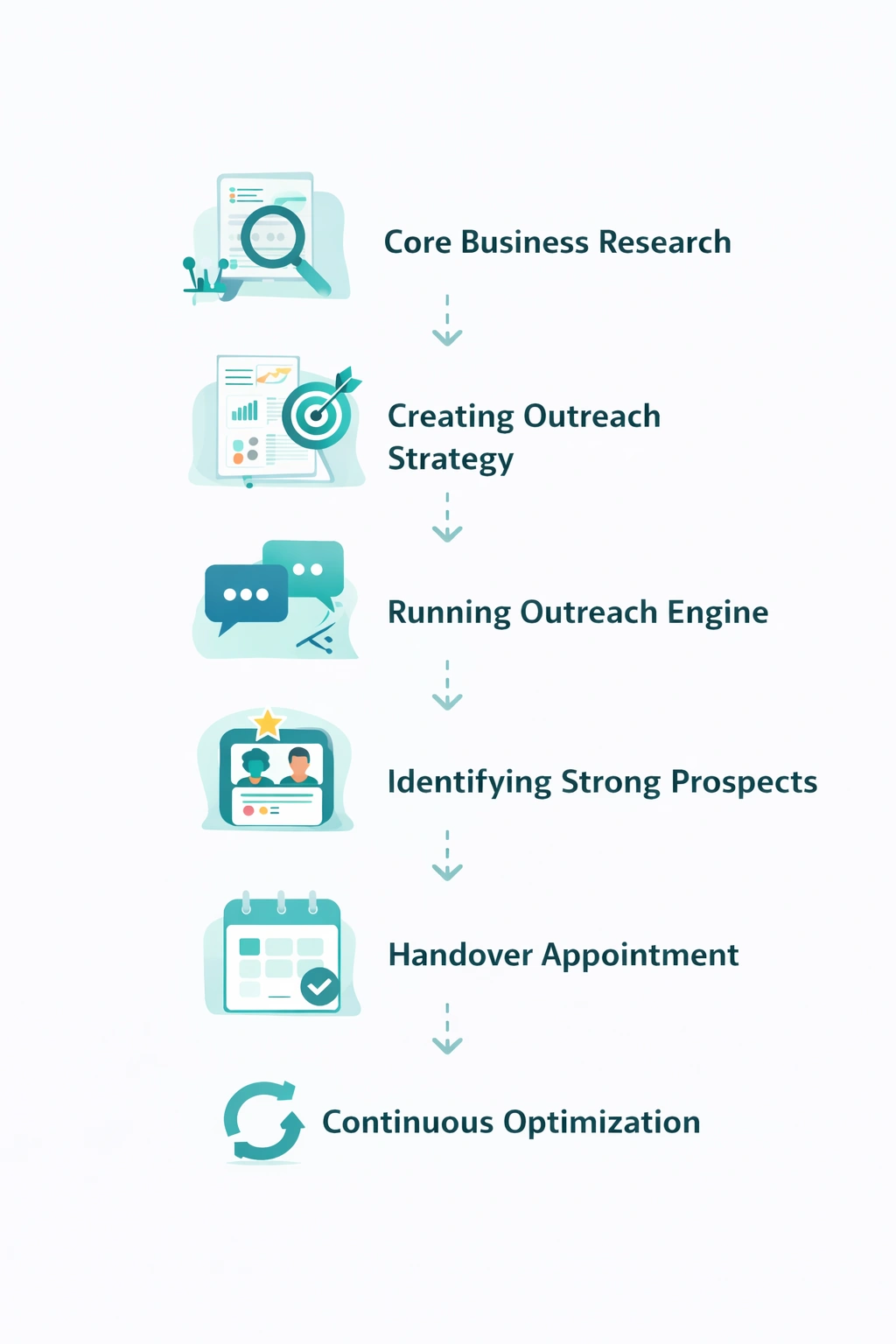
How LinkedoJet fits: we combine demand-signal targeting (compliance pressure + cloud/AI expansion + hiring), Sales Navigator buildouts, decision-maker mapping, qualification, AI-assisted personalization, LinkedIn outreach sequencing, reply tracking, and nurture. The objective is simple: more conversations with operators who already have a visible security workload—not higher message volume.
Book a Strategy Call if you want your targeting and outreach system set up end-to-end for cybersecurity-specific buying signals.
Frequently asked questions
How do cybersecurity companies find clients on LinkedIn without mass messaging?
Start with account selection based on pressure signals (compliance deadlines, cloud/AI expansion, hiring). Then map operational owners and sponsors, read profiles for responsibility, and personalize around the current workload (audit evidence, cloud hardening, AI governance). LinkedIn works when it’s a targeting and qualification system, not a volume channel.
Which sectors are most likely to work with startup cybersecurity firms or boutique consultancies?
SaaS, fintech, healthtech/healthcare groups, ecommerce/retail tech, AI-first companies, logistics/supply chain tech, and mid-market professional services. These segments often have real deadlines but limited internal capacity, making specialized vendors attractive when the offer is scoped and execution-focused.
What are the best Sales Navigator filters for cybersecurity lead generation?
Use Industry + Company Headcount (11–500) + Growth (headcount/hiring) for company selection, then Seniority (CXO/VP/Director/Head/Founder) + Function (Security, Engineering, Infrastructure, DevOps, Risk, Compliance, Operations) for contacts. Add “Posted on LinkedIn” and “Years in current position” to prioritize reachable, change-oriented leaders.
What compliance and hiring signals indicate cybersecurity buying intent (SOC 2, ISO, HIPAA, PCI, privacy, AI governance)?
Strong signals include hiring for GRC/compliance/privacy, public references to SOC 2/ISO timelines, HIPAA readiness, PCI scope changes, vendor security questionnaires, trust-center updates, and AI governance discussions. These typically indicate a defined workload, executive visibility, and a near-term need for implementation support.
Who should a cybersecurity firm approach inside a company for cloud security, GRC, or DevSecOps work?
For cloud security and DevSecOps: CTO/VP Engineering/Head of Platform plus DevOps/Infrastructure leaders who own delivery. For GRC and compliance: Compliance Director/GRC Manager/Risk Director who owns evidence and frameworks, paired with security engineering for control implementation. In many mid-market teams, the COO or Founder becomes the sponsor when timelines and scope are clear.
Get a cybersecurity LinkedIn targeting plan built around real buying signals
Use this session to translate your offer into (1) a high-intent account list, (2) decision-maker maps by sector, and (3) an outreach system tied to compliance, cloud, and AI pressure.
We’ll review your ICP, pick priority sectors, define intent signals, and produce a Sales Navigator build you can operate weekly. If LinkedoJet is a fit, we’ll outline implementation and timelines.
Next step
Choose the path that matches where you are today.