
Hiring intent shows up early; most recruiters detect it late (and lose the account)
The gap isn’t “more outreach.” It’s earlier signal detection and tighter decision-maker targeting.
Most recruitment agencies start prospecting when roles hit job boards. By then, the company has already chosen a preferred supplier, built an internal shortlist, or pushed the req to an existing panel.
LinkedIn exposes intent earlier: leadership changes, headcount growth, executive posts about delivery pressure, expansion announcements, and new budget events. If you can identify those signals and route them to the right buyer title, you create client conversations before the market is noisy.
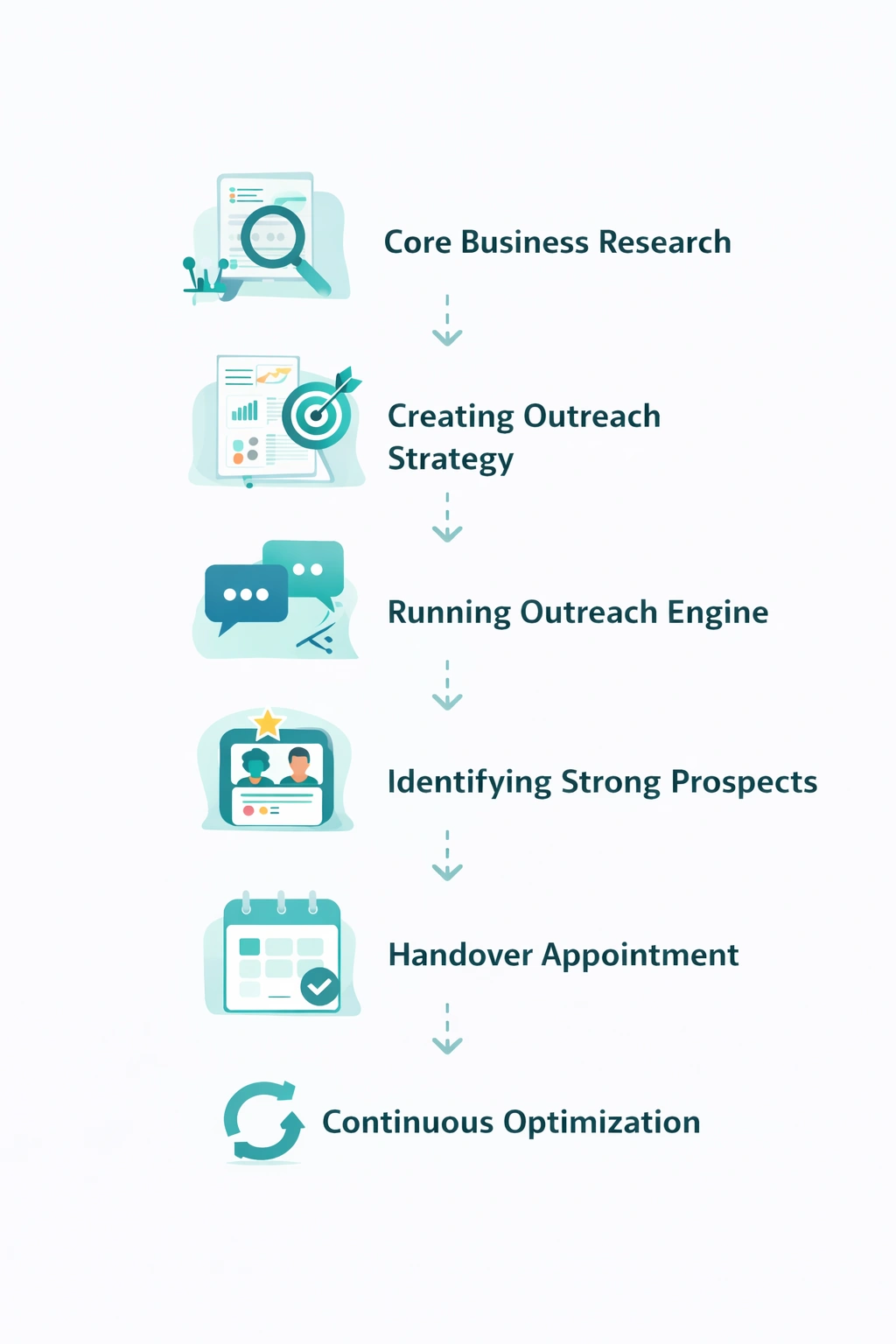
LinkedoJet is built for this: a recruiter client acquisition system that turns Sales Navigator targeting + hiring-signal intelligence into qualified outreach and a repeatable nurture pipeline.
Why generic recruiter outreach fails
Weak targeting + poor qualification + irrelevant messaging = low reply rates and damaged positioning.
Generic messages fail because they ignore the buying context. “We place great candidates” is not a reason to reply when the buyer is solving a specific operational constraint (delivery deadlines, expansion, churn, new product, compliance, plant throughput).
Common failure modes:
- Weak targeting: broad HR lists with no ownership of the hiring problem.
- Poor qualification: no evidence of active hiring pressure or budget.
- Irrelevant messaging: pitching candidates without aligning to the business trigger.
- No intent intelligence: treating every company the same instead of prioritizing those with signals.
Who actually buys recruitment services (by vertical) + buyer logic by company type
The buyer changes based on vertical and maturity. Your targeting should reflect that.
| Recruitment vertical | Primary buying titles (typical) | Secondary influencers | What they care about |
|---|---|---|---|
| IT / Software / Tech | CTO, VP Engineering, Engineering Director, Head of Engineering, Talent Acquisition Director | TA Manager, People Ops, Delivery/Program leads | Speed to hire, quality bar, ramp time, hard-to-fill skills |
| Executive Search | CEO, Founder, Managing Director, Board Member | COO, CFO, Chief of Staff | Risk reduction, confidentiality, network access, process control |
| Healthcare | Clinical Director, Hospital Administrator, HR Head, Head of Workforce | Recruiting Manager, Ops leads | Coverage, compliance, credentialing, continuity of care |
| Manufacturing | Plant Director, Operations Director, COO, HR Director | Shift managers, workforce planning | Throughput, safety, downtime, ramping new lines |
Startup buyer logic: Founder/CEO or Head of Talent buys speed and leverage. They respond to messages tied to growth milestones (funding, new product, expansion) and “time to fill” impact.
Enterprise buyer logic: TA Directors, HR Directors, and Workforce Planning leaders buy process fit, compliance, and vendor governance. They respond to specialization, delivery capacity, and evidence of execution.
Exec search logic: CEO/Board buys risk control and market mapping. They respond to discreet, thesis-led outreach tied to leadership gaps and strategic change.
Sales Navigator targeting architecture for recruiters
Build repeatable lists: ICP filters → intent indicators → prioritized queues by urgency.
Recruiter prospecting works when your Sales Navigator searches are structured as an operating system. Start with account lists (companies) and contact lists (buyers), then layer intent to prioritize outreach.
| Filter / indicator | How recruiters should use it | Why it matters |
|---|---|---|
| Geography | Split lists by market: United States, United Kingdom, UAE, Canada, Australia, Singapore, Europe, India | Aligns with your delivery capability, candidate pools, and time zones |
| Industry | Match specialization (e.g., SaaS, fintech, pharma, manufacturing, logistics, healthcare) | Improves relevance and message specificity |
| Company headcount | Use bands: 11–50, 51–200, 201–500, enterprise | Signals hiring scale and buying process complexity |
| Seniority | CXO, VP, Director, Head, Owner, Founder, Partner | Increases probability of budget and authority |
| Function | Human Resources, Engineering/IT, Operations, Finance, Healthcare, Sales, Manufacturing (per vertical) | Routes you to the department that owns the pain |
| Hiring growth / headcount growth | Prioritize accounts showing growth over the last period | Growth is the most consistent upstream hiring proxy |
| Job posting activity | Use job postings to validate demand and role clusters | Confirms real hiring activity, not just “future plans” |
| Posted on LinkedIn in past 30 days | Prioritize executives and leaders who post | Active leaders are easier to start conversations with |
Practical workflow:
- Create 3–5 account segments (by vertical + headcount).
- For each segment, create a decision-maker contact list and an influencer list.
- Run a weekly “intent refresh” to reorder accounts by growth + job activity + leadership signals.
Decision-maker title intelligence: target the buyer, not the inbox
Recruitment deals are usually bought by the role that owns delivery outcomes, not the lowest-cost HR contact.
Avoid the default trap: messaging HR coordinators because they’re easy to find. Your goal is to map the buying group and start with the title that can sponsor a search or approve an agency.
| Category | Titles to target | When they’re the right entry point |
|---|---|---|
| Ideal buyer titles | Talent Acquisition Director, Head of Talent, HR Director, VP People, CTO, Engineering Director, COO, Founder, CEO, Managing Director | When you can tie your outreach to a specific hiring trigger and business impact |
| Secondary influencers | HR Manager, Recruiting Manager, Talent Partner, Delivery Manager | When the org is process-heavy and influencers control vendor access |
| Titles to avoid | HR Coordinator, Junior HR Executive, Intern, Student, Assistant | Low authority; tends to create long cycles without sponsorship |
Decision-maker checks you can do inside LinkedIn before messaging:
- Does the person post about hiring, growth, or delivery pressure?
- Do they mention ownership: “building the team,” “scaling,” “hiring plan,” “workforce”?
- Do they sit close to the function you recruit for (Engineering/Operations/Clinical)?
Company intelligence + hiring signals: prioritize high-intent accounts and disqualify negatives
Your pipeline improves when you treat prospecting like intelligence, not list building.
Recruitment prospecting is an intent game. The best accounts show evidence of hiring pressure and change. Build a simple signal model to prioritize outreach.
High-intent company patterns (examples):
- Funded startups: new funding round, “we’re scaling,” first leadership hires.
- Scaling SaaS: headcount growth, multiple product/engineering roles, new regions.
- Healthcare groups expanding: new facilities, service line expansion, volume growth.
- Manufacturing plants increasing production: new line launches, capex announcements, shift expansion.
- Logistics/ops-heavy firms: new sites, peak demand, throughput constraints.
Strong hiring signals to track: multiple open roles, rapid hiring, leadership hiring, geographic expansion, new funding, acquisitions/mergers, executives discussing talent shortages.
Negative signals (disqualify or downgrade): layoffs, hiring freezes, repeated role reposting with no movement, public cost-cutting mandates, or minimal operational expansion.
LinkedIn activity intelligence matters because it reveals urgency. An executive posting about delivery delays, new customer wins, or expansion is often a better trigger than a generic “we’re hiring” job post.
Frequently asked questions
How do recruitment agencies find clients on LinkedIn without mass messaging HR?
Start from account intent, not HR lists. Build company segments in Sales Navigator, then identify the owning decision maker (CTO/VP Eng/COO/Founder/TA Director depending on vertical). Only message when you can reference a real trigger: headcount growth, multiple open roles, expansion, funding, leadership hiring, or operational pressure discussed publicly.
What are the best Sales Navigator filters for recruiters and staffing agencies?
Use geography (aligned to your market), industry (aligned to your niche), company headcount (11–50, 51–200, 201–500, enterprise), seniority (CXO/VP/Director/Head/Owner/Founder/Partner), function (HR, Engineering/IT, Ops, Finance, Healthcare, Manufacturing), plus intent indicators like Hiring Growth, Headcount Growth, job posting activity, and “Posted on LinkedIn in past 30 days” to prioritize reachable buyers.
How do recruiters identify hiring companies before the roles hit job boards?
Track upstream signals: headcount growth, new funding, office openings, market expansion, acquisitions, and leadership changes. Pair that with LinkedIn activity intelligence—leaders posting about growth, delivery pressure, or building teams often precede formal requisitions.
What hiring signals should recruiters track to prioritize outreach?
Prioritize accounts with clusters of open roles, rapid hiring across teams, leadership hiring, new regions/markets, recent funding, M&A integration, and repeated mentions of talent constraints. Downgrade accounts showing layoffs, hiring freezes, or broad cost-reduction messaging.
How do you find the real hiring decision maker vs a non-buying HR contact?
Map the buying group by vertical. For IT recruiting, start with CTO/VP Engineering/Engineering Director plus TA leadership. For executive search, start with CEO/Founder/Board-level stakeholders. For ops-heavy hiring, start with COO/Operations/Plant leadership with HR as an influencer. Validate decision makers by checking role ownership language on profiles, seniority, and whether they publicly discuss hiring plans or growth constraints.
Walk through your targeting, hiring-signal model, and decision-maker map
Use this session to pressure-test your Sales Navigator architecture and convert hiring signals into qualified recruiter client conversations.
We’ll review your niche (IT, exec search, healthcare, manufacturing, finance, pharma), preferred markets, and current outreach approach. Then we’ll define: (1) account segments, (2) buyer titles, (3) signals to prioritize, and (4) a practical outreach + nurture workflow.
Bring one example client profile and one “dream account” list. You’ll leave with a tighter prospecting intelligence system you can execute immediately.
Choose your next action
If you want earlier hiring intent and better buyer access, start with a structured system.