
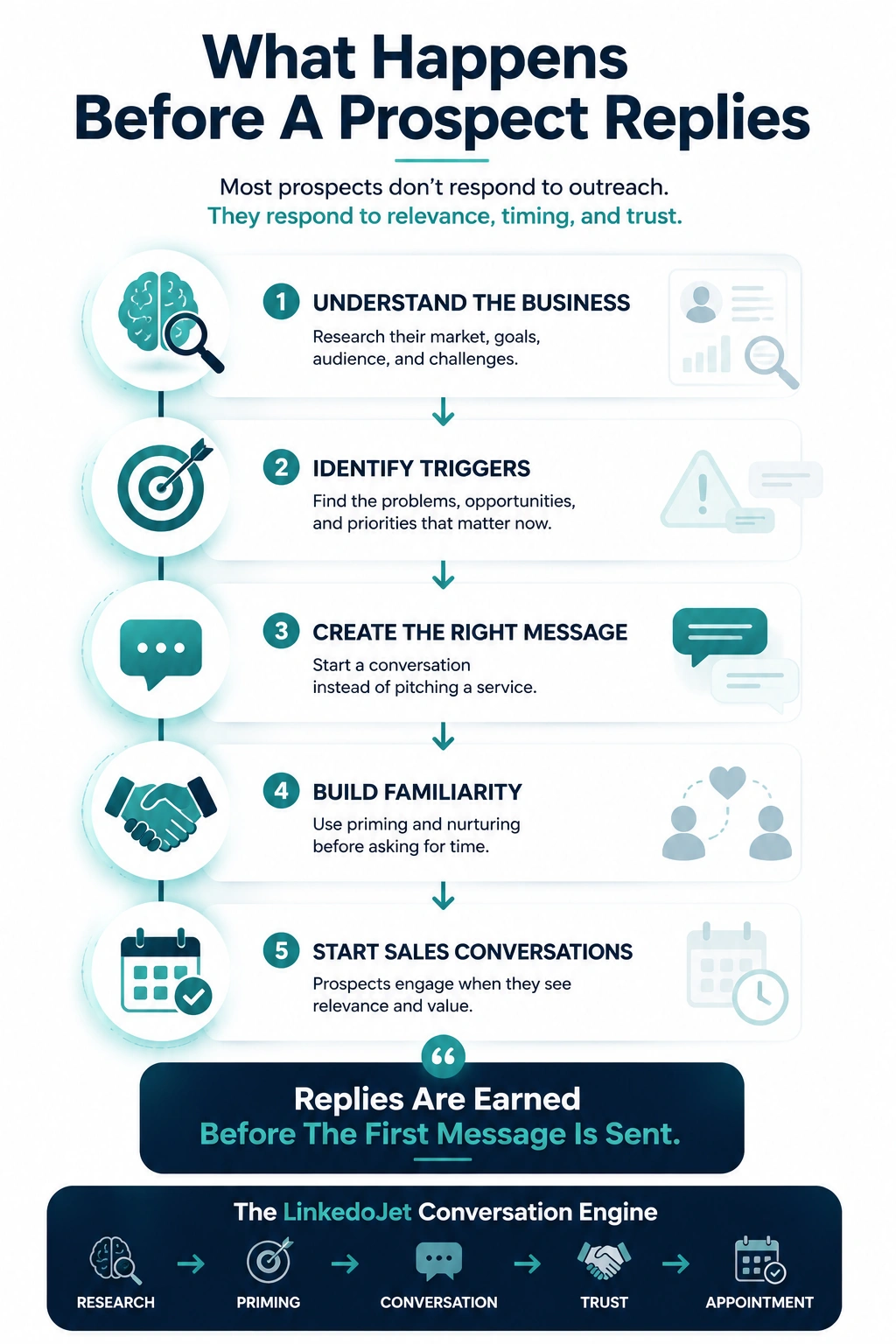
They’re not ignoring freight problems. They’re ignoring “capacity” messages.
This is a sequence built for the way logistics leaders actually live: short bursts of attention between escalations, and zero patience for rate-sheet spam.
You can feel it in your pipeline. Your team is sending messages. A few people reply. Almost nobody turns into a real shipper conversation with the person who owns OTIF, appointment windows, accessorial leakage, and exception management.
Meanwhile, the shipper side is absolutely hurting.
Detention creeps up as “small” accessorials. Claims become a weekly fight. Late ASNs trigger chargebacks. A missed appointment window turns into a cross-functional mess that lands on one person’s desk—usually the same person you’re trying to reach.
And you still can’t get them to engage long enough to diagnose anything.
This playbook is for founders, CROs, Sales Directors, and BD leaders at:
- 3PLs and managed transportation teams
- Freight forwarders (ocean/air) and customs-adjacent services
- Freight brokerages selling more than “I can cover the load”
- Warehousing/fulfillment, last-mile, cold chain, and parcel-heavy operations
- Logistics and transportation tech teams selling into ops-led buying committees
And it’s written for the buyers you actually need meetings with:
- Logistics Managers, Transportation Managers, and Ops Directors (the people who get blamed)
- Supply Chain Directors / Heads of Supply Chain (the people who set the rules)
- Procurement / Sourcing (the people who enforce the contract and keep incumbents in place)
- Plant Managers and ecom Ops leaders (the people who feel the pain at the dock and in the SLA)
The outcome isn’t “more replies.” It’s more qualified conversations that naturally convert into working sessions and discovery calls—because the messages sound like you understand the failure modes they’re measured on.
Why most logistics LinkedIn outreach dies in silence
Your prospects aren’t hard to reach. They’re easy to annoy.
They get hit all day by brokers and forwarders with some variation of: “any lanes to quote?”, “we have capacity,” “can we save you money,” “who handles transportation?” If they reply to one of those, they’re volunteering for a time sink. So they don’t.
Most outreach fails for a few predictable, industry-specific reasons:
- Asking for lanes on touch one. That’s not a conversation starter; it’s an RFP request disguised as small talk.
- Offering rates without shipment context. A quote without mode, origin/destination region, volume band, accessorial profile, and appointment constraints is how you create a bad first impression fast.
- Empty “savings” claims. Shippers don’t lack savings pitches. They lack confidence that savings won’t come back as claims, service misses, and chargebacks.
- Pretending to know their network from a website scan. “Noticed you ship nationwide” is a tell. So is “saw you’re growing.” Ops leaders read that as: you’re guessing.
- Buzzword visibility. Visibility to prevent what—late pickups, missed delivery windows, dwell at key DCs, demurrage, tender rejections, parcel DIM surprises? If you can’t name the consequence, it sounds like vendor noise.
- Over-following up like a bot. Logistics is small. If you burn your name with annoying sequences, it follows you.
The hidden problem isn’t copy. It’s conversation design.
Ops leaders evaluate risk before they evaluate vendors. Switching costs are operational: EDI/API, SOPs, appointment rules, exception workflows, carrier scorecards, customer routing guides. Your message has to earn the right to a meeting by sounding like you understand their downside.
The progression that turns cold LinkedIn into booked shipper appointments
When a shipper is “fine,” they won’t take a call. When they’re not fine, they still won’t take a call from someone who sounds generic.
What works is a progression that respects how ops-led buyers decide:
- Precision targeting by shipper type and mode (manufacturing inbound vs ecom outbound, cold chain vs dry, parcel-heavy vs truckload, port-adjacent vs inland, multi-DC vs single-site).
- Conversation-first opener that invites a one-line reply during a chaotic day.
- Operational priming with one earned observation they can sanity-check (dwell patterns, accessorial leakage, claim friction, appointment compliance).
- Respectful nurture that adds signal without content spam or “just bumping this.”
- A working-session ask that feels like a practical benchmark, not a pitch or a “demo.”
Timing matters more in logistics than most industries. You’ll see reply rates change when you align to real triggers:
- RFP season and bid calendar pressure
- Pre-peak planning (“we’re fine until Q4 hits”)
- New DC launch, network redesign, or customer routing changes
- Service failure clusters (missed appointments, carrier fall-offs, tender acceptance drops)
- ERP/WMS transitions that break visibility and appointment processes
- New product launch or SKU velocity shifts that change freight profile
A 7-part LinkedIn sequence written for shipper reality
Use this as a base and tune it to your service line (3PL vs forwarding vs warehousing vs brokerage vs last-mile). The goal is a reply you can work with—not a polite “sure” that goes nowhere.
1) Connection request (short, specific, no flattery)
Example:Hi [First Name] — I work with shipper ops teams on tightening OTIF and reducing accessorial leakage (detention/dwell, appointment misses). Open to connecting?
Optional operational hook (only if real):Noticed you’re in [ecommerce fulfillment / temperature-controlled / multi-DC retail]. I’m usually pulled in when appointment compliance and exception handling starts eating the week.
2) First message after acceptance (permission + choice)
Example:Thanks for connecting. Quick one—what’s the bigger headache right now: (A) appointment compliance/dwell & detention, (B) claims/damage & disputes, or (C) peak overflow planning?
Alternate for parcel / ecom:Are you getting more internal heat on service metrics (OTIF/fill rate) or on freight spend (parcel zone mix, DIM weight surprises)?
3) Soft follow-up if no reply (one sentence, cost-aware)
Example:When detention starts creeping up, it usually shows up as “small” accessorials that add up—are dwell/detention numbers something you’re actively trying to get under control this quarter?
4) Emotional trigger question (surfaces the human pain)
Example:When a shipment misses an appointment window on your side, who gets pulled into the escalation—ops, customer service, or you?
Alternate for manufacturing inbound:Is the bigger fire right now inbound appointment compliance at the plant/DC, or tender acceptance and late pickups upstream?
5) Insight-based nurture + permission offer (no links unless asked)
Example:One pattern I keep seeing: accessorial leakage rarely comes from one “bad carrier.” It’s usually a mix of appointment rules, inconsistent drop/hook expectations, and no clean exception reason codes—so finance just sees the bill growing.
If it’s useful, I can send a one-page checklist tailored to [FTL/LTL/ocean dray/parcel/last-mile] that ops teams use to spot where the leakage hides. Want it?
6) Soft meeting request (position as a working session)
Example:If you’re open to it, happy to do a quick 15-min benchmark on where detention/accessorials typically hide for [shipper type] networks—and what teams do to get ahead of it without ripping out incumbents. Worth a quick working session next week?
I’ve got Tue 11:30a or Thu 2:00p [their time]—either work?
7) Close-loop (protect reputation, keep door open for timing)
Example:I’ll step back for now. If peak overflow, service misses, or claims friction pops up later, I’m easy to find. Should I circle back closer to Q3/Q4 planning?
What to personalize (and what not to)
Personalization in logistics isn’t “loved your post.” It’s proving you know what kind of operation you’re talking to—without pretending you know their lanes.
Personalize these (they change the conversation)
- Mode + motion: inbound vs outbound, FTL vs LTL, drayage, air/ocean, parcel/last-mile, temperature-controlled.
- Shipper type: manufacturing, retail, ecommerce, food/bev, pharma, building products—each has different penalty pain (chargebacks vs spoilage vs stockouts).
- Facility footprint: single DC vs multi-DC; port-adjacent vs inland; cross-dock heavy vs storage heavy.
- Service promise: 2-day expectations, cold chain integrity, appointment windows, OTIF commitments to key customers.
- Seasonality: pre-peak, promo windows, harvest cycles, Q4 surge, new product launches.
- Operational signals: new DC announcements, hiring for transportation/warehouse ops, WMS/ERP migration, new customer wins that change SKU velocity.
Avoid these (they trigger the spam filter in their head)
- Vague compliments (“impressive growth,” “great company”)
- Pretending to know lanes (“noticed you ship a lot from Chicago to Dallas”)
- “We have capacity” as a value proposition
- Dropping a deck/link in the first two touches
- Asking for a call before you’ve earned a one-line reply
If your team sells multiple offerings, keep the first angle narrow. Pick one wedge: detention/dwell control, claims reduction, peak overflow, appointment compliance, or exception visibility that prevents chargebacks. Win the conversation first. Expand later.
Objections, pivots, and stop signals (talk tracks, not scripts)
Logistics buyers will default to guardrails. Your job isn’t to “overcome” them. It’s to redirect into a smaller, lower-risk conversation that still leads to a meeting.
“We already have a 3PL / forwarder.”
- Pivot:
Totally normal. I’m not pushing a rip-and-replace. Where teams usually pull us in is overflow planning, service recovery on a trouble lane, or cleaning up accessorial leakage that keeps growing under the contract.
- Wedge question:
If something broke next month—carrier fall-offs, missed appointments, claims spike—do you have a backup plan you trust, or do you scramble?
“Send rates.” (with no shipment profile)
- Pivot:
I can, but rates without context waste your time and mine. If you give me just three inputs, I’ll tell you if it’s even worth quoting: mode (FTL/LTL/parcel/ocean/air), origin/destination region, and volume band.
- Alternate:
Or we can do a 10–15 min benchmark first so you don’t end up with a quote that ignores appointment rules, dwell patterns, and accessorials.
“Send info.”
- Pivot:
Happy to. What matters more on your side right now—OTIF/service recovery, claims friction, dwell/detention, or cost-to-serve?
- Follow-through:
If you tell me which one, I’ll send a short, tailored note (not a deck) with the exact operational angle.
“Not looking / under contract.”
- Pivot:
Understood. Would it be helpful if I circled back around [pre-peak / RFP timing / Q3 planning]? That’s usually when teams want a fresh benchmark.
- Keep it human:
If you’re slammed right now, no worries—I don’t want to add to the noise.
Silence
- Do: send one more message with new signal (an observation, a choice question, or a permission-based checklist offer).
- Don’t: “bump” them 6 times. That’s how you get remembered for the wrong reason.
Stop/pause signals (protect your reputation)
- They explicitly ask to be removed or say “stop”
- They repeatedly demand rates while refusing basic context
- They tell you you’re one of many vendors hitting them and they’re not open to outreach
- They give a clear “no” twice—close-loop and move on
The win is consistency with judgment. A small industry remembers who behaves like a professional.
FAQ
How do you message shippers on LinkedIn without sounding like a broker pitching trucks?
Don’t lead with capacity, savings, or a generic intro. Lead with an ops-native problem and a low-friction question they can answer in one line: appointment compliance, dwell/detention, claims friction, chargebacks from late ASNs, peak overflow planning, or tender acceptance drops.
Then earn the right to a meeting by sharing one practical observation and offering a permission-based asset (like a one-page checklist) instead of dropping a deck.
What should a LinkedIn messaging sequence for 3PL sales look like if the prospect already has an incumbent?
Assume they do. Incumbents are sticky because SOPs, EDI, appointment rules, and exception workflows are painful to change.
Your sequence should position a smaller wedge: overflow planning, service recovery on a trouble lane, a backup plan for peak, or a quick benchmark on where accessorial leakage hides. That’s a conversation ops leaders will take without feeling like they’re inviting a full vendor swap.
How do you respond when a shipper replies “send rates” but gives no shipment profile?
Acknowledge it and refuse to guess. Rates without context create bad quotes and waste time.
Ask for three inputs only: mode, origin/destination region, and volume band. If they can’t share that, offer a short benchmark call to avoid back-and-forth: you’ll sanity-check whether a quote would be meaningful once appointment rules and accessorial profile are considered.
Which roles should logistics providers target first: Procurement, Transportation, or Operations—and how does the opener change?
If you need traction fast, start with the role that feels the pain most directly: Transportation and Operations. They own escalations—missed appointments, dwell, service recovery, claims coordination. Your opener should sound like relief and control.
Procurement is still important, but they respond better once there’s a defined wedge (overflow, trouble lane, accessorial leakage) and a reason that isn’t “we can save you money.”
What counts as a “meeting-ready signal” in LinkedIn conversations for logistics (RFP timing, service failure, new facility, peak planning)?
Look for signs they’re inside a timing window: mention of an upcoming bid, peak planning stress, a new DC or network change, a WMS/ERP transition, carrier performance frustration, rising detention/demurrage, claims disputes, or internal pressure around OTIF and chargebacks.
Also treat diagnostic questions as signals. If they ask “how do you handle exceptions?” or “what do you need from us to quote?” they’re already imagining a next step.
If you want this to run weekly (without burning your name), we’ll build and operate it with you
Book a demo session to see what LinkedoJet delivers for logistics outbound: targeting, list building, AI-assisted personalization, execution, follow-up, and appointment support—built around real shipper triggers like OTIF misses, detention creep, claims friction, and pre-peak planning.
LinkedoJet isn’t “a tool that sends LinkedIn messages.” It’s an outbound operating system you can hand to your team and trust.
What we do operationally:
- ICP + targeting setup: we define your best-fit shipper profiles by mode, network type (inbound/outbound), facility footprint, and operational pain wedge (detention/dwell, claims, peak overflow, appointment compliance, exception visibility).
- Sales Navigator + list building: we build and maintain prospect lists of the right decision-makers (Transportation, Ops, Supply Chain, Procurement) with filters that reflect logistics reality—not generic industry lists.
- AI-assisted personalization: we personalize at the level that matters (mode, shipper type, service promise, seasonality, operational signals) while avoiding the “fake lane knowledge” that gets sellers ignored.
- Outreach execution: we run the sequence end-to-end with pacing that protects reputation in a relationship-driven industry.
- Reply handling + lead nurturing: we help manage responses (“send rates,” “we have an incumbent,” “send info”) with talk tracks that move the conversation toward a practical next step.
- Warm lead tracking + appointment support: meeting-ready signals are tagged, tracked, and followed up so good conversations don’t die in someone’s inbox.
- Visibility + refinement: you get clear dashboards on sends, replies, warm leads, and booked conversations—and we adjust targeting and messaging as we learn what’s hitting.
What happens after onboarding: we stand up your targeting + lists, implement your shipper-specific sequence (like the 7-part flow above), and start controlled outbound within days—not weeks. Then we iterate weekly based on real replies and real objections, so your team isn’t guessing.
What you receive: a working outbound engine that produces qualified shipper conversations tied to operational triggers (pre-peak planning, service recovery, accessorial leakage, claims friction)—plus the tracking and follow-through to turn those conversations into booked appointments.
Why LinkedoJet is different from ordinary LinkedIn automation tools: automation blasts volume. We run the system: targeting, conversation design, personalization, execution, nurturing, and appointment support—with guardrails that keep your brand clean.
From identifying the right decision-makers to starting meaningful conversations and turning them into qualified appointments... LinkedoJet manages the entire outbound engine for your business.
Next step: get a supply-chain-specific sequence mapped to your service line
We’ll adapt the messaging to your reality (3PL vs forwarding vs warehousing vs brokerage vs last-mile), build the right shipper lists, and run follow-up that earns replies without annoying a small industry.