
The real reason CISOs and GRC leaders ignore “SOC 2 services” DMs (and what they reply to instead)
They’re not rejecting your capability. They’re rejecting the feeling that replying will cost them time they don’t have.
Your firm can be legitimately excellent—smart remediation advice, clean readiness plans, auditors who respect you, calm during the scramble—and still watch LinkedIn go dead.
Because the first message doesn’t sound like their week.
Compliance leaders are living in artifacts, deadlines, and awkward internal herding. Evidence requests stuck with control owners. A customer security questionnaire that became a mini-audit. A board question that turned into “do we have an actual program, or just policies in Google Drive?” When your outreach opens with credentials (“we do SOC 2 / ISO / HIPAA”) it lands like every tool vendor and every generic consultancy that came before you.
And here’s the quiet cost: you start planning delivery capacity off referrals and luck. You hold bench when you shouldn’t. Or you overbook when a partner channel pops. Feast/famine doesn’t just stress pipeline—it messes with staffing, cash, and your ability to say “yes” to the right projects.
What they reply to is much simpler than most firms think:
- A message that names a specific moment (readiness planning vs evidence chasing vs post-audit cleanup).
- A question they can answer in one line without committing to a call.
- An off-ramp that makes it safe to say “not right now.”
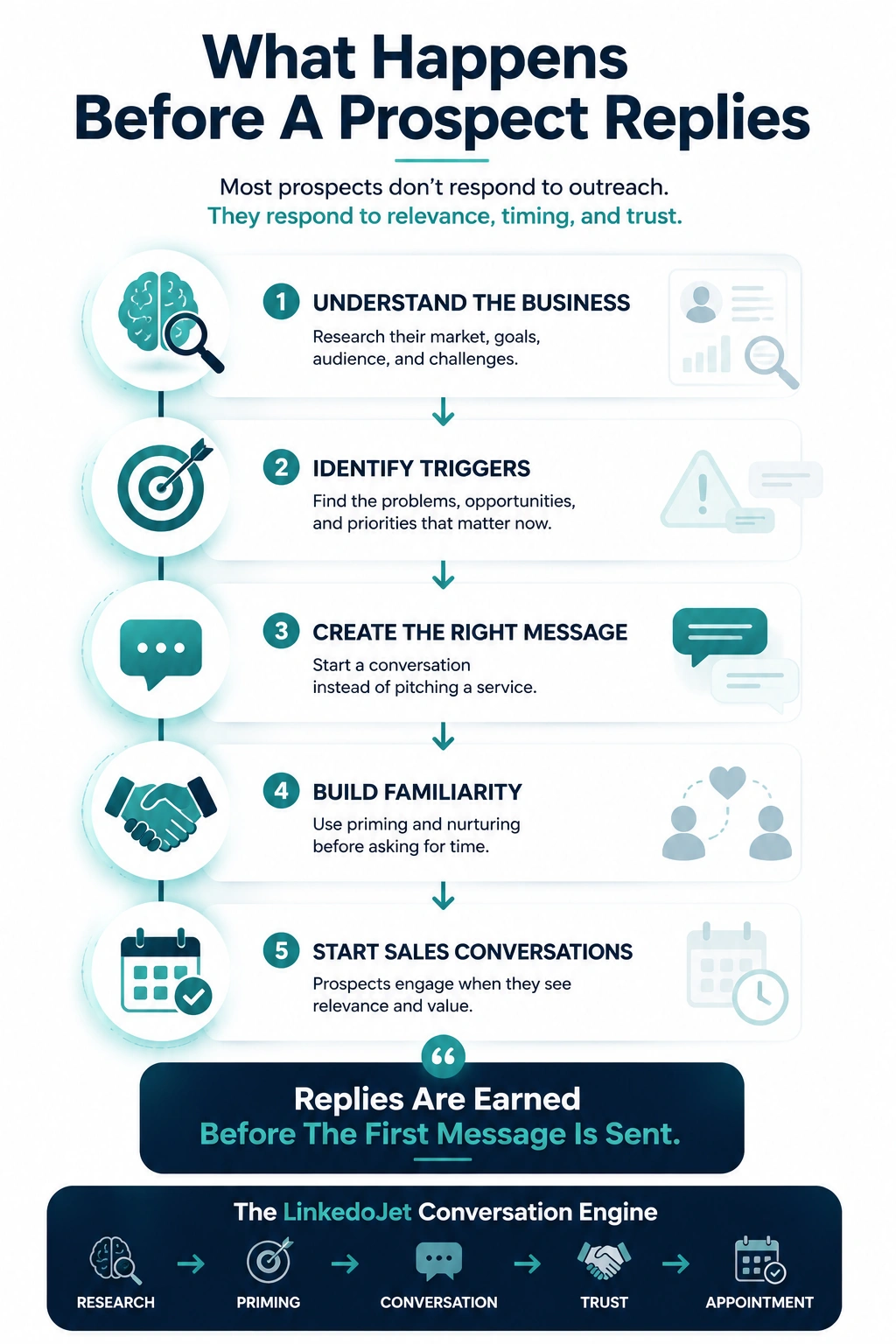
The goal of the first touches isn’t to sell SOC 2 or ISO 27001. It’s to earn a small reply that tells you whether there’s timing, pain, and ownership.
Who to target—and the exact “why now” moments that make them responsive
Good targeting isn’t “CISO at fintech.” It’s “CISO who just got pulled into a proof-for-enterprise deal.”
Most compliance consulting outreach fails one step before copy: you’re talking to the wrong owner for the moment. Or you’re talking to the right owner with the wrong clock.
In regulated mid-market, the buyer is rarely “the company.” It’s a small group of people trying to get through a specific window without surprises.
| Persona you message | What they’re actually trying to get done | “Why now” triggers that make them reply |
|---|---|---|
| CISO / Head of Security | Keep enterprise deals moving and avoid audit surprises | Enterprise customer requires SOC 2/ISO proof, renewal risk, board asks for program maturity, tooling change causing evidence gaps |
| Head of GRC / Security Compliance | Run the program and survive the evidence cycle | Audit window scheduled, Type II period ending, evidence collection chaos, control owners stalling, remediation backlog growing |
| Privacy Officer / DPO | Stop privacy work becoming a fire drill | New data processing use case, GDPR/privacy program build-out, vendor privacy assessments piling up, internal policy sprawl |
| Internal Audit leader | Get clean control testing without constant exceptions | Control testing failures, repeat findings, SOX-adjacent pressure, inability to evidence design/operating effectiveness |
| Vendor Risk / Third-Party Risk owner | Clear the backlog and reduce the ping-pong | Assessment backlog, questionnaire pileups, escalations from procurement/sales, exception handling getting out of hand |
Practical “moment matching” angles that work well in compliance consulting:
- Upmarket pressure: “Enterprise deal forcing SOC 2/ISO proof” (this is often the fastest reply trigger).
- Stalled readiness: “ISO program stuck in documentation / scope ambiguity / no control ownership.”
- Healthcare push: “HIPAA/HITRUST moved from ‘someday’ to ‘now’ because of payer/hospital requirements.”
- Vendor risk saturation: “Backlog is creating commercial drag and stakeholder fatigue.”
- Audit calm after the storm: post-audit cooldown (useful for long-cycle nurturing; not a meeting ask).
Notice what’s missing: long diagnoses, frameworks, or a promise to “improve security posture.” You’re simply trying to find out if they’re in a window where outside help is welcome.
What gets filtered out fast: familiar outreach mistakes compliance leaders don’t have time for
Compliance leaders are trained to spot risk, waste, and nonsense quickly. Their inbox and DMs are basically a live-fire exercise in attention management.
Here’s what gets deleted or mentally categorized as “vendor spam” within seconds:
- The credential dump: “We’re a SOC 2 / ISO 27001 consultancy with a proven methodology…” (they’ve heard it 200 times).
- Fake intimacy: “Loved your post…” with no real point, or worse, a generic compliment pasted everywhere.
- The long paragraph: If it scrolls, it dies. They’re reading between meetings.
- Links/attachments in the first touch: Many security leaders won’t click. Some are policy-restricted. Either way, it adds cognitive load.
- Premature meeting ask: “Can I get 15 minutes to introduce…” before they’ve even confirmed they’re in a compliance window.
What works is almost unfairly simple:
- One specific pattern they recognize (evidence chasing, questionnaire fatigue, control owners stalling).
- One question that’s easy to answer without exposure (“Are you closer to planning or scramble?”).
- A safe exit (“If not a focus, no worries.”).
A full LinkedIn sequence that sounds like a compliance peer and earns low-effort replies
Short, situational, and written to be read fast. No links. No deck. No forced meeting ask.
How to use this: Pick one “moment” angle per prospect (audit window, enterprise due diligence, vendor risk backlog). Don’t mix frameworks in one thread. Your job is to earn a reply that reveals timing and ownership.
1) Connection request (context-based, not complimentary)
Example:Hi {FirstName}—I work with GRC teams ahead of SOC 2 / ISO audits. Curious how you’re handling evidence collection this cycle. Open to connecting?
Alternative for vendor risk owners:Hi {FirstName}—quick one: are vendor security reviews becoming a bottleneck for your team right now, or is the backlog under control? Either way, open to connecting.
2) Message after acceptance (one question, no pitch)
Example:Thanks for connecting. Quick question—are you closer to “getting ready for an audit window” or “already in the middle of evidence chasing” right now?
Why it works: it gives them two safe options, both normal, neither embarrassing.
3) Soft problem follow-up (if no reply)
Example:One pattern I keep seeing: control owners slow everything down because evidence requests arrive late and messy. Is that something you’re dealing with, or is your process pretty locked in?
4) Query that surfaces the quiet anxiety (without drama)
Example:When the auditor asks for an artifact you expected to be easy and it turns into a week of Slack threads—does that happen often, or have you got a clean trail?
5) Insight-based nurturing (useful even if they never book)
Example:If it helps—teams usually buy back time by agreeing on “evidence definitions” per control early (what counts, where it lives, who signs off). It prevents late-cycle rework. Are you already running it that way?
Alternative for HIPAA/HITRUST:On HIPAA/HITRUST work, the time sink is rarely the policy writing—it’s exception handling and proving operating practice. Are exceptions a big part of your workload right now?
6) Soft meeting request (only after engagement)
Example:If you’re heading toward an audit window soon, I’m happy to do a 15-minute readiness sanity check—no deck, just compare notes on the few controls that tend to blow up timelines. Worth it, or not a focus right now?
7) Close-loop (polite, with a re-open trigger)
Example:I’ll close the loop here. If an enterprise deal or an audit date suddenly pulls compliance to the top of the list, tell me what framework you’re under (SOC 2/ISO/HIPAA/etc.) and I’ll share the 3 places teams usually get stuck.
This sequence works because it respects their reality: they’re busy, skeptical, and allergic to time-wasting. You’re making it easy to answer, and easy to say no.
Timing, cadence, and channel etiquette for compliance audiences
If you message a GRC lead like a SaaS SDR—daily nudges, “just bubbling this up,” random memes—you’ll get muted. Not because they’re rude. Because they’re protecting attention.
Simple cadence that tends to work well for compliance personas:
- Connection request
- Day 0 (after accept): the single classification question (planning vs scramble)
- Day 3–4: one friction-point follow-up
- Day 7–9: one anxiety/clarifier question
- Day 14: one useful insight (no ask)
- Day 18–21: soft sanity-check invite (only if they engaged)
- Day 28: close-loop with a clean re-open trigger
When to send: early morning before the meeting stack starts, or late afternoon when they’re clearing notifications. Midday tends to get buried under operational noise—tickets, escalations, questionnaire requests, and internal pings.
How long should each message be? If it can’t be read in one breath, it’s too long. Compliance leaders don’t “read” LinkedIn. They scan it.
When to stop: if there’s no engagement after 5–6 total touches, pause. You’re not losing the deal; you’re preserving your brand. The market is small and people remember who annoyed them during an audit window.
Reply handling: turning a one-line response into a scoped sanity-check call (without a pitch)
The best replies are short. Sometimes almost dismissive. That’s not rejection—it’s a busy person testing whether you’re safe.
What you do next determines everything. If you pounce with a meeting link, you’ll kill the thread.
Your job after the first reply: confirm timing, confirm ownership, then offer a narrow next step that matches their workload.
Use a 3-question “scope reveal” that fits in chat
- Framework + window:
Which framework is on deck (SOC 2, ISO 27001, HIPAA/HITRUST, vendor risk), and when is the window?
- Stage:
Are you in readiness planning, evidence collection, or post-audit cleanup?
- Where it’s sticky:
What’s the part that’s dragging—control ownership, evidence quality, remediation backlog, questionnaires, or testing?
Then mirror back what you heard in one line:
Got it—sounds like you’re heading into a {window} with most friction around {sticky area}. That’s a common place timelines slip.
Offer the meeting as a sanity check, not a sales step
Example:If it’s useful, we can do a 15-minute sanity check on scope + the 2–3 controls that tend to create rework (access reviews, change management evidence, vendor management, etc.). If it’s not a priority, totally fine.
What this does: it lets them say yes without feeling sold, and it signals you’ve lived through the same failure modes.
Common objections and how to handle them without fighting
- “We already have a consultant.”
Makes sense. If you’re happy, I’ll stay out of the way. If you want a second set of eyes on readiness scope before the window, I can offer a quick benchmark and you can ignore it if it’s redundant.
- “We’re handling internally.”
That’s often the right call. Are you more concerned about evidence getting messy, or about remediation bandwidth?
- “Not a priority.”
Understood. Is that because you’re post-audit for a while, or because there’s no external pressure like enterprise deals or due diligence right now?
You’re not trying to win an argument. You’re trying to find the window where your help is actually welcome.
FAQ
How do compliance consultants start a conversation with a CISO on LinkedIn without sounding like a tool vendor?
Open with a recognizable compliance moment, not your service list. “Enterprise deal forcing proof,” “audit window scheduled,” “evidence chasing,” “vendor risk backlog.” Then ask a one-line question that lets them classify where they are (planning vs scramble vs post-audit). No links, no attachments, no deck, no credential dump.
What’s the best LinkedIn messaging sequence length and cadence for SOC 2 / ISO 27001 outreach?
Plan for 5–7 touches over ~3–4 weeks, with space between messages (3–5 business days early, then 7–10 days). Compliance leaders respond to fewer, sharper touches. Daily follow-ups feel like pressure and get muted.
Which triggers work best for appointment setting in compliance consulting (audit window, enterprise deal, due diligence, vendor risk)?
The strongest triggers are time-bound: an upcoming audit window, a SOC 2/ISO requirement tied to an enterprise deal, a surge in customer security questionnaires, and vendor risk bottlenecks that slow procurement/sales. “Program maturity” messaging is weaker unless it’s tied to a near-term deadline or external pressure.
Should you include links, attachments, or a calendar link in the first LinkedIn message to compliance leaders?
No. It adds friction and can trigger security policy hesitation. Earn a small reply first. If they engage, you can offer a sanity-check call and then share scheduling. The sequence should feel like a peer-to-peer note, not a marketing funnel.
How do you qualify whether they’re in readiness planning vs an evidence scramble vs post-audit cooldown?
Ask a binary question early (“planning” vs “evidence chasing”), then confirm with one follow-up: the audit window date, what artifact/control is causing rework, and whether external pressure exists (enterprise customer, due diligence, board ask). If they’re post-audit for 9–12 months and calm, shift to light nurturing and stop pushing for meetings.
Want us to pressure-test your sequence and build the outbound engine behind it?
This isn’t a generic “discovery call.” We’ll look at your exact services (SOC 2, ISO 27001, HIPAA/HITRUST, PCI, vendor risk) and turn them into message angles that match real compliance windows—then run the follow-up and appointment workflow for you.
On this session we’ll do two concrete things: (1) pick the highest-response “why now” angles for your market, and (2) map them to a short LinkedIn sequence that earns low-effort replies from CISOs, Heads of GRC, Privacy, Internal Audit, and vendor risk owners.
If we decide to work together, LinkedoJet doesn’t hand you templates and wish you luck. We operationally run a full outbound system:
- ICP and targeting setup: we define roles, company types, and the compliance moments you want to intercept (audit windows, due diligence pressure, vendor risk backlogs).
- Sales Navigator + LinkedIn prospect list building: we build and maintain clean lists (by persona, industry, size, tooling signals when available, and timing proxies).
- AI-assisted personalization: not fluffy “loved your post” lines—tight, moment-based openers that sound like a compliance peer and stay consistent at scale.
- Outreach execution: connection requests + message sequences run with pacing that won’t get you muted by security leaders.
- Lead reply handling and nurturing: we route replies, tag intent, and run follow-ups that add one useful insight at a time without forcing meetings.
- Warm lead tracking + appointment generation support: when someone signals a real window (audit date, enterprise deal pressure, evidence pain), we move them into a scoped sanity-check call flow and help get it booked.
- Campaign visibility: dashboards that show what’s being sent, what’s getting replies, and which angles are producing meetings—so you’re not guessing.
- Ongoing refinement: we adjust targeting, angles, and sequence steps based on what the market is actually responding to.
Most “LinkedIn automation” tools stop at sending messages. LinkedoJet is different because it’s built to manage the messy middle: timing, relevance, reply handling, and turning small responses into real, qualified appointments.
From identifying the right decision-makers to starting meaningful conversations and turning them into qualified appointments... LinkedoJet manages the entire outbound engine for your business.
Book a time and we’ll bring a point of view, not theory: the exact sequence structure, example wording for your services, and how we’d run it week-to-week so pipeline stops depending on referrals and luck.
Next step: get a sequence your team can run—and a system that keeps it running
If you’re tired of “SOC 2 services” outreach getting polite silence, the fix isn’t louder messaging. It’s tighter moment-matching, disciplined follow-up, and consistent conversion from reply to scoped call.