
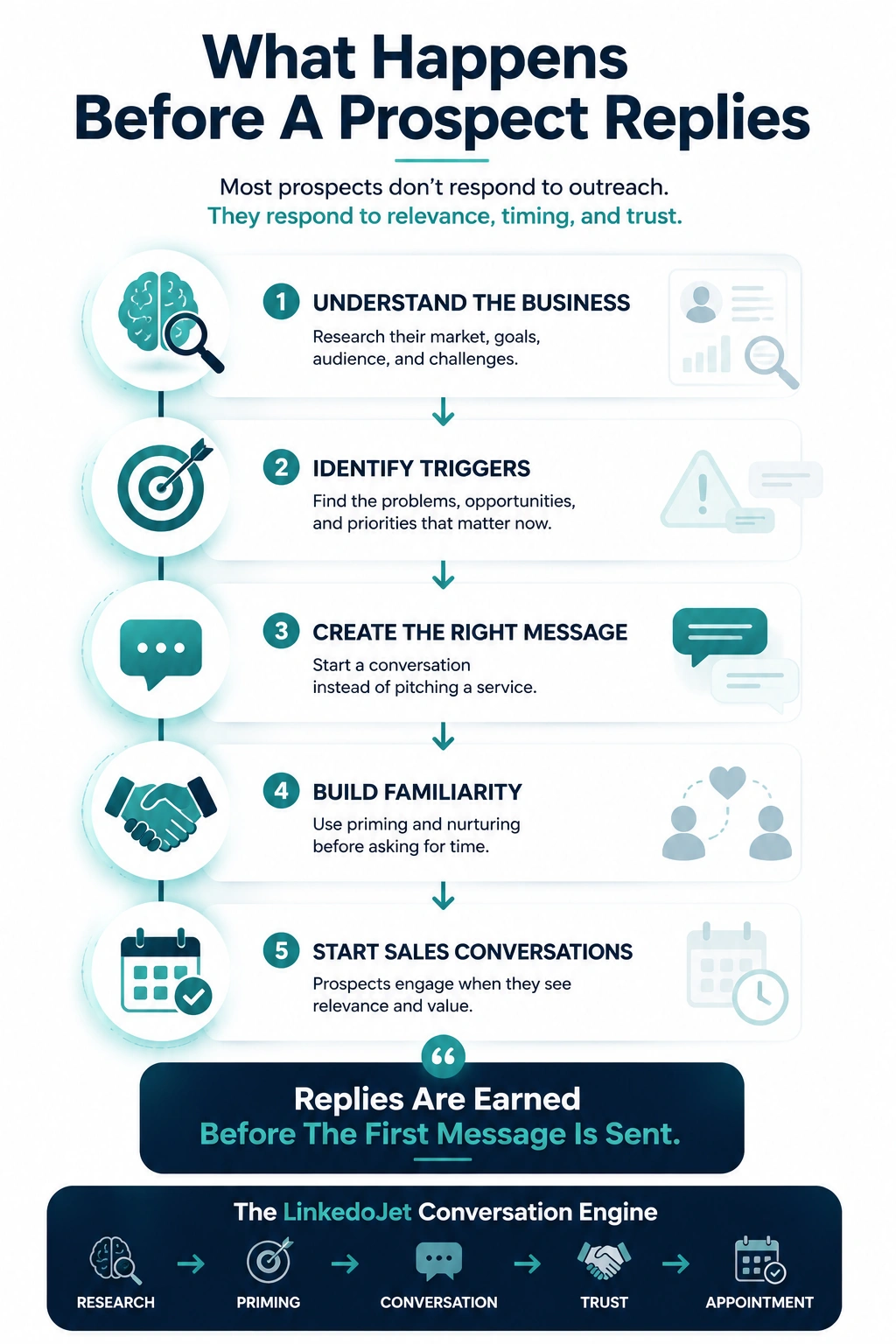
Your pipeline is getting decided in the inbox—before you ever earn discovery
If your first message sounds like “we do AWS/Azure migrations,” you’re being filtered out by leaders thinking about downtime windows, dependency surprises, and who gets blamed when cutover goes sideways.
You’re not losing deals because your assessment isn’t strong. You’re losing the right to be considered because the first 200 characters feel like vendor noise.
And the frustrating part? The people ignoring you are often the exact leaders who should be talking to you: the CIO with a data center exit date they don’t fully trust, the Head of Infrastructure watching landing zone decisions get rushed, the platform lead stuck between “move fast” and “don’t break identity and network.”
When outreach fails here, it fails quietly. No objection. No debate. Just a deleted message—and another month where your calendar depends on referrals and partner handoffs you don’t control.
The irony is that these buyers aren’t allergic to help. They’re allergic to anyone trying to skip the hard part: surfacing constraints early (IAM patterns, network connectivity, governance, DR, dependency mapping, cutover planning, FinOps baselines) before a plan calcifies and politics take over.
A single “cloud migration” pitch misses the room you’re actually selling into
What gets a response is role-aware language that matches how each stakeholder experiences migration risk.
| Role you’re messaging | What they’re thinking (in their words) | Conversation wedge that earns a reply |
|---|---|---|
| CIO / CTO | “What’s the timeline risk and the blast radius? What will the board ask if this slips?” | Exit-date pressure, renewal deadlines, stalled program recovery, decision clarity across teams |
| Head of Infrastructure / Platform Engineering | “Landing zone, identity, network, logging, backups—if this is sloppy, we’ll pay for it for years.” | Landing zone/IAM patterns, connectivity constraints, operational readiness, cutover windows |
| CCoE / Cloud Architect | “We need standards and governance that won’t collapse under exceptions.” | Reference architectures, guardrails, migration factory patterns, exception handling |
| Security / GRC | “Show me controls, audit readiness, and how you’ll avoid weak identity and shadow access.” | IAM posture, segmentation, logging/monitoring, compliance mapping, DR expectations |
| Finance / FinOps | “We can’t ‘move to cloud’ and discover the run-rate doubled.” | Baseline + commitments, waste cleanup, chargeback/showback, post-migration cost drift |
Most consultancies send one generic message and hope it lands. That’s why it doesn’t. Even when your targeting is correct, your language tells the wrong story.
Role-aware messaging doesn’t mean you write a novel per persona. It means your first question gives them a safe way to signal where the friction lives—without forcing them into a sales conversation.
Sequence logic that earns the reply, then earns the time
The goal of the early messages is not “book a call.” It’s to get a constraint admitted.
Think of your sequence like a controlled descent:
- Message 1–2: prove you’re not here to sell tooling or badges; you’re here to understand where they are (readiness vs execution) and what’s blocking momentum.
- Message 3–4: surface the real constraints—dependency mapping, landing zone/IAM design, cutover windows, governance, spend shock—without making them defend their program.
- Message 5: offer a small, credible insight that sounds like someone who has been in migration rooms, not a marketing team.
- Message 6: ask conditionally for a working session only after a signal (date, friction, internal disagreement, cost spike, audit pressure).
- Message 7: close the loop politely and leave a clean way to re-engage when timing changes.
This is how you turn “we already have a partner” into an actual thread. Not by arguing. By creating a wedge that makes them curious: “Are we missing a risk we’ll regret at cutover?”
Technically credible outreach is conservative. It doesn’t promise outcomes. It asks the right questions in the right order.
A 7-step LinkedIn message flow for cloud migration scoping calls
Examples you can run as-is—written to sound like a consultant, not a vendor.
1) Connection request (short, role-aware, no pitch)
Option A (Infrastructure/Platform):Seeing a lot of teams tighten landing zone + IAM patterns ahead of bigger migration waves. Are you in that phase right now, or already deep in execution?
Option B (CIO/CTO):Quick connect—many mid-market IT orgs are feeling renewal pressure (VMware/SQL/Oracle) driving timelines. Is that showing up for you this year?
2) First message after acceptance (context + low-friction segmenting question)
Thanks for connecting. Quick one—are you mostly focused this quarter on readiness/app rationalization, or are you already in execution/cutovers?
3) Constraint follow-up (specific, non-accusatory)
When teams say “migration is stuck,” it’s usually either app dependency surprises or landing zone/IAM/network decisions that weren’t settled early. Where are you seeing more friction right now—dependencies, or identity/network?
4) Reputational-risk trigger (pressure without drama)
Observation: the programs that stall tend to stall when no one wants to own the call on which apps get modernized vs rehosted—because the wrong choice becomes visible at cutover. Is that decision clear on your side, or still contested across teams?
5) Micro-insight nurture (teach something small, no link-dump)
If it helps, the cleanest sequence I’ve seen is: rationalize (with dependency reality) → landing zone/IAM/network guardrails → pilot with a real cutover window → then a factory motion. Most “surprises” happen when landing zone and app owners stay fuzzy. Is any of that relevant to what you’re juggling?
6) Conditional working-session ask (specific scoping angle)
If you’re open to it, I can share the 20-minute readiness questions we use to surface dependency/IAM/cutover risks before a plan gets locked. If it sounds useful, want to compare notes next week—Tue 10:30a or Thu 2:00p?
7) Polite close-loop (timing-friendly, door stays open)
No worries if timing isn’t right. If a deadline pops up (data center exit, renewal pressure, spend spike, audit finding), happy to be a sounding board. You can reply “later” and I’ll check back next month.
What IT leaders ignore instantly (and why it costs you credibility)
Most of these aren’t “bad marketing.” They’re signals that you’re not safe to engage.
- Vendor name-dropping as a substitute for relevance: hyperscaler logos don’t answer their immediate worry: “Will this blow up during cutover?”
- Asking for a meeting in message one: it tells them you’re optimizing for your calendar, not their risk.
- Fake personalization: “saw you’re passionate about cloud” reads like you scraped their profile and pressed send.
- Long architecture explanations in DMs: LinkedIn is not a design review, and they won’t context-switch mid-day to parse it.
- PDFs and decks early: attachments feel like work. Busy leaders avoid work from strangers.
- “We reviewed your environment” claims: unless you actually did, it’s a trust breaker—especially with security-minded buyers.
If you want replies from serious IT leaders, your first job is to sound like someone who respects constraints: theirs and yours. Short. Specific. Observational. No theater.
Pacing that fits meeting-heavy calendars (and passes the 15-second reply test)
You’re not being “ignored.” You’re being deprioritized. Your sequence has to make replying feel easy, not like starting a project.
Most of your targets check LinkedIn in small gaps: early morning before standups, between meetings, or late afternoon when they’re clearing notifications. They’re not reading essays. They’re scanning for: “Is this person credible? Is this relevant? Can I answer quickly?”
A practical pacing cadence
- Day 0: connection request
- Day 1: segmenting question after acceptance
- Day 4: constraint question (dependencies vs landing zone/IAM/network)
- Day 8: reputational-risk question (decision clarity, modernization vs rehost)
- Day 13: micro-insight nurture (3–4 lines)
- Day 18: conditional working-session ask (two time windows)
- Day 28: close-loop with “reply later / month” option
Two rules keep you out of the “being chased” bucket:
- Every message stands alone. Don’t rely on them remembering the thread.
- Every message has one ask. A single question they can answer in under 15 seconds.
When someone replies with “busy” or “not this quarter,” that’s not a failure. It’s a signal to shift into light-touch nurturing instead of pushing for a call.
FAQ
What’s the fastest way to get replies from CIOs and Heads of Infrastructure about cloud migration—without pitching?
Ask a role-aware, constraint-led question that lets them answer without defending their program.
Examples that earn quick replies:
Are you in readiness/app rationalization, or already in execution/cutovers?
Where’s the friction showing up more: dependencies, or landing zone/IAM/network decisions?
Is there an exit date or renewal (VMware/SQL/Oracle) driving timelines this year?
Those questions signal competence and respect their time. And they create a path to a scoping conversation after a real constraint shows up.
What should my first LinkedIn message say if the buyer already has a hyperscaler partner or preferred SI?
Don’t compete with the partner. Compete for the wedge: clarity on risk, decisions, and readiness.
Try:
Makes sense—most teams do have a preferred SI. Quick question though: where do you see the highest program risk right now—dependency surprises, landing zone/IAM/network, or cutover windows?
Now you’re not asking them to switch providers. You’re offering a diagnostic conversation that helps them lead the program.
How do I handle “send info” without dumping a deck or losing control of the conversation?
Send questions, not a PDF.
Reply with a short “choose your path” prompt:
Happy to—so I don’t send generic material, which is closer to your world right now: (1) app rationalization/dependencies, (2) landing zone/IAM/network guardrails, or (3) cutover planning + DR? I’ll send a 1-page set of readiness questions.
This keeps you in dialogue and turns “send info” into segmentation.
What’s the right pacing for a LinkedIn messaging sequence to IT leaders during long migration evaluation cycles?
Space messages far enough apart that you don’t feel like a chase, but close enough that the thread stays alive. For most IT leaders, 3–5 business days between touches works well.
Also: if they mention being mid-cutover, in an RFP, or “locked with our SI,” pause the sequence and switch to occasional, relevant micro-insights. Pushing for time in that moment burns trust.
Which signals in replies mean someone is meeting-ready vs. “not now” for a migration assessment or landing zone review?
Meeting-ready signals usually include specificity:
- a date (data center exit, renewal, audit)
- program friction (stalled wave, app owner resistance, cross-team disagreement)
- risk language (cutover windows, DR concerns, identity/network constraints)
- money pressure (spend spike, commitments, FinOps reset)
“Not now” signals are vague or closed:
We’re just exploring
with no constraint attachedSend info
and no answer to a segmentation questionAll set
/not migrating this year
Your job is to treat those as routing: meeting-ready gets a working-session ask; “not now” gets a clean close-loop and light nurturing.
If you want more scoping calls, you need a system that runs after you log off
LinkedoJet builds and runs the role-aware LinkedIn outbound engine that turns technical credibility into replies—and replies into qualified assessment and migration scoping appointments.
This isn’t a “let’s talk about your strategy” call. It’s a working session where we map your outreach to the real buying committee and the constraints they actually respond to.
On the session, we’ll:
- Confirm your ICP and targeting angles (data center exit, renewal pressure, stalled program recovery, landing zone/IAM readiness, FinOps cleanup).
- Review how you currently message CIO/CTO vs Infrastructure/Platform vs CCoE vs Security vs FinOps—then tighten the wedge so it sounds like a practitioner, not a vendor.
- Build a short sequence that earns a reply first, surfaces constraints next, and only then asks for a scoped working session.
After onboarding, LinkedoJet operationally delivers:
- ICP and targeting setup with clear role-based angles (what a CIO cares about vs what a platform lead cares about).
- Sales Navigator / LinkedIn prospect list building so you’re consistently messaging the right decision-makers and adjacent influencers (CCoE, Security, FinOps).
- AI-assisted personalization that stays grounded—no fake flattery—just relevant hooks (landing zone governance, dependency risk, cutover windows, spend shock).
- LinkedIn outreach execution with pacing designed for meeting-heavy calendars.
- Lead reply handling and nurturing so “we have a partner” and “send info” become structured conversations instead of dead ends.
- Warm lead tracking with reply-intent notes (curious vs busy vs not a fit vs timing trigger) and next-message prompts.
- Appointment generation support to convert real signals (dates, risk, friction) into working-session scoping calls.
- Campaign visibility through dashboards so you can see what’s getting replies by role and which constraints are showing up most.
- Ongoing campaign refinement as you learn what your market is reacting to (renewals, audits, M&A, modernization pressure, FinOps drift).
Why LinkedoJet is different from ordinary LinkedIn automation tools: we don’t sell “sending volume.” We run the full conversation system—targeting, sequencing, personalization, execution, reply handling, and conversion—so your pipeline isn’t held hostage by referrals or whoever happens to need help this quarter.
From identifying the right decision-makers to starting meaningful conversations and turning them into qualified appointments... LinkedoJet manages the entire outbound engine for your business.
Next step: turn your expertise into consistent scoping conversations
If you can run a great assessment but your inbox isn’t producing enough real conversations, the fix isn’t louder pitching. It’s a role-aware sequence that surfaces constraints and converts signals into working-session appointments—managed end to end.