
Win earlier by spotting technology demand before it becomes a formal buying process
Most IT services pipelines break because demand is discovered late—after the internal team has already chosen a direction, a shortlist, or a delivery approach.
Businesses rarely wake up and “need a vendor.” They hit operational pressure: a platform is unstable, a customer portal needs modernization, security posture is questioned, cloud costs spike, or a new product line needs software delivery capacity.
Your advantage on LinkedIn is timing. Identify organizations entering build/modernize/scale mode before procurement formalizes. That is where qualified conversations come from.
| Visible demand (early) | What it usually means for IT services | Who to reach first |
|---|---|---|
| New product roles and engineering expansion | Active build, modernization, or roadmap acceleration; likely capacity gaps | CTO, VP Engineering, Head of Product |
| Cloud/DevOps hiring + SRE mentions | Infrastructure scaling, reliability issues, deployment bottlenecks | Head of Infrastructure, Platform Engineering, CIO |
| Security/compliance hiring or risk language | Audit pressure, incident response readiness, control gaps | CISO, Security Director, Compliance lead |
| ERP/ops transformation language | Process redesign, integration work, data migration, change management | CFO/COO, Transformation Director, CIO |
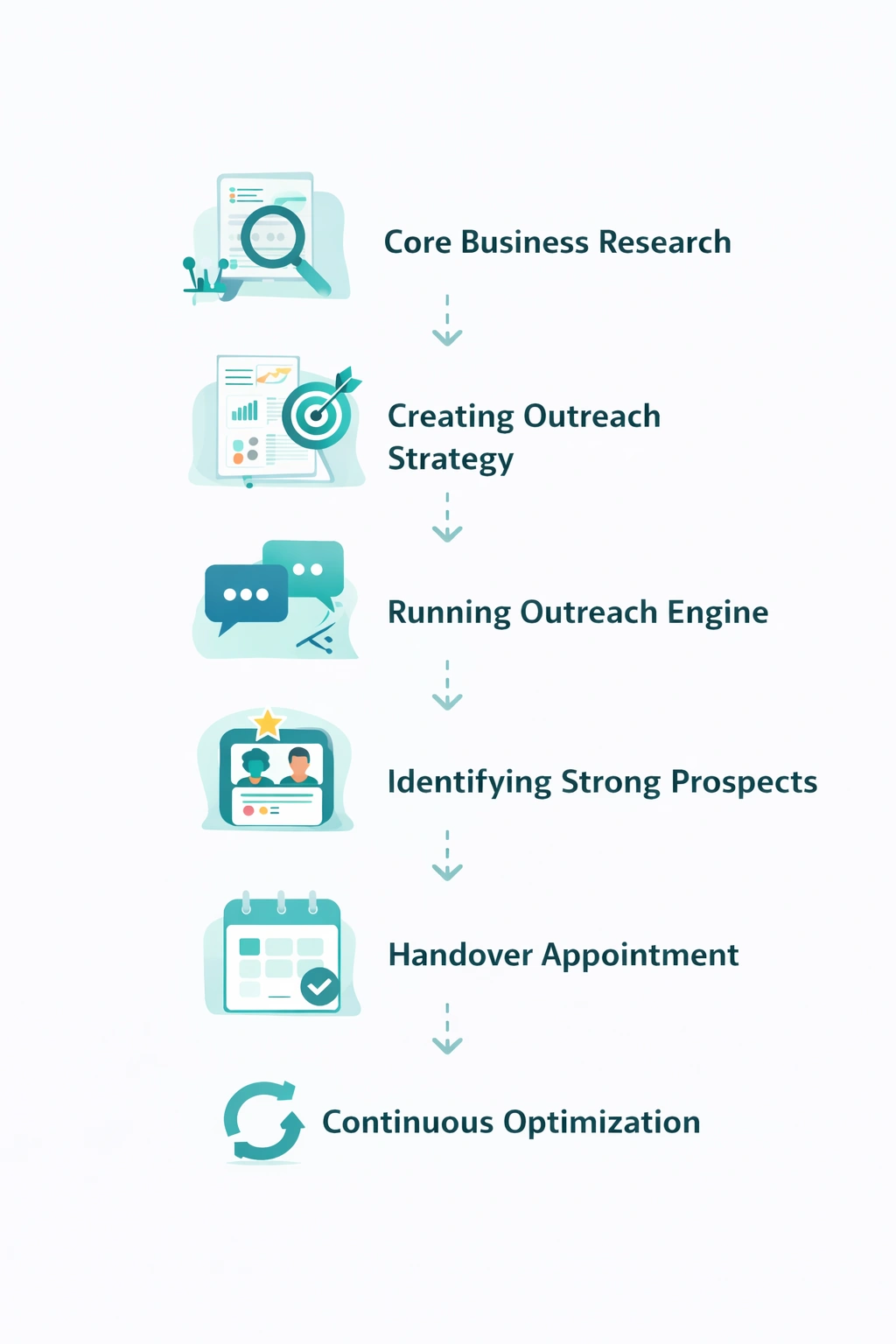
LinkedoJet is built for this: prospect intelligence first, then decision-maker targeting, then structured outreach. The goal is to enter conversations while demand is already visible but not yet “shopped.”
The real IT lead-gen problem: generic outreach fails because it ignores how buying decisions form
Most IT outreach targets the wrong people, at the wrong accounts, with the wrong context.
Generic messages fail because they treat “IT services” as one category. In reality, the buyer depends on the service line, the transformation stage, and whether the work is product-led, infrastructure-led, or compliance-led.
The second failure is qualification. Title + industry is not enough. A company with no hiring, no platform roadmap signals, and no operational pressure will not convert—regardless of how polished the pitch is.
Qualified demand shows up where work is already being planned: hiring patterns, team growth, executive posts about modernization, new product announcements, infrastructure expansion, and compliance deadlines.
Get an IT Services LinkedIn Lead Generation Strategy to map your service lines to buyer titles, signals, and a targeting architecture that produces qualified conversations.
Buyer map + title intelligence: who buys what (and who rarely controls budget)
Decision makers shift by service category. Build your targeting around ownership: product outcomes, operational systems, risk, and delivery capacity.
Use title intelligence as a starting point, then confirm ownership in the profile: what they ship, what they run, what they are accountable for, and whether they influence vendor selection.
| Service line | Primary buyers (most common) | Influencers to include | Often low authority |
|---|---|---|---|
| Software development / product builds | CTO, VP Engineering, Engineering Director, Head of Product, Founder | Product Director, Program/Delivery lead, Solutions Architect | Junior developers, analysts without ownership |
| Managed services (MSP) | IT Director, Head of Infrastructure, CIO, Operations Director | Systems/Network Manager, Service Desk Manager, Procurement | Support staff, coordinators |
| Cloud migration / DevOps | Head of Infrastructure, Platform Engineering, CTO, CIO | DevOps Manager, SRE lead, Security leadership | Individual contributors with no budget |
| Cybersecurity | CISO, Security Director, Risk/Compliance leader, CTO (varies by size) | IT Director, Security Manager, Audit stakeholders | Security analysts without purchasing influence |
| AI implementation / automation | COO, CTO, Head of Data/AI, Transformation Director, Founder | Ops Excellence, Product leadership, IT leadership | Innovation “scouts” with no execution mandate |
| ERP + digital transformation | CFO, COO, CIO, Transformation Director, Ops/Supply Chain leader | Finance Director, PMO, Enterprise Architect | End users and admins without project ownership |
Title rules that protect your pipeline quality:
- Prioritize roles accountable for delivery outcomes (launches, uptime, compliance, automation).
- Include operations and finance leaders when the work touches core systems (ERP, process redesign, integration).
- Avoid assuming “IT Manager” equals buyer—verify scope, budget exposure, and vendor interaction.
Product-development demand intelligence: identify companies actively building and modernizing platforms
The highest-quality IT services opportunities often come from organizations already in build mode—before the RFP exists.
When a business is launching or modernizing a platform (customer portal, internal system, automation workflows, data pipeline, mobile app), external support becomes likely: software engineering capacity, cloud architecture, DevOps, QA, security reviews, ERP integration, AI enablement, and delivery acceleration.
LinkedoJet focuses on finding these organizations by combining LinkedIn activity cues with hiring intelligence and decision-maker targeting, so outreach is anchored to a real initiative—not a generic “we do development” message.
Signals that frequently indicate active build/modernization:
- Hiring: Product Manager, Engineering Manager, VP Engineering, DevOps/SRE, QA, Data Engineer, Cloud Architect, Security Engineer, ERP specialist.
- Leadership posts about product launches, roadmap acceleration, platform stability, automation, or customer experience.
- Funding, acquisitions, new market entry, or rapid headcount growth in engineering.
Examples of high-signal situations (common in LinkedIn data):
- SaaS firms staffing up engineering before a platform relaunch.
- Enterprises modernizing customer portals and internal workflow systems.
- Logistics organizations building digital operations platforms and tracking systems.
- Healthcare networks rolling out patient-facing digital products and integrations.
- Financial services firms expanding fintech capabilities and compliance controls.
- Manufacturers building automation dashboards and shop-floor data systems.
Book a LinkedoJet Demo to see how product-build signals are translated into named account lists and buyer targets for software dev, cloud, DevOps, QA, security, ERP, and AI services.
Operational buying signals + company intelligence: qualify fast, disqualify faster
A good account is not “in your industry.” It is experiencing operational technology pressure that makes external support rational.
Buying intent in IT services is often a capacity and risk problem. Teams hire when they are behind; they outsource when they cannot staff fast enough, need specialist depth, or must hit a deadline.
High-intent signals to prioritize:
- Repeated technical hiring across 30–90 days (delivery pressure, scaling, backlog).
- Headcount growth in engineering/IT (expansion or modernization program).
- Public emphasis on automation, AI adoption, cloud migration, security posture, compliance, uptime, or customer experience.
- New offices/regions, acquisitions, or integration-heavy changes.
Negative signals (disqualify or de-prioritize):
- Layoffs in engineering/IT, hiring freezes, or leadership churn without replacement.
- No product/engineering activity on LinkedIn and no hiring footprint.
- Very small teams with no evidence of platform work (misfit for project size/pricing).
- Companies that already built a full in-house delivery function and show no pressure signals.
Profile reading matters: a CTO who owns a platform launch is a different prospect than an IT manager who runs support tickets. A Product Director overseeing a new portal can be more relevant than an “IT” title.
Sales Navigator targeting architecture for IT services: filters, examples, and list-building
Build lists that mirror how IT work is bought: by region, company size, service line, and visible demand signals.
Sales Navigator is strongest when you treat it as a targeting engine tied to operational intelligence. Start with account lists, then layer decision-maker filters and activity filters to prioritize who is reachable and likely in motion.
| Filter | What it solves | Operator guidance (IT services) |
|---|---|---|
| Geography | Delivery coverage and legal/compliance boundaries | Common routes: US, UK, Canada, UAE, Singapore, Australia, Europe, India (match your delivery model). |
| Industry | Concentrates common pain patterns | Use by service fit: Financial Services (security/compliance), Healthcare (integrations), Manufacturing (ERP/automation), Logistics (ops platforms), SaaS (product builds). |
| Company headcount | Predicts project size and buying structure | 11–50 (founder/CTO-led), 51–200 (scaling), 201–500 (multi-stakeholder), 501–1000+ (programs + procurement). |
| Seniority + function | Finds owners, not just participants | Seniority: CXO/VP/Director/Head/Founder. Function: IT, Engineering, Product, Operations, Finance, Security, Program Management. |
| Hiring growth / headcount growth | Flags expansion and delivery pressure | Use as a demand signal, not a vanity metric. Pair with specific role hiring (DevOps, QA, data, security, ERP). |
| Posted on LinkedIn (30 days) | Prioritizes reachable prospects | Great for CTO/CISO/COO/product leaders discussing modernization, AI, security, launches, scaling. |
| Years in current position | Finds “new leaders” likely to evaluate vendors | 0–2 years often correlates with assessment cycles and platform changes. |
Example list builds (practical starting points):
- Cloud + DevOps: 201–1000 headcount, Hiring growth high, Function = IT/Engineering, Titles = Head of Infrastructure/Platform/CTO, Posted in 30 days.
- Cybersecurity: regulated industries, Titles = CISO/Security Director/Compliance, Company headcount 51–500+, recent hiring in security.
- ERP + transformation: Manufacturing/Logistics/Retail, Titles = CFO/COO/CIO/Transformation, headcount 201–5000, activity about modernization or process change.
- Software dev / product engineering: SaaS/tech-enabled services, Titles = CTO/VP Eng/Head of Product/Founder, cluster hiring across product + engineering + QA/DevOps.
Get an IT Services LinkedIn Lead Generation Strategy to set up service-line lists, decision-maker layers, and a repeatable named-account workflow.
Frequently asked questions
How do IT services companies find clients on LinkedIn without blasting generic messages?
Start from demand signals (hiring, product/platform activity, transformation cues), then build account lists and target the owners of those initiatives. Outreach should reference the operational context (what they appear to be building or scaling) rather than leading with a service menu.
What are the best Sales Navigator filters for IT services lead generation?
Use Geography, Industry, Company headcount, Seniority, Function, Hiring growth, Headcount growth, Posted on LinkedIn (past 30 days), and Years in current position. Combine them to prioritize accounts in motion and leaders who are reachable.
How can IT companies identify businesses building new IT products or customer-facing platforms?
Look for cluster hiring across Product + Engineering + DevOps/QA/Data, product launch language in executive posts, and engineering org expansion. Then target CTO/VP Engineering/Head of Product (and sometimes COO) rather than broad “IT” roles.
What technology hiring signals indicate real buying intent for external IT services?
Repeated postings for the same technical function, rapid growth in engineering/IT headcount, and hiring that spans multiple parts of delivery (e.g., product + backend + DevOps + QA). These patterns often reflect deadlines, delivery bottlenecks, and capacity gaps.
How does LinkedoJet qualify IT prospects beyond job title and industry filters?
LinkedoJet combines decision-maker targeting with operational intelligence: role ownership from profile context, company-level hiring and growth signals, LinkedIn activity cues, and disqualifying signals (layoffs, inactivity, no visible build/modernize work). The result is a tighter list and fewer low-intent conversations.
Book a strategy call
Walk through your service lines, target regions, buyer map, and the exact signals you will use to build qualified account lists.
In 20–30 minutes we’ll map (1) who actually buys your category, (2) which LinkedIn signals indicate build/modernize/scale work, and (3) a Sales Navigator list architecture you can run weekly.
If you already have named accounts, bring a short list. If not, we’ll outline how to generate one from hiring + platform activity.
Choose your next step
If you want a predictable pipeline, start with targeting and qualification—not more outreach volume.