
How to find leads for packaging manufacturers
Most packaging prospecting fails for a simple reason: you’re talking to the wrong “packaging” people at the wrong time. LinkedoJet turns LinkedIn + Sales Navigator into a prioritized list of accounts and decision-makers based on capability-match and buying triggers (launches, sustainability changes, expansions, compliance).
- Sales Navigator filters included
- Buying + hiring signals
- Decision-maker pods per account
- Not a generic automation tool
You don’t feel the damage on day one. You feel it when your quoting team is burning evenings on “maybe” opportunities, while the right-fit brands quietly switch suppliers because a rebrand pulled timing forward, a PCR target got real, or a line is already constrained.
And when you finally hear about it? The spec is written. Procurement has framed it as cost-down. Freight, MOQs, lead time, and compliance are “your problem” to figure out after the fact.
Why packaging prospecting breaks (and why it turns into RFQ-only cycles)
Packaging teams don’t usually have a lead volume problem. They have an intelligence problem.
When your list is even slightly wrong, everything downstream gets expensive:
- Wrong accounts: you wanted converters and co-packers, but you pulled in design studios, distributors, and brands that will never buy from you directly.
- Wrong titles: you message “Procurement” first and trigger price-first behavior, missing the Packaging Engineer or Packaging Development gatekeeper who decides if you even belong.
- Wrong timing: you show up after the launch calendar is locked, sustainability claims are already promised, or a regulated program has written you out by certification.
This is how you end up living in late-stage RFQs where you’re interchangeable, freight sensitivity shows up as a surprise, and lead time/MOQ realities kill momentum after you’ve already invested effort.
The fix isn’t “more outreach.” It’s a repeatable way to: (1) qualify capability and footprint against the job, (2) map the buying committee, and (3) prioritize accounts showing real change signals.
Target segments that actually fit your plant economics
Your best new accounts are the ones where your materials, processes, and footprint make the buying decision feel low-risk. Not the ones with the loudest RFQ.
| Segment you sell | What to filter for (company keywords/cues) | Who usually drives supplier choice |
|---|---|---|
| Corrugated & folding carton | “corrugated”, “folding carton”, “die-cut”, “shelf-ready”, regional plant mentions; prioritize plant proximity where freight matters | Director of Packaging, Category Manager (Packaging), Ops/Supply Chain leadership |
| Flexible packaging (film, pouches, laminations) | “pouches”, “lamination”, “mono-material”, “PCR”, “barrier film”, “cold chain”, “retort” | Packaging Development Manager, Senior Packaging Engineer, Strategic Sourcing Manager |
| Labels (pressure-sensitive, shrink sleeves) | “pressure-sensitive”, “shrink sleeve”, “digital print”, “brand protection”, “variable data” | Packaging Engineer + Procurement (often shared ownership) |
| Rigid plastic (injection/blow molding) & thermoform | “injection molding”, “blow molding”, “thermoform”, “PET/PP/HDPE”, “lightweighting”, “tamper evident” | Materials Engineer, Director of Packaging, VP Procurement |
| Molded fiber/pulp | “molded fiber”, “pulp”, “plastic replacement”, “compostable” (then verify what they mean), “protective inserts” | Sustainability Manager + Packaging Engineering |
| Contract packaging / co-packers / fulfillment | “co-packer”, “contract packaging”, “kitting”, “fulfillment”, “warehousing”, “3PL”, “GMP packaging” | Co-Manufacturing Manager, Head of Manufacturing, VP Operations |
The operator move: build separate universes by segment and deal-shape. Corrugated sold locally behaves nothing like a national flexible program. If you mix them, you’ll over-call the wrong accounts and under-serve the ones that can actually convert.
Buying committee pods: Procurement + Packaging Engineering + Ops + Sustainability
Most packaging outreach fails because it assumes a single buyer. Real decisions happen in pods. Your job is to find the economic owner, the technical evaluator, and the person who runs the supplier process—then message them with different angles.
Pod model we build per target account
- Economic owner: VP Procurement, Director of Procurement, VP Operations, VP Supply Chain
- Technical evaluator / gatekeeper: Packaging Engineer, Senior Packaging Engineer, Packaging Development Manager, Director of Packaging, R&D Packaging, Materials Engineer
- Procurement owner (runs the process): Strategic Sourcing Manager, Category Manager (Packaging), Supplier Relationship Manager, Procurement Manager
- Operations stakeholder: Director Supply Chain, Operations Manager, Manufacturing Director (or Plant Manager for in-house packaging ops)
- Sustainability influencer (when relevant): Head of Sustainability, Sustainability Manager, ESG Director
Then we verify scope with profile-reading—because titles lie. We look for: category ownership language (“own packaging suppliers”), plants/regions supported, whether they select suppliers or only execute POs, and whether they mention triggers like supplier rationalization, new facility startup, or a packaging sustainability initiative.
Sales Navigator filter playbooks + a qualification checklist that stops dead quotes
This is the part most teams skip: they pull “packaging” results, send messages, and call it a system. A system starts with clean filters, exclusions, and a quick capability/footprint check before anyone touches your quoting team.
Playbook A: Find packaging manufacturers (accounts)
- Industry (account): Packaging & Containers; plus Plastics, Paper & Forest Products, Printing (only when your segment requires it)
- Headcount bands: 11–50, 51–200, 201–500, 501–1000, 1001–5000 (match to your deal size and plant capacity)
- Geography: target regions/states; use plant-heavy regions when freight or service radius matters
- Keywords (account): “corrugated”, “folding carton”, “flexible packaging”, “pouches”, “converter”, “labels”, “shrink sleeve”, “thermoform”, “molded fiber”, “blow molding”, “injection molding”, “co-packer”, “contract packaging”, “kitting”, “fulfillment”, “warehousing”, “GMP packaging”, “FDA”, “pharma packaging”, “ISO 9001”, “BRCGS”, “SQF”
- Spotlights: headcount growth (last 6 months), posted on LinkedIn (last 30 days), job openings
- Exclusions: Graphic Design/Marketing agencies; “packaging design”; “distributor” (unless that’s your target); micro firms (<10) if your delivery model requires process maturity; “moving and storage” noise
Playbook B: Find packaging buyers at brands/CPG/pharma that purchase packaging
- Industry (account): Food & Beverages, Consumer Goods, Cosmetics, Pharmaceuticals, Medical Devices, Chemicals, E-commerce/DTC, Household Products
- Keywords (account): “product launch”, “rebrand”, “innovation”, “sustainability”, “PCR”, “recyclable”, “mono-material”, “lightweighting”, “shelf ready”, “ecommerce”, “cold chain”, “child resistant”, “tamper evident”
- Titles (leads): Procurement, Sourcing, Packaging Engineer, Packaging Development, R&D Packaging, Supply Chain
- Seniority: Manager, Director, VP, CXO (then adjust based on average deal size)
- Years in role: prioritize 0–18 months when you’re selling change (new programs, new suppliers, new specs)
Company qualification checklist (before outreach)
- Capability-match: materials (paperboard, PE/PP/PET, aluminum), processes (extrusion/lamination, flexo/gravure, die-cutting), run sizes (short-run digital vs high-volume)
- Compliance: GMP, ISO 9001, BRCGS, SQF, food/pharma suitability (only claim what you can actually support)
- Footprint: single site vs multi-plant; proximity to distribution hubs; explicit “capacity expansion” cues
- End markets: food, beverage, pharma, cosmetics, industrial, ecommerce—align to the jobs you win and can service
What LinkedoJet produces from this: an exportable account list segmented by packaging type/region/end market, plus decision-maker pods per account (names, titles, LinkedIn URLs), plus notes on capability/fit so outreach doesn’t create dead quotes.
If you want, ask for a list shaped around your reality: freight radius, MOQs, lead times, certifications, and what your plant actually does well.
Prioritize with signals (and avoid the ones that waste your time)
Packaging buying is trigger-driven and committee-driven. The fastest way to get earlier conversations is to rank accounts by what’s changing right now—then message the right pod member with an angle that matches the change.
Signals that usually indicate near-term packaging work
- Company moves: new product launch, rebrand/pack refresh, sustainability pledge that names PCR/mono-material/lightweighting, new facility/line, acquisition/merger, entering new retailers or channels (ecommerce-ready packaging)
- LinkedIn activity: Packaging Engineers posting about material shifts, barrier requirements, line trials; Ops leaders sharing commissioning updates; Procurement sharing “supplier partnership” posts
- Hiring signals: Packaging Engineer / Packaging Development (new programs), Sustainability or ESG roles (spec changes coming), Quality/Regulatory (regulated expansion), Plant/Production roles (ramp/capacity changes)
Negative signals (downgrade or change approach)
- Layoffs/plant closures, hiring freezes, or repeated “pausing projects” language
- Procurement roles heavily centered on auctions/cost-down-only programs (you can still sell here, but you lead with risk reduction, service, and compliance—not novelty)
- Clear mismatch on minimums, service radius, or “no custom work” posture
LinkedoJet uses these signals to score and queue outreach so your team isn’t chasing whoever replies first. You chase the accounts that are most likely to be making a decision while the spec is still moving.
The LinkedoJet system: qualified lists, verified pods, trigger-based angles
LinkedoJet is a prospect intelligence + client acquisition system for packaging manufacturers and packaging service providers. It’s built to create earlier, more qualified conversations—not louder outbound.
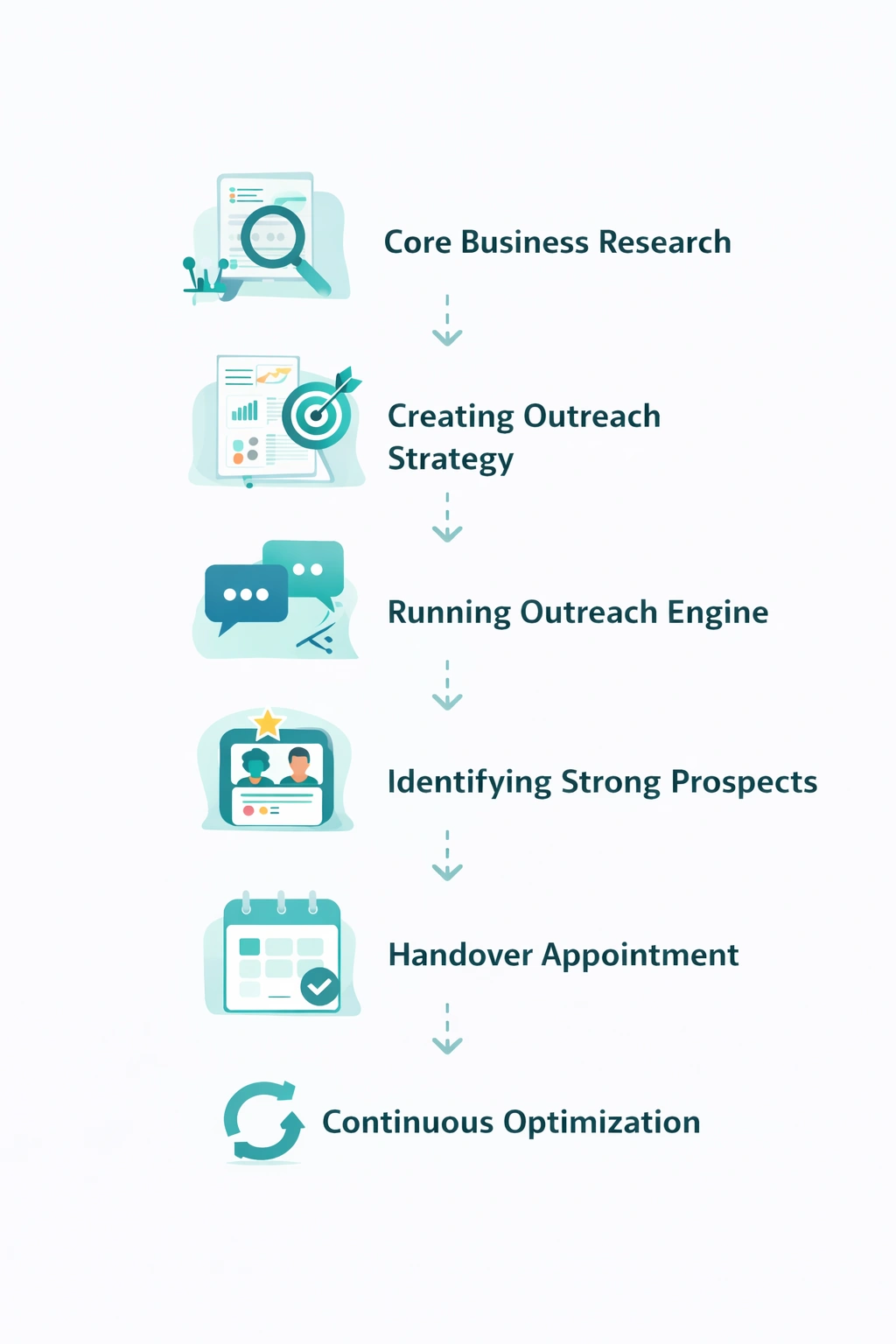
What happens after onboarding (operationally)
- ICP and targeting setup: we define your best-fit segment(s), regions, end markets, and the constraints that kill deals (freight radius, MOQs, lead times, certifications, materials/processes).
- Sales Navigator account universe: we build segmented account lists using the filter playbooks above, with hard exclusions to remove lookalikes (design agencies, distributors, non-manufacturing brands when you need converters).
- Decision-maker pods per account: we map Procurement/Sourcing + Packaging Engineering/Development + Ops/Supply Chain + Sustainability (when relevant), then verify scope by reading profiles (category ownership, plants supported, tenure, and change triggers).
- Signal-based prioritization: we score accounts by launches, sustainability commitments, expansions, hiring, and LinkedIn activity—plus we downgrade negative signals so your team stops chasing low-probability deals.
- AI-assisted personalization: we generate message angles tied to a real trigger (PCR conversion, mono-material shifts, lead-time risk, capacity constraints, compliance needs, redesign/rebrand) and align the angle to the role in the pod.
- Outreach execution + follow-up workflows: we run the sequences, handle follow-ups, and keep conversations moving without sounding like a template.
- Lead reply handling and nurturing: responses are categorized (fit, timing, routing, objections). Warm leads are nurtured with sensible touch points, not random “checking in.”
- Warm lead tracking + appointment support: warm conversations and booked meetings are tracked, and we help convert interest into qualified appointments your team actually wants to take.
- Campaign visibility + refinement: you get dashboards and iteration—filters, segments, messaging, and prioritization improve as we see what converts.
Outcome: a living pipeline built on capability-match and timing. Fewer dead quotes. More conversations with Packaging Engineering and the actual sourcing owner before it becomes a cost-down event.
Common questions from packaging teams
Can LinkedoJet find corrugated, flexible packaging, and label manufacturers specifically?
Yes. We build separate account universes by segment using industry + keyword stacks (e.g., corrugated/folding carton vs pouches/lamination vs pressure-sensitive/shrink sleeve), then segment output lists by region and capability so you’re not mixing incompatible deal types.
How do you avoid distributors, design agencies, and other lookalikes in Sales Navigator results?
We use a combination of exclusions (industries and keyword negatives like “graphic design” and “packaging design”), profile/company page cues (do they manufacture vs broker), and list hygiene rules. If you’re targeting converters, we also filter out brand-only accounts unless you explicitly want brand buyers.
Can I target regulated markets like food or pharma (GMP, BRCGS, SQF, ISO 9001)?
Yes—when it matches what you can actually support. We include certification and regulated-market keywords in the account build, then verify on company pages and leadership profiles. That way your outreach angle is credible (quality systems, documentation, validation expectations), not wishful.
How do you identify who owns packaging sourcing vs someone who only executes POs?
We don’t guess from the title. We read profiles for scope language (“own packaging category,” “supplier selection,” “strategic sourcing”), plants/regions supported, and cross-functional involvement with Packaging/Engineering. We then build pods so you’re not betting the deal on one person’s inbox.
What buying signals matter most for packaging (and which ones are noise)?
Best signals: launches/rebrands, sustainability commitments that name specific material changes, expansions/new lines, hiring Packaging Engineering or Quality/Regulatory, and decision-maker changes (0–18 months in role). Noise: generic “sustainability” posts with no spec implications, vague “innovation” updates, and mass hiring that’s clearly seasonal or unrelated to packaging.
See what your next 30–60 days of packaging outbound could look like
This isn’t a vague discovery call. We’ll show you how we build your account universe, verify buying-committee pods, and prioritize outreach using real LinkedIn intent signals—so your team spends time on conversations that can actually become revenue.
What LinkedoJet provides: ICP and targeting setup, Sales Navigator prospect list building, AI-assisted personalization, LinkedIn outreach execution, reply handling and lead nurturing, warm lead tracking, appointment generation support, and campaign visibility through dashboards—plus ongoing refinement as we learn what converts in your niche (corrugated, flexible, labels, thermoform, molded fiber, co-packers, and more).
How targeting and list building work: we create segmented account lists (by packaging type, end market, and region) with exclusions that remove lookalikes. Then we build decision-maker pods per account: Procurement/Sourcing, Packaging Engineering/Development, Ops/Supply Chain, and Sustainability when relevant—verified via profile reading (scope, plants supported, tenure, change history).
How personalization works: we use AI-assisted drafts grounded in specific triggers—launches, rebrands, PCR/mono-material shifts, capacity changes, compliance requirements, lead-time risk—then align the message to the person’s role (engineering credibility vs sourcing process vs ops risk).
How follow-up and nurturing works: we run structured sequences, handle replies, tag outcomes (fit/timing/routing/objection), and nurture warm leads until there’s a real next step—without turning your brand into spam.
How tracking works: warm leads, booked meetings, and segment performance are visible in dashboards so you can see which triggers and buyer roles are producing qualified appointments.
Why this is different from ordinary LinkedIn automation tools: tools send messages. LinkedoJet builds the targeting system, verifies who matters inside each account, ties outreach to buying signals, manages follow-up, and supports appointment generation—so the outbound engine keeps working even when your internal team is busy running the plant and quotes.
What you’ll receive after onboarding: segmented account lists, verified buying-committee pods with LinkedIn URLs, a prioritization score based on intent/hiring/activity signals, and trigger-based message angles—then ongoing execution and refinement.
Next step: replace guesswork with a packaging-ready outbound engine
Get a prioritized account list built around your capabilities and footprint, complete buying-committee pods, and message angles tied to real triggers—so you reach the right Packaging Engineering, Sourcing, and Ops stakeholders before the spec is locked.
From identifying the right decision-makers to starting meaningful conversations and turning them into qualified appointments... LinkedoJet manages the entire outbound engine for your business.