
How to find leads for luxury building material brands—without guessing who’s actually specifying
Luxury specs don’t get “won” by who has the biggest list. They get won by who shows up with the right context, in the right lane, at the right moment. This workflow shows how to find and prioritize architects/designers, developers, GC/precon, and dealer partners using LinkedIn + Sales Navigator signals like projects, hiring, launches, and real activity.
- Specifier + channel lead lanes (A&D, owner/developer, GC/precon, fabricators, dealers/showrooms)
- Account qualification + buying signals (luxury fit + project motion + reachability)
- Outreach-ready with context (signal tags + recommended opener angle, not a raw spreadsheet)
If you’ve ever walked a finished project and recognized your finish—under someone else’s brand—you already know the real pain. You weren’t “out-sold.” You were out-timed, or you were talking to the wrong person while the actual specifier made the call in a quieter room.
Why pipeline feels “busy” but revenue stays lumpy in specification-led selling
In luxury finishes, activity can look healthy while the outcome stays random. Reps have calls, samples go out, follow-ups happen… and the project still closes with a competitor, or the dealer pushes a different line because you didn’t earn mindshare early enough.
The hidden reason is simple: most teams treat lead gen like contact-finding. But specification-led selling is a decision-path and timing problem.
- The decision-makers aren’t obvious. The person posting project photos isn’t always the person writing the spec. The person approving budget isn’t the person controlling the finish schedule.
- The spec locks earlier than your CRM thinks. By the time procurement asks for “alternates,” the brand narrative is already set—sometimes months earlier.
- Luxury is a tight community. If your outreach reads like supplier spam, you don’t just lose a deal. You lose credibility with the design community and your dealer network.
- Non-luxury noise wastes weeks. Generic title searches pull in mass-market shops, production housing, and big-box channel folks who will never value what you sell.
LinkedIn has become the public activity layer where the early signals show up first: new hires, studio openings, developer announcements, precon ramp-ups, showroom moves, awards, press, and collection launches. The question isn’t “can you find people.” It’s whether you can spot who’s actually in motion and reachable right now.
Stop searching titles. Build lanes that match how specs and channel adoption really happen.
There isn’t one decision-maker. There are lanes—each with different control over spec, budget, install lock-in, and market reach. If your team mixes them into one sequence, you either sound irrelevant or you pitch too early.
- A&D specifiers (spec influence + brand standard)
Principal, Founding Principal, Managing Partner, Studio Director, Design Director, Project Architect, Senior Architect, Specification Writer / Specifier, Materials Librarian, Director of Interiors, Senior Interior Designer, FF&E Director, Procurement Manager, Purchasing Manager - Owners / Developers / Hospitality (budget + standards + approvals)
VP Development, Director of Development, Development Manager, Owner’s Rep, Project Executive, Project Director, Head of Design / Design Manager, Construction Manager - GC / CM / Precon (install reality + substitutions + schedule lock-in)
VP Preconstruction, Preconstruction Director/Manager, Estimating Director/Manager, Project Executive, Senior Project Manager, Construction Manager - Dealers / Showrooms / Distributors (coverage + advocacy + sell-through)
Owner, President, General Manager, Showroom Manager, Category Manager, Purchasing Manager, Vendor Relations, Business Development - Fabricators / Installers (stone/slabs/surfaces) (recommendations + field lock-in)
Owner, Operations Manager, Project Manager, Estimator, Fabrication Manager
Operator reality: the “right person” is often the one who says yes quietly. The spec writer who’s tired of vendor chaos. The FF&E lead who wants fewer warranty headaches. The precon lead who wants a clean substitution story. The showroom GM who wants a premium line that actually turns.
Sales Navigator build: filters that find luxury-fit accounts—and the people who can move a spec
This is the recipe we use when we build lane-based lead lists for luxury materials teams. You’re not trying to “cover the market.” You’re trying to find the few hundred accounts that match your price point and aesthetic, then identify the roles that drive the decision path.
- Pick one lane. Don’t mix A&D and dealer outreach. Different language, different value, different timing.
- Set geography by luxury metros. US: NYC, LA, SF Bay, Miami, Dallas, Houston, Chicago, Scottsdale/Phoenix, Seattle. Canada: Toronto, Vancouver. UK: London. UAE: Dubai/Abu Dhabi. (Then replicate for EU/GCC/APAC where you ship and support.)
- Choose industry per lane.
A&D: Architecture & Planning, Design, Interior Design
Owners: Real Estate, Commercial Real Estate, Hospitality
Construction: Construction, Civil Engineering
Dealer: Wholesale, Import and Export, Retail (specialty), Building Materials - Headcount bands that actually answer the phone.
A&D: 2–10, 11–50, 51–200 (often the sweet spot for principal access)
Dealers: 2–10, 11–50, 51–200
Developers/GC: 51–1000+ depending on project size - Seniority + function. Owner/Partner/CXO/VP/Director/Manager/Senior; then function (Sales, Purchasing, Ops, Program/Project Management, Engineering, Marketing) depending on lane.
- Keywords that expose spec responsibility. “specification”, “specifier”, “materials”, “FF&E”, “procurement”, “trade program”, “showroom”, “hospitality”, “multifamily”, “custom homes”, “high-end residential”, “luxury”, plus category terms like “tile”, “stone”, “slab”, “surfaces”, “kitchen”, “bath”.
- Spotlights to favor reachability. Posted on LinkedIn in past 30 days; Changed jobs in past 90 days; Mentioned in the news.
| Lane | Example Sales Navigator build (starting point) | What you’re screening for |
|---|---|---|
| A&D specifiers | Geography: London + NYC + LA Industry: Architecture & Planning, Interior Design Headcount: 11–50, 51–200 Seniority: Partner, Owner, Director, Senior Keywords: specification OR specifier OR materials librarian OR FF&E | Mentions of “specification”, “vendor selection”, “approved products”, hospitality/high-end residential portfolio cues |
| Dealers/showrooms | Geography: Miami + Dallas + Toronto Industry: Wholesale, Building Materials, Retail (specialty) Headcount: 2–10, 11–50 Titles/keywords: showroom, category manager, purchasing, vendor relations, kitchen & bath, tile, slabs | Showroom focus, premium brands carried, trade/client base, multi-location potential |
| Owners/developers | Geography: SF Bay + Dubai + Chicago Industry: Hospitality, Commercial Real Estate, Real Estate Seniority: VP, Director, Manager Titles: Development, Design Manager, Owner’s Rep, Project Director | Projects in motion, brand standards work, approvals influence, new asset launches |
Do not target (unless you have a very specific reason): mass-market “discount/warehouse/big box” signals, production housing portfolios, junior roles (intern/assistant) with no materials ownership, and generic “purchasing” at companies that don’t show premium projects or trade programs.
Buying signals to prioritize this week (so you’re not late to the spec)
Most teams contact prospects when they have time. Specs are won when you contact prospects when the project has urgency.
We prioritize weekly outreach based on signals that correlate with active decisions in luxury materials:
- Project signals: new hotel/resort announcements, luxury multifamily launches, flagship retail builds, “breaking ground” updates, project completion photos, “handover” posts, featured case studies.
- Product/brand signals: new collection launches, sustainability certifications (LEED/WELL content), press/features, awards, “now available” posts.
- Channel signals: showroom opening/renovation, dealer recruitment, new rep territories, trade program announcements, vendor onboarding language.
- Hiring signals: A&D hiring project architects/designers (workload), owners/GC hiring precon/estimating (awarded work), dealers hiring showroom/purchasing roles (category attention), brands hiring specification/A&D roles (territory buildout).
- LinkedIn activity signals: recent posting/commenting, event attendance posts (KBIS, Coverings, ICFF, Maison&Objet, Salone del Mobile, BDNY, HD Expo), portfolio shares, job-change announcements.
LinkedoJet tags each prospect with the relevant signal (project/hiring/news/activity) and routes them into the right lane sequence with a recommended opener angle: launch, project, showroom, award, or hiring. That’s how you stay brand-safe while still being direct.
The LinkedoJet Prospect Intelligence System: lane-based research → signal tags → an outreach-ready queue
LinkedoJet isn’t “set it and forget it” LinkedIn automation. For luxury materials, that’s how you burn reputation fast. We run an intelligence-first outbound engine that treats your premium positioning as an asset to protect.
- Define lanes + territories + luxury qualifiers. We set the metros, project types (hospitality, high-end residential, premium multifamily, flagship retail), and the exclusion rules (commodity/big-box noise).
- Build Sales Navigator searches and account lists. Separate lists for A&D, owners/developers, GC/precon, fabricators, dealers/showrooms—so messaging matches what they control.
- Enrich with prospect intelligence. We read profiles for responsibility cues (“specification”, “vendor selection”, “approved products”, “FF&E”, “preconstruction”, “trade program”). We capture portfolio/project context and channel fit.
- Signal-based prioritization. Each week, we move the accounts showing real motion to the top: project announcements, hiring, news mentions, active posting.
- Deliver outreach-ready lead lists + execution. You receive segmented lists with territory, project focus, signal tags, and a recommended opener angle. Then LinkedoJet runs AI-assisted personalization, executes LinkedIn outreach, handles replies, and nurtures follow-ups so warm leads don’t die in someone’s inbox.
You get visibility through dashboards: what’s being sent, who’s replying, which lanes are producing warm conversations, and which signals are correlating with meetings. Then we refine continuously—territories, filters, messaging angles—based on what the market actually responds to.
From contact-finding to timing + decision-path: build a segmented, signal-qualified pipeline
Once you see the lanes, you stop arguing internally about “who’s the decision-maker.” You start building predictable coverage: the specifiers who set taste, the owners who set standards, the precon teams who police risk, and the dealers who decide what gets put in front of designers every day.
The outcome isn’t more names. It’s fewer, better accounts—prioritized by project motion and reachability—so your team shows up early enough to matter, without sounding like every other supplier.
If you want, we’ll build your first segmented batch (A&D, owners, GC/precon, dealers) with luxury qualifiers and signal tags, then run the outreach with the right tone for a premium brand.
FAQ
Can LinkedoJet find architects and interior designers who actually write specs (not just “designers” with no vendor influence)?
Yes. We don’t rely on generic “Interior Designer” searches. We target responsibility indicators (specification/spec writer/materials librarian/FF&E/procurement) and validate influence by reading profiles for phrases like “vendor selection,” “approved products,” and “materials.” Then we keep A&D in a dedicated lane so the outreach matches how they evaluate finishes.
How do you separate luxury accounts from commodity and big-box noise before outreach starts?
We qualify at the account level before we ever message: portfolio cues (boutique hotel, resort, penthouse, custom homes, flagship retail), positioning language (“to the trade,” “contract,” “trade program”), brand adjacency (premium lines carried), and exclusion keywords (discount/warehouse/big box/mass market). If the account can’t credibly support your price point and design intent, it doesn’t enter the queue.
Can you help us grow dealer/showroom coverage in a new metro without diluting premium positioning?
That’s a common use case. We build a dealer/showroom lane by metro, screen for showroom model + premium brand mix, then prioritize by signals like showroom renovations, category hiring, vendor relations posts, and trade program activity. The messaging is partnership-oriented (sell-through, sampling, designer pull-through), not a generic “carry our line” pitch.
Which buying signals matter most for specification-led materials (and how do you tag them in the lead list)?
The signals that consistently correlate with near-term decisions are: active project posts (announcements/completions), hiring that indicates workload (A&D project roles, GC precon/estimating), news mentions, showroom moves, and high-frequency LinkedIn activity. We tag each lead with signal type (project/hiring/news/activity) and add a recommended opener angle so your team can be specific without being intrusive.
Does this work for tile/stone/slabs, engineered surfaces, luxury kitchen & bath, and architectural finishes?
Yes. The lanes remain the same; the qualifiers and keywords change. Stone/slabs often add a fabricator/installer lane for field lock-in. Kitchen & bath often leans heavier on showroom/category/purchasing roles. Architectural finishes can skew toward hospitality standards and owner design managers. We build the system around how your category actually gets specified and installed.
See exactly what your first signal-qualified lead batch looks like
This isn’t a vague “strategy chat.” In this session we’ll pressure-test your lanes, build the first Sales Navigator searches, and show you how we turn project and hiring signals into an outreach-ready queue—then we run the outreach and follow-up for you.
What LinkedoJet operationally provides: we set up ICP and targeting by lane, build Sales Navigator prospect lists, apply luxury-fit qualification, and layer in buying signals (projects, hiring, news, activity). Then we use AI-assisted personalization to write message openers that reference real context (a showroom move, a hospitality project, an award, a new spec hire) without sounding performative.
What happens after onboarding: we launch lane-specific campaigns (A&D, owners/developers, GC/precon, dealers/showrooms, and fabricators where relevant). LinkedoJet executes the LinkedIn outreach, handles reply routing, and runs lead nurturing and follow-up workflows so warm conversations don’t stall after the first response.
What you receive: segmented lead lists by lane with territory, project type focus, signal tags, and a recommended opener angle; campaign dashboards showing sends, replies, warm leads, and booked meetings; and ongoing refinement as we learn which signals and lanes are producing real specification conversations.
How targeting and list building works: we don’t buy lists. We build Sales Navigator searches by metro, industry, headcount, seniority/function, and spec-responsibility keywords, then validate luxury fit using portfolio cues and exclusion rules (commodity/big-box noise). We prioritize “reachable” prospects using Spotlights (posted recently, job changes, news mentions).
How warm leads and appointments are tracked: every positive reply is tagged to a lane and signal type, tracked through the nurture sequence, and supported through appointment generation so your team spends time on conversations with real momentum—not endless chasing.
Why this is different from ordinary LinkedIn automation tools: automation sends messages. LinkedoJet manages the targeting system, the qualification logic, the signal tagging, the personalization, the outreach execution, the follow-up, and the visibility—so premium positioning stays intact while pipeline becomes predictable.
Next step: get out of guessing mode
If you’re serious about winning more luxury specs and expanding dealer coverage, the fastest path is a lane-based, signal-qualified lead system—run consistently, with the right tone.
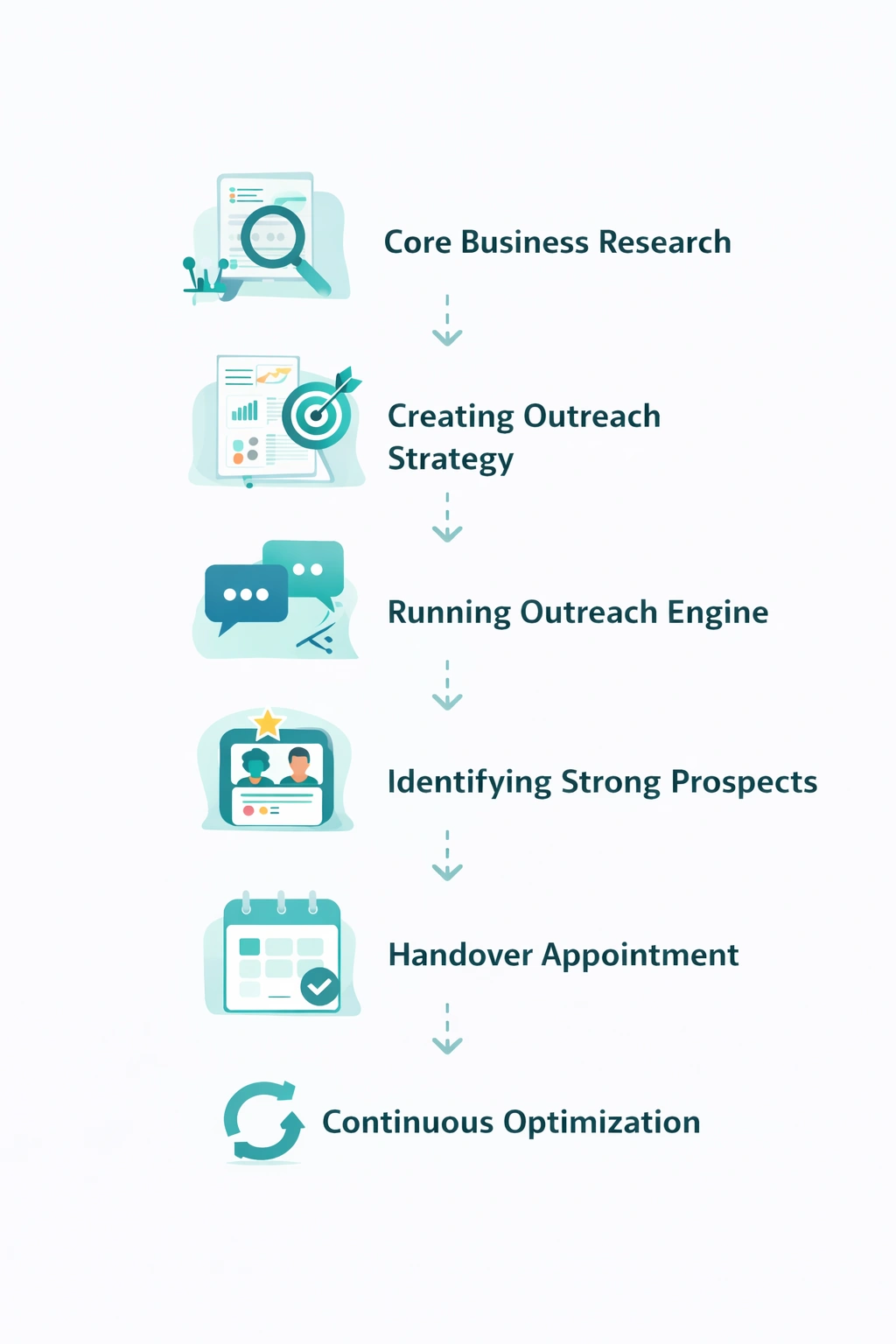
From identifying the right decision-makers to starting meaningful conversations and turning them into qualified appointments... LinkedoJet manages the entire outbound engine for your business.