
How to find leads for supply chain & logistics companies—without guessing who’s actually buying
Most teams aren’t being ignored because their offer is weak. They’re being ignored because they’re showing up in the wrong accounts, talking to the wrong role, at the wrong moment. LinkedoJet helps you build qualified logistics account lists, map the real buying committee, and spot timing signals on LinkedIn so outreach is anchored to what’s actually happening on the floor and in the network.
- Target the right segments: 3PLs/4PLs, forwarders/NVOCCs, warehousing & cold chain, last-mile, TL/LTL carriers, drayage & intermodal.
- Pull real decision-makers: Ops + Systems + Finance, filtered by seniority and scope (not “Logistics Coordinator” and hope).
- Prioritize accounts in motion: hiring, expansion, tech change (TMS/WMS, telematics, visibility, EDI/API), new lanes, new terminals.
Speak to our Experts Create my Roadmap to Success
What you’ll walk away with: a segmented prospect list, the title map that actually fits logistics org charts, and a priority order based on signals (not gut feel).
Why generic LinkedIn lead gen fails in logistics
Logistics is where “spray-and-pray” gets expensive fast. You can send 500 invites and still feel behind—because you just spent your best selling hours talking to people who can’t say yes.
Titles are messy. “Operations” might mean terminal ops, warehouse ops, transportation ops, or broker ops. “Logistics” might be shipper-side, not provider-side. And the same person can be a GM, a site lead, and the de facto COO depending on headcount.
Buying is committee-based. Even a mid-market 3PL deal pulls in Ops (service levels), Systems (TMS/WMS, EDI/API), and Finance (accessorials, billing, risk, working capital). If you message only a VP Ops, you often get polite interest and then silence when the systems owner or controller shows up late.
Timing decides everything. A 3PL not changing lanes, sites, customers, or systems has no reason to answer you. But the week they post for a Warehouse Systems Manager in Dallas, or the month they announce a new Savannah footprint, the internal pressure spikes—and relevant outreach gets through.
What good looks like is simple and ruthless: qualify accounts first, map the committee second, then only prioritize the ones showing change. Personalization stops being “Hey {FirstName}” and starts being “I see what you’re dealing with.”
Who to target: logistics segments + fit rules (and who to exclude)
Start by deciding what “fit” means operationally. Not industry labels—real-world footprint, service lines, and complexity. This is where most LinkedIn lists break: they’re built on a category, not a buying reality.
| Segment | Good fit looks like | What to scan for on LinkedIn |
|---|---|---|
| 3PL / 4PL providers | Multi-client warehousing, managed transportation, multi-site network | “Fulfillment”, “managed transportation”, “cross-dock”, hiring for WMS/TMS roles |
| Freight forwarders / NVOCC / customs | International volumes, compliance complexity, multi-office | “Ocean/Air”, “trade compliance”, “customs brokerage”, port-hub presence |
| Warehousing / fulfillment / cold chain | Throughput pressure, labor volatility, accuracy metrics | DC/warehouse openings, automation projects, inventory accuracy/returns talk |
| Carriers (TL/LTL), drayage, intermodal, last-mile | Fleet + network operations, safety/CSA focus, dispatch complexity | Hiring waves (drivers/dispatch), telematics/ELD tools, new terminals/lanes |
| Shipper-side supply chain (optional) | Manufacturing/retail distribution networks with multi-DC operations | OTIF, chargebacks, dock-to-stock, WMS/TMS modernization posts |
Account qualification checklist (use this before you ever save a lead)
- Size band: SMB (11–200) for owner/ops-led deals; mid-market (201–1000) for functional VPs; enterprise (1000+) for multi-stakeholder buying.
- Footprint: multi-site DCs, cross-dock network, terminals near port/rail hubs, temperature-controlled or hazmat capability (if relevant to your offer).
- Service lines: managed transportation, e-commerce fulfillment, returns, international forwarding, drayage/intermodal, dedicated fleet.
- Geo reality: filter by your delivery region; for forwarding/drayage, add port hubs (LA/Long Beach, NY/NJ, Savannah, Houston, Miami, Seattle/Tacoma, Vancouver; or Rotterdam/Hamburg/Antwerp if you sell into EU).
- Tech clues: TMS/WMS (Manhattan, Blue Yonder, SAP TM, Oracle OTM, MercuryGate, Descartes), telematics (Samsara, Geotab), visibility (project44, FourKites), EDI/API language in job posts.
Exclusions (save yourself weeks): owner-operator individuals (unless your ICP is micro), non-operating holdings, consumer gig delivery (unless relevant), staffing agencies (if not your buyer), tiny broker shops (1–5 employees) if you sell mid-market/enterprise.
Buying committee map: Ops + Supply Chain + IT/Systems + Finance (title variants that actually work)
If you treat a logistics company like a single-buyer org, you’ll keep getting “looks interesting” replies that never convert. The handoff always happens: Ops likes it, Systems has to integrate it, Finance asks what it does to cost/risk.
| Seat in the deal | What they care about | Titles that actually show up (variants) |
|---|---|---|
| Economic buyer | Service levels, margin pressure, claims, detention/demurrage exposure | COO, VP Operations, SVP Operations, Head of Operations, General Manager (Terminal/Depot/DC), Regional Operations Manager |
| Process owner | Day-to-day execution: throughput, dwell time, pick rate, OTIF | Director of Logistics, Director of Transportation, Transportation Manager, Fleet Manager, Director of Warehouse Operations, DC Manager, Head of Fulfillment |
| Technical owner | Systems, integrations, data quality, security, rollout risk | CIO, VP IT, Director of IT, Head of Systems, Director of Business Systems, Enterprise Applications Manager, TMS/WMS Product Owner, Digital Transformation Lead |
| Commercial / finance | Billing accuracy, working capital, risk, insurance, payment terms | CFO, VP Finance, Controller, Treasury Manager, Risk Manager |
SMB vs enterprise nuance: in an 11–200 headcount carrier or warehouse operator, the buyer may be Owner/President plus an Ops Manager and a “do-everything” IT lead. In 500+ headcount 3PLs and forwarders, the VP layer is real—and the systems owner often has veto power even when they’re not the loudest voice.
Micro-instruction that changes response rates: before saving a lead, verify provider-side vs shipper-side. Look at experience and keywords: “3PL”, “forwarding”, “brokerage”, “carrier”, “warehouse”, “distribution”. Messaging the wrong side of the market reads like you didn’t do the basics.
Sales Navigator filter recipes: three searches you can run today (and how to tighten/loosen)
Don’t hunt one profile at a time. Build three repeatable searches: accounts + leads, saved by segment. Then you can measure list quality, not just message volume.
A) “3PL & Warehousing Ops Leaders (Mid-Market)”
- Account industry: Logistics & Supply Chain; Warehousing
- Company headcount: 51–200 OR 201–500 OR 501–1000
- Geography: your service region(s)
- Account keywords: 3PL, fulfillment, warehousing, managed transportation, cross-dock
- Lead titles: VP Operations; Director of Warehouse Operations; Head of Fulfillment; DC Manager; Director Logistics
- Spotlights: Hiring on LinkedIn OR Job openings; Posted on LinkedIn in past 30 days
B) “Freight Forwarder / Customs Decision-Makers (International)”
- Account industry: Import and Export; Logistics & Supply Chain; Maritime (optionally Airlines/Aviation for cargo)
- Account keywords: freight forwarder, NVOCC, customs brokerage, trade compliance
- Lead titles: VP Global Forwarding; Head of Freight Forwarding; Director Operations; Director of Customs/Compliance; Licensed Customs Broker; Ocean/Air Freight Manager
- Geography: port hubs + target countries/metros
- Spotlights: Mentioned in news; Posted on LinkedIn in past 30 days
C) “Transportation & Fleet Ops (Carriers)”
- Account industry: Transportation/Trucking/Railroad (add Package/Freight Delivery for parcel/last-mile)
- Company headcount: 11–50 OR 51–200 (adjust to your ICP)
- Lead titles: VP Operations; Director of Transportation; Transportation Manager; Fleet Manager; Director of Fleet; Head of Linehaul; Dispatch Manager (common in SMB carriers)
- Spotlights: Hiring on LinkedIn; Posted on LinkedIn in past 30 days
Tighten / loosen rules (so you can control list quality)
- To loosen: widen seniority (Manager + Director), add function filters (Operations, Supply Chain, IT, Finance), include title Boolean like (logistics OR transportation OR warehouse OR fulfillment OR forwarding OR customs) AND (director OR vp OR head OR manager OR chief).
- To tighten: add account keywords tied to footprint (cold storage, intermodal, drayage), require headcount growth (past 6 months/1 year), focus on years in role 0–2 (new leader) or 3–10 (stable operator), and keep “Posted in last 30 days” on to avoid dead profiles.
Speak to our Experts Create my Roadmap to Success
What you get with LinkedoJet: we build and QA these searches with your segment rules, then turn them into saved account lists + saved lead lists your team can run every week—without list rot.
Prioritization: buying signals that show a logistics org is “in motion”
Logistics teams don’t buy because they “feel like it.” They buy when the network forces the issue—new volume, new sites, new systems, new risk. Your LinkedIn qualification should treat that as the main filter, not a nice-to-have.
1) Hiring signals (the easiest to spot)
- Hiring a Warehouse Systems Manager, TMS/WMS analyst, EDI/API integrations, Solutions Architect → systems and process change is active.
- Hiring waves of warehouse associates or drivers → volume growth, safety/retention pressure, cash flow and claims exposure tends to rise.
- Posts mentioning opening, launching, greenfield, new DC, new terminal → operational ramp and vendor decisions happen fast.
2) Expansion signals (network change)
- New lanes, new mode (air/ocean), new service line (last-mile, returns, cold chain).
- M&A integration: “excited to welcome…” is often followed by weeks of system consolidation and KPI firefighting.
- Port/terminal footprint changes (Savannah/Houston/NY-NJ ramps) that alter dwell time and appointment scheduling pressure.
3) Tech change signals (where budgets hide)
- Posts/jobs referencing Manhattan, Blue Yonder, SAP TM, Oracle OTM, MercuryGate, Descartes → modernization or re-implementation.
- Telematics and ELD chatter (Samsara/Geotab) → safety, routing, detention, and fuel controls are on the table.
- Visibility and exception management (project44/FourKites) → customer pressure on OTIF and “where’s my shipment?” escalations.
- Cybersecurity initiatives after incidents in the sector → urgency rises quickly, but trust is the gating factor.
4) Commercial triggers (the “we have to deliver now” moments)
- New contracts, partnership announcements, RFP mentions, customer logo posts.
- Leadership posts about growth targets while simultaneously talking about claims, labor constraints, or accessorial costs.
LinkedIn activity signals checklist (quick scan before outreach)
- Mentions of OTIF, detention/demurrage, claims, inventory accuracy, dock-to-stock, pick/pack productivity, returns, chargebacks.
- Engagement with TMS/WMS, telematics, yard management, slotting, routing optimization content.
- Role change into VP Ops / Director Logistics in the last 0–2 years (new leader = new mandate).
LinkedoJet workflow: turn LinkedIn intelligence into compliant, precise outreach (with a real personalization example)
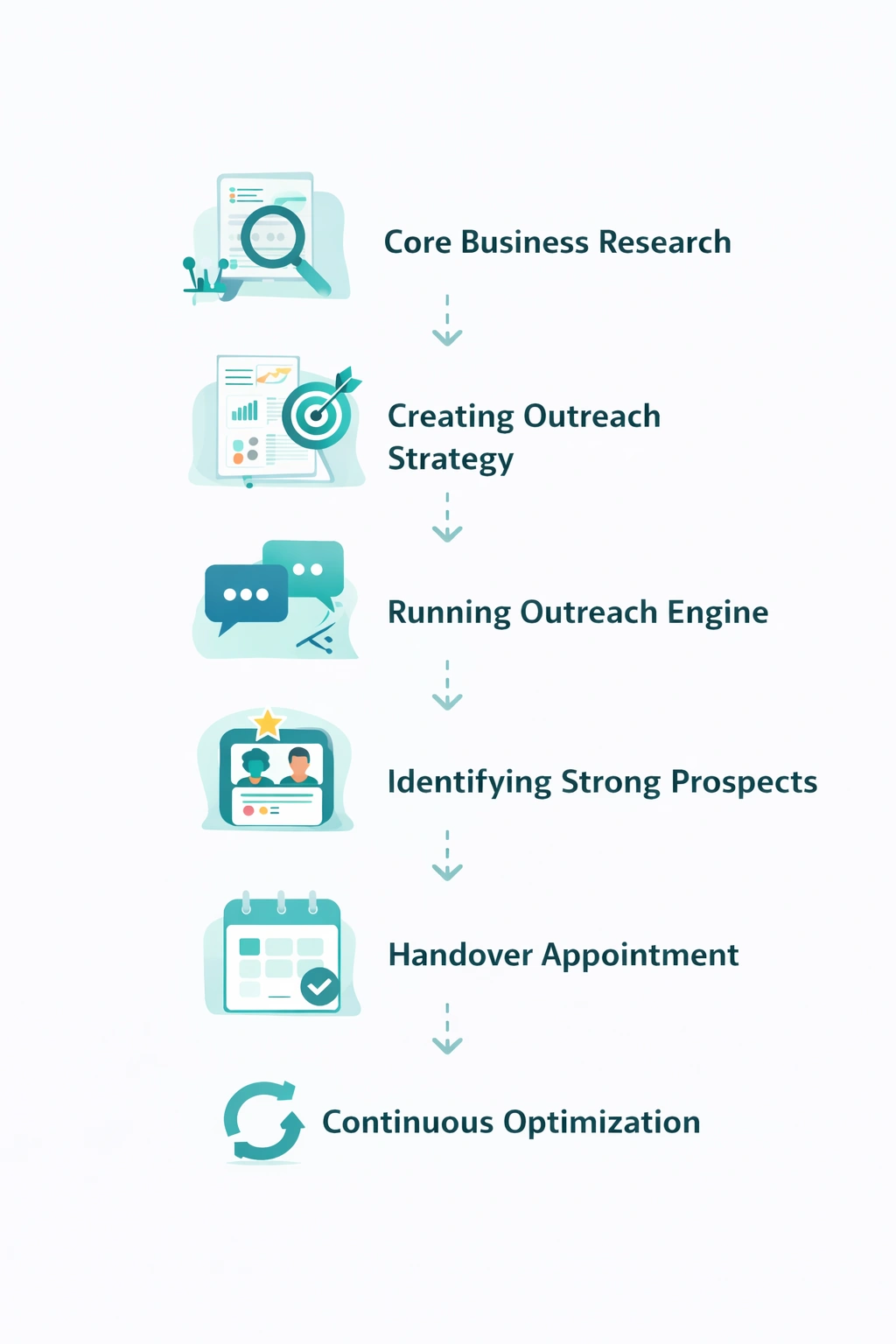
LinkedoJet isn’t “a tool that sends messages.” It’s an outbound operating system: targeting rules, list building, AI-assisted personalization, outreach execution, reply handling, follow-up, and visibility—so your team stops guessing and starts running a repeatable motion.
A 5-step system that fits logistics reality
- Define segments + qualification rules: what’s in/out by footprint, service lines, size band, geo hubs, and tech clues.
- Build account lists in Sales Navigator: saved accounts by segment + region (e.g., “Cold chain 3PLs, Southeast” or “Drayage near NY/NJ + Savannah”).
- Map the buying committee: saved leads by role cluster—Ops, Supply Chain, IT/Systems, Finance—so you can run multi-threaded outreach without spamming.
- Attach timing signals + notes: hiring, expansion, tech change, leadership moves; plus a short operator note from profile reading (metrics language, scope, facility count, modes).
- Launch targeted outreach and nurture: sequences that reflect the signal, handle replies, and follow up like a professional (not a bot). Warm leads and booked meetings are tracked end-to-end.
Personalization example (credible, fast, and tied to a trigger)
Signal: the company is hiring a Warehouse Systems Manager in Dallas and posted about peak season staffing.
Message angle (Ops + Systems aware): “Saw you’re hiring a Warehouse Systems Manager in Dallas. In my experience, that’s usually a sign you’re either tightening WMS processes or preparing for a throughput shift. If detention and appointment variance are creeping up as volume ramps, we’ve helped teams cut exception handling time by tightening the workflow between warehouse execution and carrier/visibility tools. Worth comparing notes?”
That’s not “personalization theater.” It’s one real observation, connected to one real operational consequence.
What LinkedoJet manages after onboarding: we set up your ICP and targeting system, build and maintain Sales Navigator lists, generate AI-assisted personalization based on real signals, execute LinkedIn outreach, handle replies and lead nurturing, track warm leads and appointments in dashboards, and refine the campaign weekly based on response quality and booked conversations.
Speak to our Experts Create my Roadmap to Success
Close: You don’t need more activity. You need fewer, better conversations—started earlier in the change window, with the full committee in view.
FAQ
Which logistics segments does this work best for: 3PLs, freight forwarders, carriers, or warehousing/cold chain?
All of them, but the targeting rules change. 3PLs/warehousing respond well to facility and systems signals (WMS hires, new DC launches, automation projects). Forwarders respond to trade/compliance and network expansion signals (new offices, new lanes, port-hub hiring). Carriers respond to fleet/dispatch signals (driver hiring waves, safety/CSA focus, telematics changes). Cold chain adds a footprint qualifier (temperature-controlled network) and tends to have sharper pain around claims and service levels.
How do we avoid wasting cycles on dispatchers, brokers, and coordinators who can’t buy?
Two moves: (1) lock seniority and scope (CXO/VP/Director; Manager only when you’re selling SMB carriers), and (2) map the committee so you’re not betting everything on one title. Also read the profile for scope language: “regional”, “multi-site”, “network”, “P&L”, “enterprise applications”, “TMS/WMS owner”. A dispatcher can be influential in a 30-truck carrier, but they’re rarely the budget holder in a 500-person operation.
Which Sales Navigator filters matter most for logistics decision makers and account qualification?
Start with account headcount, industry + keywords (3PL/forwarding/drayage/cold storage), geography, and headcount growth. On the lead side: current title + function + seniority, years in role (0–2 for new leader triggers), and “posted in last 30 days” to avoid dead profiles. Spotlights like “hiring” and “mentioned in news” are underrated because they correlate with internal change.
What are the strongest timing signals in logistics for TMS/WMS, telematics, payments, insurance, or consulting offers?
Look for hiring tied to systems and change (TMS/WMS analyst, EDI/API, business systems), new facility/terminal launches, M&A integration, and posts about OTIF, detention/demurrage, claims, or labor instability. For payments/factoring/insurance, watch for growth plus margin pressure language, rapid hiring, and mentions of accessorial exposure or claims spikes. For consulting, new leadership and “continuous improvement / network optimization” language is often the entry point.
How do you personalize outreach without spending hours per lead—while still sounding credible to ops leaders?
Don’t personalize “facts.” Personalize the reason now. One signal + one operational consequence is enough: a WMS hire, a new terminal, a spike in driver recruiting, a post about detention or inventory accuracy. LinkedoJet uses AI-assisted personalization to draft message variants from those signals, then keeps the structure consistent so your outreach stays readable, compliant, and fast to review.
See your logistics targeting system built the right way (then we run it for you)
This isn’t a vague “strategy chat.” If you’re selling into 3PLs, forwarders, carriers, or warehousing/cold chain, we’ll show you exactly how we build the account lists, map the buying committee, and turn hiring/expansion/tech-change signals into outreach that gets read—and replied to.
On the session, we’ll pressure-test your current LinkedIn motion against logistics reality: messy titles, committee buying, and timing windows (new DC, new lanes, TMS/WMS change, port-hub expansion, labor ramps).
Then we’ll walk you through what LinkedoJet operationally provides:
- ICP and targeting setup: segment rules (3PL vs forwarder vs carrier), size bands, geo hubs, footprint qualifiers, and tech clues.
- Sales Navigator list building: saved account lists by segment + region, plus saved lead lists by committee seat (Ops, Supply Chain, IT/Systems, Finance).
- AI-assisted personalization: messages drafted from real LinkedIn signals (hiring, expansion, tech change, commercial triggers) so you sound like you’ve done the homework—without spending 30 minutes per contact.
- Outreach execution: connection + follow-up workflows run with guardrails, pacing, and audience-specific angles (detention/demurrage, OTIF, claims, labor, integration risk).
- Reply handling + lead nurturing: we manage responses, route opportunities, and run follow-ups so warm interest doesn’t die in someone’s inbox.
- Warm lead + appointment tracking: dashboards that show list health, response quality, warm leads, and booked meetings—so leadership gets visibility beyond “we sent messages.”
- Ongoing refinement: weekly adjustments to targeting, messaging angles, and sequences based on what the market is actually reacting to.
What happens after onboarding: we implement the targeting system, build the prospect lists, launch campaigns, and keep the engine running—so your team isn’t stuck rebuilding lists every month or guessing which titles matter.
Why this is different from ordinary LinkedIn automation tools: tools send messages. LinkedoJet runs the operating cadence—qualification, committee mapping, signal-based personalization, execution, nurturing, and tracking—so you can produce conversations you’d actually want your brand attached to.
From identifying the right decision-makers to starting meaningful conversations and turning them into qualified appointments... LinkedoJet manages the entire outbound engine for your business.
Next step: stop guessing, start qualifying logistics accounts with signals
If your LinkedIn activity is high but replies are low, the fix usually isn’t more volume. It’s better account rules, a real committee map, and outreach timed to change (hiring, expansion, systems work). That’s the engine LinkedoJet builds and then runs with you.