
How to find leads for industrial automation companies—on LinkedIn, with real buying signals
Stop collecting “manufacturing contacts.” Start finding plants entering an automation window, map the buying committee, and prioritize outreach by hiring, expansion, and modernization signals—then run it as a repeatable outbound engine with LinkedoJet.
- Find plants investing in controls, robotics, MES, OT networking, and safety
- Map Ops + Engineering + IT/OT + Procurement (who shapes spec vs who approves spend)
- Prioritize by hiring and modernization signals before the RFP shows up
Here’s the uncomfortable truth: if your outbound “works” but revenue doesn’t move, you’re probably selling to the wrong layer of the factory. Automation deals rarely start as “we need a new PLC vendor.” They start as a trigger—line expansion, chronic downtime, a safety push, an OT security mandate, an MES program, a new plant leader hired to fix throughput.
When you miss the trigger, you only find out later—after demos, site calls, and scoping—when the plant says “not this year,” procurement goes dark, or the spec was already influenced.
Why industrial automation lead gen fails: wrong layer, wrong timing, wasted cycles
You can have a full calendar and still be losing. The failure mode is subtle: the team talks to helpful engineers, corporate people who don’t own the plant project, or accounts that simply aren’t in a modernization cycle.
And because sales cycles are long, targeting mistakes don’t punish you quickly. They punish you in 90–180 days—right when you needed that quarter to hit.
- Broad manufacturing lists create “nice conversations” that never become funded capex.
- Wrong titles: you get responsiveness from Controls Engineers, but no sponsorship for a PLC/SCADA refresh, MES rollout, or robotics cell.
- Plant vs corporate mismatch: the project sits at site level, but you’re stuck in corporate standards—or the opposite.
- Integrator vs OEM vs end user confusion: you chase channel motion when the plant is buying direct (or you pitch end users when the OEM spec drives everything).
- Generic outreach ignores what actually moves deals: OEE targets, downtime costs, commissioning risk, safety/compliance, cybersecurity pressure.
List-based lead gen treats LinkedIn like a contact database. Industrial automation outbound works when you treat LinkedIn like plant/project intelligence.
Define your target universe: end buyers vs partners (with qualifiers and exclusions)
The goal isn’t “more accounts.” It’s a tight universe you can monitor weekly for signals. If your list is too wide, your signal-to-noise collapses and the team stops trusting outbound.
| Segment | Who they are | What you’re really hunting for |
|---|---|---|
| Manufacturers & plants (end buyers) | Discrete (automotive/tier, electronics, machinery), process (food & beverage, pharma, chemicals), packaging, warehouse/logistics, energy/utilities, pulp/paper | Modernization windows: PLC/SCADA lifecycle, MES/IIoT programs, robotics/vision throughput projects, safety upgrades, OT network/segmentation, commissioning/ramp-up |
| Partners (channel) | System integrators, panel shops (UL 508A), OEM machine builders, industrial services/MRO firms | Partners scaling delivery: project backlog, hiring controls talent, standardizing platforms (Ignition/WinCC/AVEVA, Rockwell/Siemens), expanding vertical coverage |
Company qualifiers (make them explicit)
- Geo: North America + UK/EU (exclude out-of-coverage regions so you don’t burn reps on “not in territory”).
- Size: prioritize 50–5,000 employees for mid-market; include 5,000+ only if you can survive enterprise cycles; exclude <20 unless you serve niche OEMs.
- Multi-site preference: look for language like “multiple plants,” “regional manufacturing,” “global operations,” or obvious facility footprint.
- Stack hints (fit signals): Rockwell/Allen-Bradley, Siemens, Schneider; Ignition, WinCC, Wonderware/AVEVA; Tulip, Sepasoft, SAP ME; OPC UA, MQTT, Kepware; Fanuc/ABB/KUKA/UR; Cognex/Keyence; Nozomi/Claroty.
Exclusions (save months)
- Layoffs, plant closures, “no capex” language, hiring freeze signals.
- Very small job shops that can’t fund meaningful projects (unless you explicitly sell SMB).
- Consulting-only firms with no delivery capability (for end-buyer targeting).
- Accounts publicly locked into long-term exclusivity where your offer can’t attach (unless you sell complementary scope).
Map the committee: who shapes the spec vs who releases the money
Automation is a committee sport. Your outreach fails when you treat it like a single-title sale. Most plants have a split brain: site urgency + corporate standards + IT/OT risk + procurement process. If you only speak to one node, the deal stalls.
| Cluster | Common titles to target | What they care about (real talk tracks) |
|---|---|---|
| Economic sponsor | Plant Manager, General Manager (Plant), Director/VP Operations, VP Manufacturing, Head of Continuous Improvement, VP Engineering | OEE, throughput, labor constraints, cost of downtime, risk of missing customer demand, commissioning/ramp-up risk |
| Technical specifier | Controls/Automation Engineering Manager, Lead Controls Engineer, SCADA Manager, Manufacturing Systems Manager, MES Manager, Electrical Engineering Manager | Architecture, standards, lifecycle, integration pain, validation/traceability, migration path, supportability, change control |
| Reliability & maintenance | Maintenance Manager, Reliability Manager, Reliability Engineer | MTBF/MTTR, preventive vs predictive, spare parts, alarm rationalization, root cause, chronic downtime, safety interlocks reliability |
| IT/OT & security | Director of IT, IT Manager (Manufacturing), OT Manager, OT Cybersecurity Manager, Network/Infrastructure Manager (Industrial), Digital Transformation Leader | Segmentation, remote access, patching, asset visibility, vendor access control, historian/data pipeline, cyber risk, compliance evidence |
| Commercial | Procurement Manager (CapEx/MRO), Strategic Sourcing Manager, Category Manager (Automation/Controls), Supply Chain Manager | Total cost, lead times, approved vendor list, contract terms, service SLAs, risk transfer, bid process |
Create my Roadmap to Success if you want a sample role map (by vertical) plus the exact title filters we use to avoid junior contacts while still monitoring hiring.
Sales Navigator recipes you can copy (saved searches + weekly refresh)
Most teams “use” Sales Navigator, but they don’t operationalize it. The win is saved searches that refresh weekly, so intent signals surface automatically instead of being discovered by accident.
A) Manufacturers with active automation hiring (strong early signal)
- Account filters: Geography (NA/UK/EU), Industry (Manufacturing + sub-verticals), Company headcount (50–5,000), Keywords: plant, factory, facility, operations, automation, controls, PLC, SCADA, MES, IIoT, robotics.
- Account spotlights: Job openings, Headcount growth, Posted on LinkedIn in past 30 days.
- Lead filters: Functions (Operations, Engineering, IT, Procurement, Project Mgmt), Seniority (Manager/Director/VP + Senior/Lead for specifiers), Posted in past 30 days.
- Lead titles (starter set): Plant Manager; Director/VP Operations; Controls/Automation Engineering Manager; SCADA Manager; Manufacturing Systems/MES Manager; Maintenance/Reliability Manager; OT Manager; IT Manager (Manufacturing); Procurement Manager (CapEx/MRO).
B) MES/SCADA/IIoT modernization targets (program signal)
- Account keywords: MES, historian, SCADA, Ignition, WinCC, Wonderware, AVEVA, digital transformation, Industry 4.0, connected worker, IIoT, OPC UA, MQTT, Kepware.
- Lead titles: Manufacturing Systems Manager, MES Manager, OT Manager, SCADA Manager, Digital Transformation Leader, Network/Infrastructure Manager (Industrial).
- Lead keywords: Ignition rollout, MES deployment, historian, OT network, cybersecurity, ISA/IEC 62443.
C) Robotics/packaging line throughput targets (capacity signal)
- Account industries: Food & beverage, packaging & containers, consumer goods, logistics/warehousing.
- Account keywords: packaging line, palletizing, robotics, vision inspection, end-of-line, case packing.
- Lead titles: Engineering Manager, Operations Director, Continuous Improvement Manager, Plant Manager, Maintenance Manager.
Save each search. Review weekly. Track which accounts moved from “quiet” to “something’s happening.” LinkedoJet bakes this into a cadence so it doesn’t depend on a rep’s memory.
Intent signals that predict funded projects: spot, score, and turn signals into talk tracks
RFPs show up late. The earlier signals show up in hiring, leadership changes, commissioning language, and what Ops posts when they’re under pressure.
Signal checklist (what to watch)
- Hiring signals (strong): Controls Engineer, Automation Engineer, SCADA/MES Engineer, Reliability Engineer, Robotics Engineer, OT/IT Engineer, Capital Projects Manager, Plant Project Engineer.
- Expansion/capex signals: “new line,” “ramp-up,” “commissioning,” “start-up,” “facility upgrade,” “greenfield/brownfield,” new product launch requiring capacity.
- Performance pain signals: posts/comments about downtime, scrap/yield, changeover reduction, OEE targets, throughput bottlenecks, maintenance backlog.
- Compliance/safety signals: safety upgrades, audit language (GMP/FDA in pharma/food), incident reduction, LOTO, functional safety mentions.
- Digital/OT security signals: segmentation, remote access, asset inventory, “OT cybersecurity program,” ISA/IEC 62443, Nozomi/Claroty-type conversations.
A simple scoring model (keeps you honest)
| Score | What you saw | What you do next |
|---|---|---|
| 3 (hot) | Commissioning/ramp-up language + automation hiring + active Ops posting | Sequence to Ops + specifier + IT/OT within 48 hours; reference the trigger and reduce commissioning/downtime risk |
| 2 (warm) | New plant leader/automation manager + headcount growth or modernization keywords | Start with plant-level sponsor and technical lead; ask one tight question tied to OEE/downtime and standards |
| 1 (watch) | General Industry 4.0 interest, sporadic engagement, no hiring | Add to watchlist; nurture monthly with relevant proof points and check for movement |
| 0 (avoid) | Layoffs/closures, “no capex,” leadership churn without investment signals | Pause outreach; keep minimal monitoring only |
Turning a signal into a message that doesn’t sound like a template
- Hiring → “Saw you’re hiring controls/OT. Is that backfill, or tied to a line expansion / lifecycle refresh? If it’s the latter, we usually help reduce commissioning surprises and unplanned downtime in the first 60–90 days.”
- Modernization language → “When sites move from ‘we should’ to ‘we must’ on MES/SCADA, the hidden risk is data integrity + change control. Who owns that internally—manufacturing systems or IT?”
- Downtime/OEE posts → “If the bottleneck is chronic stops, we can often quantify the top 3 causes quickly and attach automation scope to the business case. Is this a single line issue or multiple facilities?”
LinkedoJet runs this as a weekly routine: detect signals, score accounts, generate role-specific angles, then execute outreach and follow-up so your team isn’t guessing where to spend time.
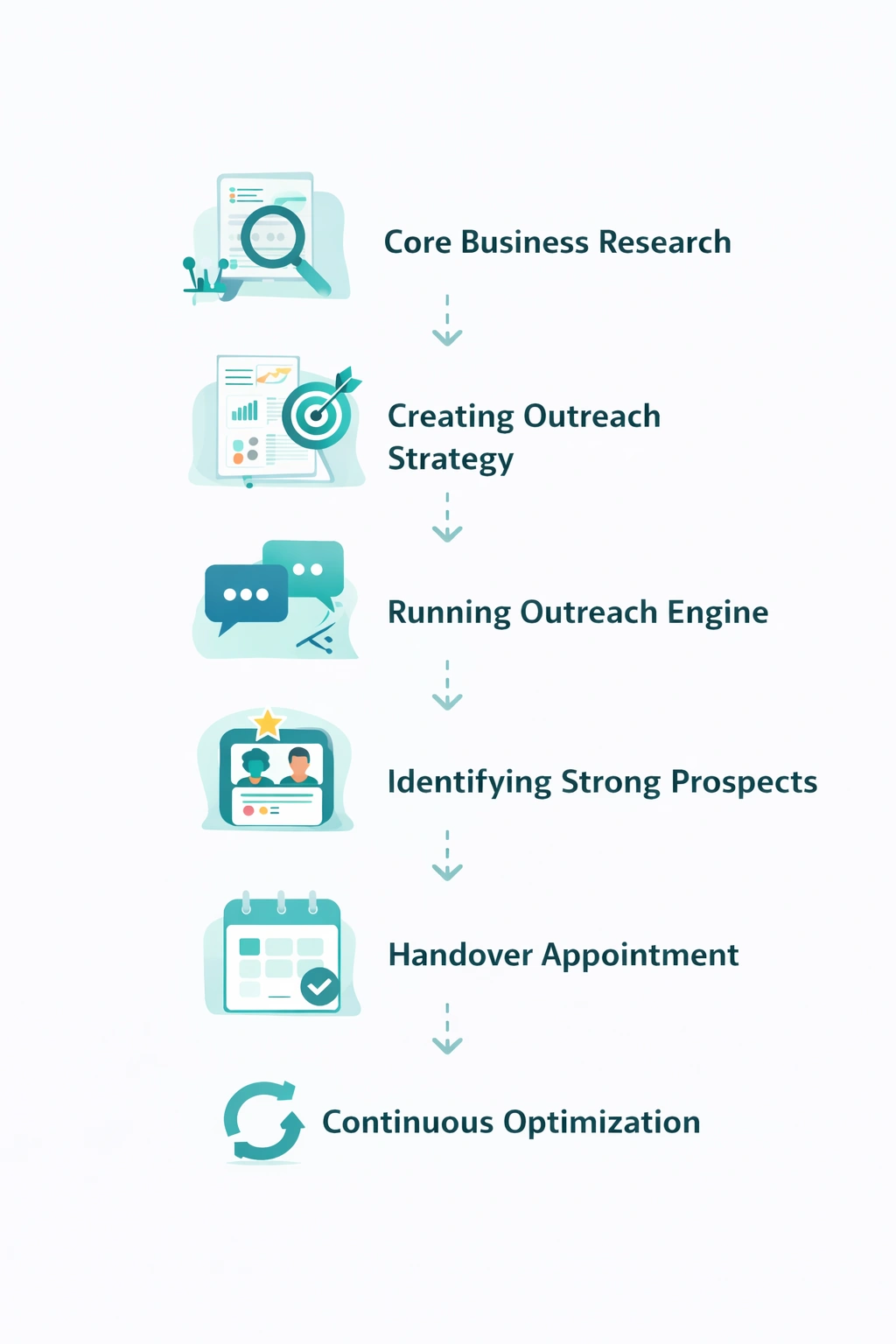
The LinkedoJet system: repeatable plant/project intelligence → role-based sequences → tracked appointments
LinkedoJet is not “LinkedIn automation.” It’s an outbound operating system for industrial automation sellers who need timing, authority, and project relevance—not more activity.
The 5-step system we run with you
- Build your target universe: end buyers (plants/manufacturers) and/or partners (SIs, panel shops, OEMs) segmented by vertical, size, and geography.
- Map the buying committee per account: Ops sponsor, technical specifier (controls/MES/SCADA), reliability, IT/OT security, procurement.
- Verify fit by profile-reading: site vs corporate scope, tenure (0–2 years is often a change window), and stack hints (Rockwell/Siemens, Ignition/AVEVA, OPC UA/MQTT, etc.).
- Intent-score weekly: hiring + expansion/commissioning language + modernization content + engagement signals; filter out negative signals (closures, freezes, “no capex”).
- Launch role-specific sequences: messaging tied to OEE/downtime, commissioning risk, safety/compliance, cybersecurity, and total cost—then handle replies, follow-ups, and meeting conversion.
You get visibility, not mystery: account lists, lead lists by role, signal notes, outreach activity, replies, and booked meetings tracked in a dashboard so you can see what’s working and where deals are getting stuck.
FAQ
Can you target specific manufacturing verticals (food & beverage, pharma, automotive, chemicals, packaging)?
Yes. We build separate account universes per vertical because the triggers and language differ. Pharma/food often centers on validation, traceability, and audit pressure; automotive and tier suppliers skew toward throughput, downtime, and launch ramps; chemicals and process industries bring safety and reliability into every scope. Targeting and messaging change accordingly.
How do you separate plant-level decision makers from corporate standards teams in Sales Navigator?
We look for scope clues in titles and profiles: “Plant,” “Facility,” “Site,” “Operations Manager (Plant)” vs “Global/Corporate/Standards.” We also use years-in-role (new plant leaders often drive initiatives), location alignment (lead location near the facility), and profile language like “multi-site,” “global manufacturing,” or “enterprise standards.” Then we intentionally sequence both layers when the account size suggests hybrid decision-making.
Can you find active automation projects without RFP access?
Most of the time, yes—earlier than RFPs. Hiring (controls/MES/OT), commissioning language, headcount growth, and modernization content typically appear weeks or months before a formal bid. We treat those as intent signals, score them weekly, and connect outreach to the trigger (downtime/OEE, compliance, cybersecurity, ramp-up risk) instead of sending generic “what are your priorities?” messages.
Do you support selling to system integrators, panel shops, and OEM machine builders as channel/partners?
Yes. The targeting and committee map changes: you’ll often prioritize VP Engineering, Director of Projects, Project Managers, Estimating, and Solutions Architects. Signals also shift—project backlog, hiring for controls/UL panel build, new vertical focus, or standardizing on platforms like Ignition/Rockwell/Siemens.
How do you avoid junior engineers, recruiters, and other non-budget holders while still monitoring hiring signals?
We separate signal monitoring from outreach targets. Hiring listings can tell you a project is forming, but we route outreach toward managers/directors (Ops, Automation, Maintenance/Reliability, IT/OT, Procurement). We also apply exclusion title lists (students, recruiters/TA, job seekers, competitor sales, generic lead gen consultants) while keeping hiring data as an account-level trigger.
See what your next 25–50 automation targets look like (with signals and the full committee)
This isn’t a “strategy chat.” It’s a working session to show you how we build a plant/account universe, detect buying signals, and run outreach that produces qualified appointments—without betting the quarter on guesswork.
What LinkedoJet operationally provides: we set up your ICP and targeting system, build Sales Navigator account and lead lists, apply intent scoring, write AI-assisted personalization that still sounds human, execute LinkedIn outreach, handle replies and follow-ups, track warm leads, and support appointment generation.
How targeting and list building works: we segment end buyers (manufacturers/plants) and/or partners (SIs/OEMs), then build a tight universe by vertical, size (typically 50–5,000 employees), geography (North America/UK/EU), and stack cues (Rockwell/Siemens, Ignition/AVEVA, MES/historian, OPC UA/MQTT, robotics/vision).
How AI-assisted personalization is used: we don’t blast “Hi {FirstName}.” We use AI to draft first-pass personalization from real signals (hiring, commissioning, modernization posts), then we apply operator review so the message ties back to plant outcomes like OEE, downtime, safety, commissioning risk, and OT security exposure.
How lead nurturing and follow-up works: replies are triaged, warm leads are tagged by role and project theme, and follow-up sequences run based on the buying motion (site urgency vs corporate standards vs procurement timing). You don’t lose deals because someone forgot to circle back after the first “not this quarter.”
How warm leads and appointments are tracked: you get campaign visibility through dashboards—accounts contacted, roles covered, signals captured, conversations started, warm leads in motion, and meetings booked—plus ongoing refinement based on what’s converting.
Why this is different from ordinary LinkedIn automation tools: tools send messages. LinkedoJet runs the system: targeting + intent + committee mapping + messaging + execution + reply handling + follow-up + reporting. The point is fewer accounts, better timing, and meetings that have a real project behind them.
Next step: turn LinkedIn into a project radar, not a contact list
If you want a steadier flow of qualified conversations in industrial automation, you need three things working together: a tight plant/account universe, a mapped committee, and a weekly intent refresh that tells you who to contact and why now.
From identifying the right decision-makers to starting meaningful conversations and turning them into qualified appointments... LinkedoJet manages the entire outbound engine for your business.