
How to find leads for HRMS / HR Tech companies
A repeatable LinkedIn + Sales Navigator prospect intelligence system to surface the right accounts, the real buying group (HR + Finance + Ops + IT), and the moments when HR systems actually change.
Your pipeline isn’t thin because your team “isn’t working hard enough.” It’s thin because your best hours are being spent on the wrong accounts, the wrong stakeholders, and the wrong timing.
HR tech deals don’t start when someone asks for a demo. They start when payroll goes multi-state, when shift complexity breaks scheduling, when a new CHRO inherits a mess, or when a People Systems leader gets hired to clean house.
- Find accounts with HRIS change triggers (new People Systems hires, “Workday/UKG admin” roles, transformation PMs)
- Map the actual buying group: CHRO/CPO + HR Ops/HRIS + Payroll + Finance + Ops + IT/Security/Procurement
- Prioritize prospects who are active on LinkedIn (and therefore reachable without five follow-up emails)
- Qualify by workforce complexity (multi-location, shift-based, union, seasonal surge)
- Build separate lists per module (HCM/HRIS vs payroll vs WFM vs benefits vs talent) so your message matches the buyer and the moment
Why HR tech prospecting breaks (and what it costs your pipeline)
When SDRs tell you they’re doing “everything right” (Sales Navigator, sequences, personalization) but meetings still feel random, that’s not a messaging problem. It’s an intelligence problem.
The waste is subtle at first. AEs recycle the same HR Director list. SDRs book polite calls that die after meeting one because the real owner (HRIS), the budget holder (Finance), or the gatekeeper (IT/security/procurement) wasn’t involved. Your team stays busy while forecast confidence collapses.
What’s changed: buying is fragmented and slower. More point tools, more consolidation projects, and bigger committees. Meanwhile, intent is now visible in public signals—job posts, leadership changes, expansion, compliance moments, “People Systems” language on profiles. Generic list pulls got weaker. Signal-based targeting got stronger.
- Title-only targeting: “CHRO/HR Director” isn’t a strategy. HR may sponsor, but HR Ops/HRIS often owns the platform work, Finance cares about risk/cost, and IT can stop you cold.
- Module-mixing: payroll + WFM + benefits + HRIS in one list leads to vague messaging that lands with nobody.
- Timing blindness: you’re reaching out when people are curious, not when they’re forced to act (new leader, new locations, audit, system strain).
- Workforce mismatch: a scheduling pitch to a knowledge-work org, or a culture/engagement pitch to a unionized multi-site operator with timekeeping chaos.
The consequence isn’t just missed meetings. It’s months of cycle drag, discounts to “create urgency,” and a pipeline that looks fine on paper but won’t close.
Who actually buys HRMS, payroll, WFM, benefits, and talent tools
Most HR tech teams over-index on the most visible persona (CHRO) and under-invest in the owners and veto paths. Your outreach should mirror how deals get approved.
Stakeholders to map in every target account
- CHRO / CPO / VP Human Resources: cares when consolidation, transformation, or M&A integration hits.
- Director HR Ops / Director HRIS / People Systems Manager: platform ownership, integrations, reporting, migration pain, internal credibility risk.
- Payroll Director / Payroll Manager: accuracy, multi-state compliance, retro pay, audit exposure, volume spikes.
- Benefits / Total Rewards: open enrollment stress, vendor sprawl, eligibility rules, carrier feeds.
- Workforce Management / Operations: scheduling, overtime control, attendance policy, productivity KPIs (especially in hourly-heavy orgs).
- CFO / Controller / VP Finance: ROI, risk containment, cost control, vendor consolidation, approval logic.
- CIO / VP IT / IT Director / Director of Information Security / Procurement Director: security reviews, SSO, SOC2/ISO, data access, vendor management, procurement gates.
Title variations to load into Sales Navigator (by function)
- HR/People: Chief Human Resources Officer (CHRO), Chief People Officer (CPO), VP Human Resources, VP People, Head of People, Director of HR, HR Director, People Operations Director, VP People Operations, Head of People Ops, HR Business Partner (HRBP) Lead
- HR Ops/HRIS: VP HR Operations, Director HR Operations, HR Operations Manager, Director HRIS, HRIS Manager, HR Systems Manager, People Systems Manager, HR Technology Manager, HR Program Manager
- Payroll/Benefits: Payroll Director, Director of Payroll, Payroll Manager, Head of Payroll, VP Payroll, Benefits Director, Director of Benefits, Total Rewards Director, Compensation & Benefits Director
- WFM/Time: Workforce Management Director, WFM Manager, Time & Attendance Manager, Scheduling Manager, Labor Optimization Manager, Operations Analytics Manager
- Talent/TA/LMS: VP Talent Acquisition, TA Director, Recruiting Operations Director, Director of Learning & Development, L&D Director, HR Talent Management Director
- Finance/IT: CFO, VP Finance, Controller, Finance Director, CIO, VP IT, IT Director, Director of Information Security (for enterprise), Procurement Director/Vendor Management
Practical rule: don’t “lead with CHRO” unless the trigger is strategic (suite consolidation, transformation, M&A). If the trigger is operational (multi-state payroll, timekeeping chaos, HRIS integration), lead with HR Ops/HRIS or Payroll, and bring HR leadership in once you’ve earned relevance.
Speak to our Experts — we’ll build the stakeholder map and the sequencing so your reps stop guessing.
ICP filters + negative signals (so you stop burning SDR hours)
HR tech outbound fails when “ICP” is just headcount and an HR title. The better model: qualify by workforce complexity + HRIS maturity + change triggers. That’s what separates an active buyer from an HR-curious conversation.
Qualification logic that holds up in the real world
- Workforce complexity: multi-state, multi-country, multi-location, shift-based labor, union presence, high turnover.
- Compliance pressure: ACA, GDPR, SOC2 expectations, industry regulations (healthcare, manufacturing, finance).
- Operational pain proxies: rapid hiring, seasonal surges, distributed teams, recent acquisitions.
- Budget/authority proxies: dedicated HRIS/People Systems roles; dedicated payroll/benefits leadership; Finance involvement; procurement motion present.
- Implementation readiness: job posts like HRIS Analyst/Manager, Payroll Systems Analyst, Workday Analyst, UKG/Kronos Admin, HR transformation PM.
Segment ranges (use as defaults, then tighten)
- SMB payroll / time: 50–500 employees
- Mid-market HCM / HRIS / WFM: 200–2,000 employees
- Enterprise suite / analytics: 1,000–10,000+ employees
Negative signals (disqualifiers or “handle with a different angle”)
- No HR owner: very small orgs with no HR titles (unless you sell SMB payroll and can target Owner/Partner).
- Fresh platform adoption: “just implemented Workday last quarter” with no add-on need; your angle should shift to adjacent value or wait.
- Wrong company type: consultants, HR agencies, staffing firms (unless explicitly targeted).
- Low readiness: shrinking headcount + hiring freeze + no cost-savings wedge.
- Non-buying roles: purely advisory/consulting titles without influence.
Sales Navigator recipes by segment (three lists, not one)
Build separate account universes by motion. Then run lead searches inside those universes. This is how you keep payroll messaging out of HRIS lists, and WFM outreach away from knowledge-work orgs.
Recipe A: SMB payroll / time (50–500)
- Account search: Geography: US/Canada/UK/Australia → Headcount: 50–500 → Headcount growth: +5% to +50% → Company type: privately held (add public if relevant) → Exclude staffing agencies.
- Industry focus: retail, hospitality, construction, home services, healthcare, professional services (pick 2–4 based on win rate).
- Company keywords: “multi-state payroll”, “franchise”, “distributed workforce”, “compliance”.
- Lead search (within saved accounts): Function: Human Resources + Finance → Seniority: Manager, Director, VP (add Owner/Partner where relevant) → Titles: Payroll Manager, Head of Payroll, Payroll Director, Controller, Finance Director, HR Operations Manager.
- Spotlights: Posted on LinkedIn in past 30 days; Changed jobs in past 90 days.
Recipe B: Mid-market HRIS / WFM (200–2,000)
- Account search: Geography: US/Canada/UK/Australia → Headcount: 200–2,000 → Headcount growth: +5% to +50% → Industry: logistics, manufacturing, healthcare, retail chains, education, SaaS (choose based on module).
- Company keywords: “shift scheduling”, “multi-location”, “union”, “field service”, “compliance”.
- Technologies (if available): include or segment by Workday, UKG, ADP, Paylocity, Dayforce, BambooHR, Rippling (use as competitor-install or ecosystem signals).
- Lead search: Functions: Human Resources + Operations + Finance → Seniority: Manager, Director, VP → Titles: Director HRIS, HRIS Manager, People Systems Manager, Workforce Management Director, WFM Manager, Time & Attendance Manager, Payroll Director.
- Spotlights: Mentioned in the news; Changed jobs in past 90 days; Posted on LinkedIn in past 30 days.
Recipe C: Enterprise HR suite / analytics (1,000–10,000+)
- Account search: Geography: targeted regions → Headcount: 1,000–10,000+ → Company type: public + large private/PE-backed → Add “ISO/SOC2” keyword if security posture matters.
- Industry focus: healthcare systems, manufacturing, logistics, large professional services, public sector (based on where committees exist and data/reporting is painful).
- Technologies (if available): Workday, SAP SuccessFactors, Oracle HCM, UKG, ADP (segment lists by incumbent to avoid generic messaging).
- Lead search: Functions: Human Resources + Information Technology + Finance → Seniority: Director, VP, CXO → Titles: VP HR Operations, Director HR Operations, Chief Human Resources Officer (CHRO), Chief People Officer (CPO), CIO, VP IT, IT Director, Director of Information Security (for enterprise), Procurement Director/Vendor Management, Controller.
- Spotlights: Mentioned in the news; Changed jobs in past 90 days (new CHRO/CIO is a real door-opener).
Persona-by-module mapping (keep your list honest)
- Payroll: Payroll Director/Manager + Controller/CFO as approver; HR leadership as sponsor depending on org.
- WFM / time & attendance: Workforce Management Director/WFM Manager + Ops leadership (COO/field ops) + Finance for labor cost control.
- HRIS / HCM core: Director HRIS/People Systems + VP HR Operations; CHRO/CPO when consolidation/transformation is the trigger; IT/Security for enterprise paths.
- Benefits admin: Benefits Director/Total Rewards + HR Ops; Finance when vendor consolidation is in play.
- Talent / LMS / performance / engagement: TA/L&D/Talent leaders; HR leadership for strategic programs; Finance less central unless broad-suite spend.
Create my Roadmap to Success if you want the persona routing and list structure built around your module mix.
When to act (and what angle to lead with)
HR tech outbound works when you show up at the moment internal teams can’t ignore the problem anymore. That moment is usually public—if you know where to look.
What to watch
- Hiring signals: job posts for HRIS Manager, HRIS Analyst, Workday Analyst, UKG/Kronos Admin, Payroll Systems Analyst, People Systems, Benefits Analyst, HR transformation PM.
- Leadership change signals: new CHRO/CPO, new CFO/Controller, new VP HR Operations, new CIO/IT Director.
- Expansion / M&A / funding: new locations, new states/countries, acquisitions that force system consolidation, PE-backed operational tightening.
- HR calendar signals: open enrollment prep, performance cycle, annual comp review—times when the cracks become visible (and internal patience is low).
- LinkedIn activity signals: posts about consolidation, payroll errors, audit/compliance pressure, scheduling pain, engagement initiatives, “systems cleanup.”
- Tech stack signals: profile mentions like “Workday SME,” “ADP Workforce Now admin,” certifications, “implementation” language—useful for incumbent-aware outreach.
How to convert signals into relevant outreach
- If you see HRIS/People Systems hiring → lead with integration burden, reporting/analytics pain, migration risk, and how peers reduce internal load during change.
- If you see multi-state or new location expansion → lead with payroll compliance, time policy consistency, manager self-service, audit readiness.
- If you see hourly growth or scheduling chatter → lead with WFM: overtime control, attendance policy enforcement, schedule quality, and labor cost visibility.
- If a new CHRO lands → lead with consolidation and stakeholder alignment: “what gets fixed first” and how to avoid year-one death by vendor sprawl.
- If you see procurement/security titles active → don’t pretend it’s just an HR project; talk security posture, SOC2/ISO expectations, SSO, and vendor risk pathways.
This is where most teams miss the point: the list is the strategy. Outreach is the last step.
Speak to our Experts if you want a trigger-tagged list your SDRs can actually work without guessing.
The LinkedoJet system: prioritized HR tech buyer lists, trigger tags, and managed conversations
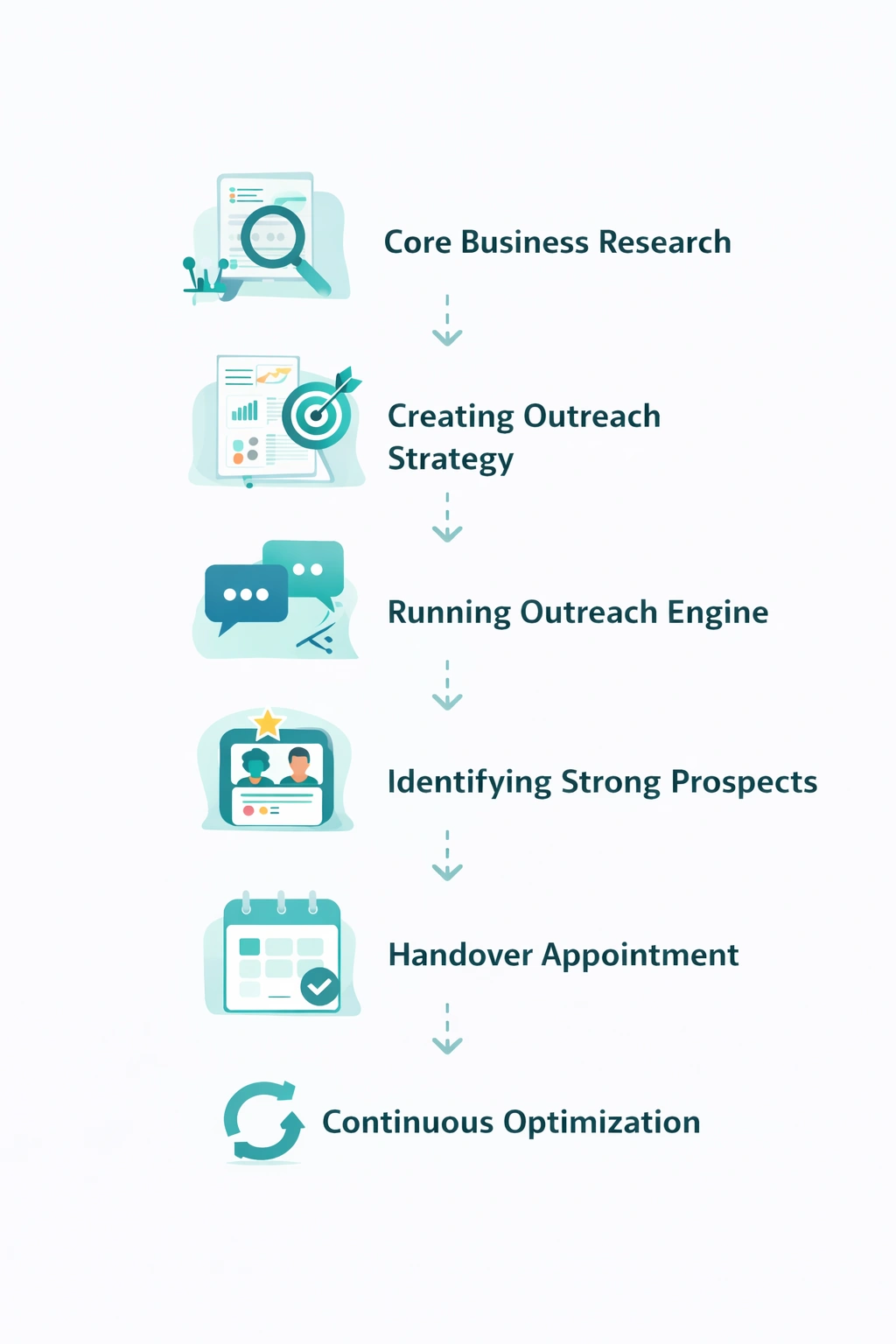
LinkedoJet isn’t “LinkedIn automation.” It’s an outbound operating system built for teams who are tired of random meetings and inconsistent qualification.
For HRMS / HR Tech, we build the prospect intelligence layer first—then run outreach and follow-up with context that matches your module and the prospect’s reality.
What we set up and run
- Module-specific ICP: we define your ICP by product (HCM/HRIS vs payroll vs WFM vs benefits vs talent) and by segment (SMB/mid-market/enterprise), including exclusions and “not now” logic.
- Sales Navigator account universe: we build segmented account lists using headcount, growth, industry, geography (US/Canada/UK/Australia as a starting frame), keywords like “multi-state payroll,” “shift scheduling,” “union,” and tech filters where available (Workday, UKG, ADP, Paychex, Dayforce, BambooHR, Rippling, Paylocity, SAP SuccessFactors, Oracle HCM).
- Stakeholder mapping per account: HR + Finance + Ops + IT/Security/Procurement, with title variations and seniority tuned to your motion.
- Trigger detection & prioritization: we tag accounts and leads by change signals (job posts, job changes, expansion/news, calendar moments) and score for outreach timing.
- AI-assisted personalization: we pull profile and company context (current HRIS language, transformation cues, compliance or scheduling pain) and generate tailored openers that still sound like a human wrote them.
- Outreach execution + reply handling: we run LinkedIn outreach, manage follow-ups, handle replies with agreed playbooks, and route warm responses back to your team with context.
- Warm lead tracking + appointment support: warm leads and booked meetings are tracked, with clear visibility into what’s working, what’s not, and where to refine.
You get campaign visibility through dashboards, ongoing refinement, and a system that prevents list rot and message drift as quarters change.
FAQ
Who are the real buyers for HRMS vs payroll vs WFM—and who should we avoid leading with?
HRMS/HRIS decisions usually run through HR Ops/HRIS (Director HRIS, HRIS Manager, People Systems Manager) because they own integrations, reporting, and change risk. Payroll is often owned by Payroll Director/Manager with Finance (Controller/CFO) as an approval path. WFM is frequently an Ops-led pain (Workforce Management Director, WFM Manager, Time & Attendance Manager), with Finance caring about labor cost control.
Avoid leading with a generic HR Director list when your trigger is operational. And avoid “purely advisory” HR titles that can’t sponsor a system change.
How do we find companies changing HRIS (or preparing for a switch) using LinkedIn signals?
Look for preparation signals: new HRIS/People Systems hiring, an HR transformation PM role, a newly hired Director HRIS, or a CHRO/CPO change followed by systems-related posts. “Implementation,” “migration,” “integration,” and vendor-admin language on profiles is also a tell.
In Sales Navigator, combine account growth + industry fit with Spotlights (job change in 90 days, mentioned in news) and then scan job posts and employee profile language inside those accounts.
Can we target competitor installs like Workday, UKG, ADP, Paychex, Dayforce, BambooHR, Rippling, Paylocity, SAP SuccessFactors, or Oracle HCM?
Yes—when Sales Navigator technology filters are available, we segment by incumbent to avoid generic outreach. When they’re not, we infer installs using profile language (“Workday SME,” “UKG Pro admin,” “ADP Workforce Now”) and job postings that reference those platforms.
The goal isn’t “rip and replace” messaging. It’s incumbent-aware relevance: replacement where there’s change pressure, or adjacent value where the platform is stable.
What signals actually indicate budget and project readiness (vs curiosity)?
Signals that correlate with real projects: hiring for HRIS/Payroll systems roles, a new executive owner (CHRO/CFO/CIO) with mandate language, M&A integration, expansion into new states/countries, and public mentions of audits/compliance/scheduling pain.
Curiosity tends to look like: generic “HR trend” posts without internal change, no systems ownership roles, and no operational pressure. Those leads might convert later—but they shouldn’t dominate your week.
Does this system work differently for SMB vs mid-market vs enterprise HR tech motions?
Yes. SMB needs tighter simplicity: fewer stakeholders, faster cycles, and a heavier Owner/Partner/Controller path (especially for payroll). Mid-market is where HR Ops/HRIS and Ops start to matter a lot because integrations and workforce complexity show up. Enterprise requires committee mapping (HR + Finance + IT/security + procurement), incumbent segmentation, and longer nurture—often anchored to leadership change or consolidation.
See what your HR tech buyer list looks like before you commit
This isn’t a generic “strategy call.” You’ll leave with a clear view of the accounts, stakeholders, and triggers we’d run—and what we deliver after onboarding.
What LinkedoJet operationally provides: we build and manage a signal-driven outbound engine on LinkedIn for HRMS / HR Tech teams—targeting, list building, AI-assisted personalization, outreach execution, reply handling, nurturing, tracking, and appointment support.
On the session, we’ll walk through:
- Your module mix (HCM/HRIS, payroll, WFM, benefits, talent) and the buyer paths it creates
- The exact Sales Navigator filters we’d use (geos, headcount bands, growth, industries, keywords like “multi-state payroll” and “shift scheduling,” and tech segments when available)
- How we map HR + Finance + Ops + IT/Security/Procurement per account—so meetings don’t die after call one
- The trigger logic we use to prioritize timing (HRIS hiring, new CHRO/CFO, expansion/M&A, compliance moments, calendar pressure)
What you receive after onboarding:
- A segmented account universe and prospect lists built in Sales Navigator/LinkedIn, with exclusions to prevent wasted outreach
- Stakeholder maps per account, including title variations and seniority rules by segment
- Trigger tags and priority scoring so SDRs work the right leads first
- AI-assisted personalization built from profile/company context (incumbent HRIS language, transformation cues, compliance or scheduling pain)
- Managed LinkedIn outreach execution, follow-up workflows, and lead nurturing based on how prospects respond
- Warm lead and appointment tracking with dashboards, plus ongoing campaign refinement as segments and messaging prove out
Why this is different from ordinary LinkedIn automation tools: we don’t sell software that blasts sequences. We run the targeting system, the list quality control, the messaging relevance, the reply handling, and the iteration loop—so outbound becomes predictable instead of noisy.
Get a prioritized HR tech buyer list from LinkedIn
If you want more qualified HRMS / HR Tech conversations, don’t ask your team to send more messages. Give them a better target universe: accounts qualified by workforce/HRIS complexity, mapped buying groups across HR/Finance/Ops/IT, and trigger tags that explain why now.
From identifying the right decision-makers to starting meaningful conversations and turning them into qualified appointments... LinkedoJet manages the entire outbound engine for your business.