
How to find leads for sales enablement companies
The reliable path isn’t “find people with enablement in the title.” It’s role-mapped buyer lists plus initiative-based buying signals—so every message is anchored to a live ramp, coaching, methodology, or stack change. That’s LinkedIn prospect intelligence, not automation.
- Sales Navigator targeting
- Buying-signal detection
- Account qualification + buyer committee mapping
Enablement is a timing sale. If you show up when the org is stable, you’ll get polite interest and slow deals. If you show up while they’re rebuilding onboarding, standardizing discovery, rolling out call coaching, or cleaning up forecast hygiene, you’ll get urgency.
Most teams feel “busy” here: sequences firing, meetings on calendars, activity in the CRM. But the quarter still slips because the conversations start at the wrong moment—and with the wrong person.
Generic targeting fails in enablement because titles lie and timing punishes you
Enablement buying has moved toward committees and initiatives. Static lists and “title-first” outreach create noise, not pipeline.
If your outbound depends on someone self-identifying as “Sales Enablement” and being in-market on your schedule, you’ll keep getting the same pattern: low replies, long cycles, and deals that die in the handoff to RevOps or the CRO.
Here’s what I see repeatedly when enablement vendors tell me “lead gen isn’t working”:
- Targeting only enablement titles misses budget and governance. In many orgs, RevOps and revenue leadership decide what gets implemented, instrumented, and measured.
- Outreach without a live initiative gets ignored. Nobody wakes up wanting “enablement software/services.” They wake up needing faster ramp, consistent discovery, coaching coverage, and content adoption that actually shows up in pipeline.
- Wrong stage accounts burn cycles. Founder-led sales, no managers, no ops function, or a tiny AE footprint: you can book calls, but you can’t close meaningful programs.
The hidden cost isn’t just reply rate. It’s the time tax on your team: reps writing “personalization” that isn’t connected to anything real, sales leaders forecasting off meetings that won’t convert, and marketing learning the wrong lessons because the dataset is polluted.
And because enablement ROI is measured downstream—ramp time, win rate lift, coaching impact, content usage, forecast quality—starting with the wrong accounts makes you look like the category doesn’t work.
Map the buyer committee early or you’ll lose the deal in “internal alignment”
Enablement deals stall when you only talk to a champion. Committees buy. Committees also block.
| Role in the deal | Who it is | What they care about (and the urgency signal) |
|---|---|---|
| Economic buyer | CRO, VP Sales, SVP Sales, VP/Head of GTM | Faster ramp, pipeline consistency, manager effectiveness, forecast hygiene. Signal: new revenue leader, posts about “standardizing” discovery/coaching, new segment launch, regional expansion. |
| Technical / process owner | VP/Director RevOps, Sales Ops, GTM Ops, Revenue Systems | System fit, rollout risk, governance, reporting. Signal: stack evaluation (CRM/engagement/CI/content), hiring for RevOps/Systems, “process overhaul” language. |
| Program owner / champion | VP/Head/Director Sales Enablement, Revenue Enablement Lead, Sales Training Director | Program adoption, coaching coverage, onboarding throughput, content findability. Signal: |
| Influencers | Sales Managers, Regional Directors, Product Marketing, CS Ops (when expansion enablement matters) | “Make this workable in the field.” Signal: |
In practice, the fastest wins come when your list is built per-account: one CRO/VP Sales, one RevOps owner, one enablement owner, plus 1–2 manager-level influencers. You’re not spamming more people. You’re preventing the late-stage “we need to loop in RevOps” reset.
Account fit rules that stop you from chasing “enablement-shaped” companies
You don’t want more leads. You want the companies where enablement is a revenue problem with budget, urgency, and operational capacity.
Must-haves (non-negotiable)
- 10+ quota carriers (verify via LinkedIn employee distribution: Sales function density, multiple AEs/BDRs/SDRs)
- Ops presence: RevOps, Sales Ops, or GTM Ops exists and has decision gravity
- Evidence of enablement need: onboarding cohorts, coaching, content governance, methodology language, playbooks, certification
Strong-fit indicators (prioritize)
- Hiring burst across sales roles (new AEs/SDRs/managers) → onboarding load is about to spike
- New revenue leader (CRO/VP Sales) → “new operating system” window is open
- Upmarket move (enterprise AEs, new segment) → messaging + discovery consistency becomes painful fast
- Multi-region / multi-pod → content distribution and coaching coverage break without a program
- Stack maturity (Salesforce/HubSpot + Outreach/Salesloft + Gong/Chorus + content platform signals) → they can actually implement and measure
Disqualifiers (or lower priority)
- No real sales org (founder-led, <5 in Sales function)
- Downsizing in Sales/RevOps (unless your offer is explicitly cost/ramp efficiency; still treat cautiously)
- Enablement buried in HR/L&D with no revenue ownership (unless you sell directly into L&D enablement)
- PLG-only, low-touch with minimal sales motion and no ops function
Three Sales Navigator searches you can run weekly (and actually trust)
Don’t build one mega-search. Build three repeatable lanes—enablement, RevOps/systems, and revenue leadership triggers—then save and alert.
Search 1: Enablement-first (champion + program owners)
- Geography: your primary markets
- Seniority: CXO, VP, Director, Manager
- Function: Sales, Operations
- Title contains: “sales enablement” OR “revenue enablement” OR “sales training” OR “sales readiness” OR “enablement”
- Company headcount: 51–5000 (split lists: 51–200, 201–1000, 1001–5000)
- Industries (examples): Computer Software, Internet, Information Technology & Services, Financial Services, Staffing & Recruiting, Management Consulting, Telecommunications, Hospital & Health Care (adjust to your offer)
- Company type: Privately Held + Public + PE-owned
- Spotlights: Changed jobs in last 90 days; Posted on LinkedIn in last 30 days
Search 2: RevOps + systems change (implementation + governance)
- Title contains: “revenue operations” OR “revops” OR “sales operations” OR “gtm operations” OR “revenue systems”
- Seniority: Director+ (add VP/CXO if your deal size warrants)
- Company headcount: 51–5000
- Spotlights: Changed jobs in last 90 days; Posted on LinkedIn in last 30 days
Search 3: Revenue leader trigger (economic buyer timing)
- Title contains: “CRO” OR “VP Sales” OR “Head of Sales” OR “SVP Sales” OR “VP Revenue”
- Spotlights: Changed jobs in last 90 days; Posted on LinkedIn in last 30 days
- Company focus: 51–5000 headcount; prioritize visible hiring and expansion patterns
Save + alert workflow: Save each search, then review alerts 2–3 times/week. You’re looking for new hires/promotions (committee reshuffles), fresh posts (initiative language), and growing teams (ramp pressure).
Negative title/keyword guardrails: Unless it’s your target, filter out roles where “enablement” means something else: IT enablement, partner enablement only, pure HR training, internal comms, or generic L&D.
Signals that mean an enablement initiative is live (and how to message it)
The goal is simple: every account gets a “reason code” your reps can anchor to, so outreach feels timely instead of needy.
Hiring signals
- What to watch: job posts for Sales Enablement Manager, Enablement Ops, RevOps Analyst/Manager, Sales Manager, SDR Manager, Enterprise AE; multiple sales roles opened at once
- Outreach angle: “Saw you’re hiring X roles across the sales org. When headcount jumps, onboarding and manager coaching usually become the bottleneck. Who owns ramp targets and readiness right now—enablement, RevOps, or sales leadership?”
Leadership change signals
- What to watch: new CRO/VP Sales, promotions into GTM leadership, “first 90 days” posts
- Outreach angle: “Congrats on the new role. Most new revenue leaders reset qualification, deal review cadence, and coaching expectations quickly. Are you standardizing methodology and onboarding in Q1, or waiting until the org stabilizes?”
Methodology / process signals
- What to watch: MEDDICC/Challenger/SPICED mentions, ‘standardizing discovery,’ SKO prep, new playbook rollouts, certification language
- Outreach angle: “Noticed the push around MEDDICC / playbook standardization. The hard part isn’t the framework—it’s getting managers to coach it consistently and proving adoption. Want a quick view of what other orgs instrument to make it stick?”
Tech / stack change signals
- What to watch: CRM migration chatter, sales engagement changes, conversation intelligence rollout, content platform evaluation; RevOps posts about tooling or governance
- Outreach angle: “When the stack changes, enablement either becomes a change-management program—or it becomes a graveyard of links. Are you planning for content governance + in-workflow coaching as part of the rollout?”
Performance pressure signals
- What to watch: posts about ramp time, inconsistent messaging, low content adoption, ‘coach the coaches,’ win/loss themes, forecast misses
- Outreach angle: “The signal I’m hearing is consistency: discovery quality, manager coaching coverage, and content actually being used. If you had to pick one to fix in 60 days, which one moves win rate fastest for your motion?”
The LinkedoJet system: prospect intelligence that produces role-mapped lists with reasons to reach out
We’re not selling volume. We’re building a repeatable outbound engine for enablement sellers that ties targeting to sales-motion maturity and live initiatives.
1) ICP + segmentation (A–E)
- Segment A: B2B SaaS with 25–300 sellers scaling fast (onboarding, coaching, content enablement)
- Segment B: B2B SaaS/Tech with 10–50 sellers moving into mid-market/enterprise (methodology + readiness)
- Segment C: Services/IT/Consulting with quota-carrying teams (repeatable pitch + asset governance)
- Segment D: Manufacturing/Industrial/MedDevice with channel + direct sellers (training, certification, distribution)
- Segment E: PE-backed companies in GTM transformation (standardization + ramp acceleration)
2) Account sourcing + qualification
We pull from Sales Navigator and validate basics you can’t fake: sales team density, manager layers, RevOps existence, and signals that the org can actually implement enablement. This is where we cut the “looks good on paper” accounts that waste months.
3) Buyer committee mapping (per account)
Every target account gets a mapped committee: CRO/VP Sales, RevOps/Sales Ops, Enablement owner, plus manager influencers where relevant. We add role notes so your messaging matches what each person is trying to protect—forecast integrity, rollout risk, adoption, or coaching coverage.
4) Signal layering + prioritized output
We attach reason codes to accounts and prospects (hiring, leadership change, methodology push, tool change, ramp pressure, LinkedIn activity). That becomes the anchor for AI-assisted personalization and outreach that sounds like you’re paying attention—because you are.
What you get is practical: prioritized account lists, role-mapped contacts, signal notes, and talk tracks your team can run without improvising. The system is human-reviewed before anything goes live.
When you’re ready, don’t send us a vague “target SaaS.” Send: target market, ACV band, ideal company size, core geos, and whether you sell software vs services. We’ll build the segments and start producing signal-based lists you can actually convert.
FAQs
Who should we target first: Sales Enablement leadership or the CRO/VP Sales?
Start with the initiative owner and the budget path in parallel. Enablement leaders validate the problem and the shape of the program; CRO/VP Sales validates urgency and ties it to ramp, win rate, and manager expectations. If you only pick one, you’ll either get a champion with no air cover or an exec with no implementation partner.
How do you find companies actively building or rebuilding enablement (not just people with “enablement” in their title)?
We look for public fingerprints: hiring for enablement/RevOps/manager layers, posts about onboarding cohorts or certification, methodology rollouts, SKO planning, and stack change chatter. Then we qualify for sales-motion maturity (quota carriers + managers + ops) before we ever call it a target.
Can you include RevOps and Sales Ops stakeholders in every account’s buyer committee map?
Yes. For enablement deals, RevOps/Sales Ops often controls systems access, governance, reporting, and rollout sequencing. We map them by default and note whether they’re a blocker risk or an ally (based on role scope, tenure, and current change initiatives).
What company sizes are the best fit for enablement platforms vs enablement services firms?
Platforms tend to win where there’s enough complexity to require governance: multiple teams/regions, manager layers, and a stack that needs integration. Services can win earlier when the org needs the playbook built and leadership alignment created. We segment lists accordingly so you’re not selling a platform into a company that really needs foundational work—or vice versa.
How do you detect tool-change intent (CRM, sales engagement, conversation intelligence, content platforms) on LinkedIn?
We track signals across company pages, job posts, and prospect activity: roles like Revenue Systems or Enablement Ops, RevOps posts about governance, comments around tooling, and recent hires who typically drive evaluations. It’s rarely “we’re buying a tool.” It’s “we’re fixing adoption, instrumentation, and workflow”—and that shows up in the language.
See what LinkedoJet would ship for your enablement outbound in the first 30 days
This isn’t a generic “discovery call.” We’ll walk you through the exact prospect intelligence workflow we’d run—then, if there’s a fit, we implement it and operate it with you.
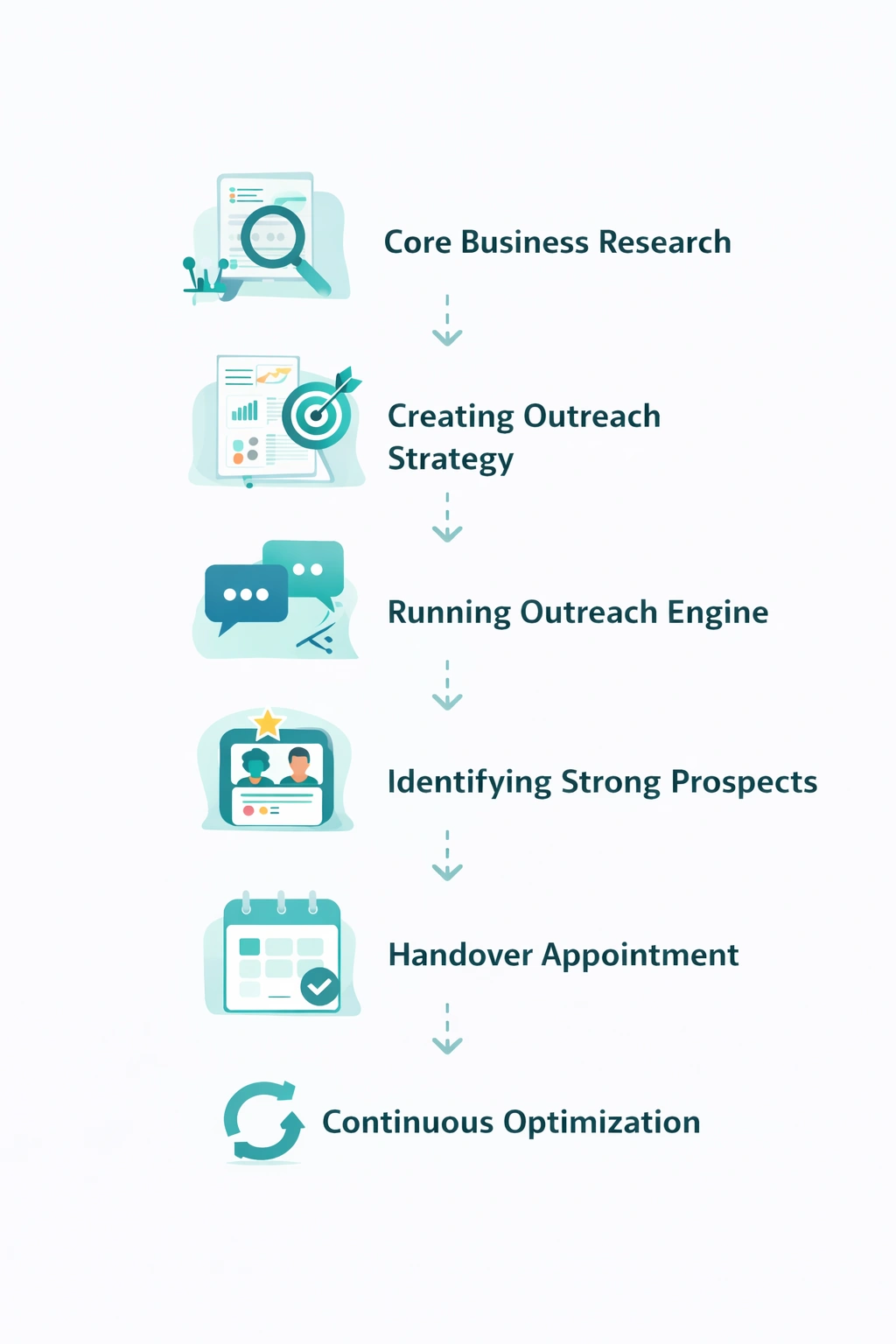
Operationally, LinkedoJet provides the full outbound engine for sales enablement companies: ICP and targeting setup, Sales Navigator prospect list building, AI-assisted personalization, LinkedIn outreach execution, reply handling and lead nurturing, warm lead tracking, appointment generation support, and campaign visibility through dashboards.
What happens after onboarding: we build your segments (A–E), set qualification rules (sales-motion maturity + disqualifiers), and create role-mapped buyer committees per account (CRO/VP Sales + RevOps/Sales Ops + Enablement + key influencers). Then we layer buying signals—hiring, leadership change, methodology rollouts, stack shifts, and ramp pressure—so every message has a real reason to exist.
What you receive: prioritized account lists with reason codes, contact maps with role notes, outreach talk tracks tied to signals, and an operating cadence (alerts, list refreshes, and refinement based on replies and meetings). You’ll see what’s being sent, what’s working, and where pipeline is coming from.
How targeting and list building works: we source in Sales Navigator using repeatable searches (enablement-first, RevOps systems, revenue leader triggers), validate account fit (quota carriers + ops + manager layer), and remove irrelevant “enablement” noise (IT enablement, partner-only enablement, HR/L&D-only roles) unless you explicitly want those lanes.
How AI-assisted personalization is used: AI helps draft first-pass angles tied to the specific signal (e.g., enablement hiring burst, MEDDICC rollout, new CRO). A human reviews the output so your voice stays credible and the message matches the committee member’s incentives.
How nurturing and follow-up works: we don’t stop at the first message. We run structured follow-ups, route replies, and keep warm leads moving with context-based touches (initiative updates, relevant examples, internal alignment prompts) until there’s a clear next step.
How warm leads and appointments are tracked: every prospect is tagged by segment, role, and signal; conversations are tracked through the workflow; and meetings are attributed to the account + reason code so you can see what’s creating momentum.
Why this is different from ordinary LinkedIn automation tools: tools send sequences. LinkedoJet builds and runs a prospect intelligence system—qualification, committee mapping, signal detection, messaging, follow-up, and visibility—so you’re not guessing why a message worked or why a deal stalled.
If you want this to move fast, bring: your target market, ACV band, ideal company size range, geos, and whether you sell software vs services. We’ll show you what we’d target first and what we’d exclude.
Next step: get a role-mapped lead list with live buying signals—then let us run the outbound
If your team is working hard but the deals keep starting too early (or with the wrong person), fix the inputs: account maturity, committee coverage, and initiative timing.
From identifying the right decision-makers to starting meaningful conversations and turning them into qualified appointments... LinkedoJet manages the entire outbound engine for your business.