
How to find leads for corporate wellness companies on LinkedIn—without guessing
If your pipeline looks “busy” but deals don’t progress, you’re not short on activity. You’re short on decision-context: who owns wellbeing/benefits at that employer, and whether this is a real budget window.
You can feel the waste when the replies are polite but useless: “Talk to our broker.” “We just renewed.” “Not this year.”
Meanwhile, your team burns hours chasing HR Directors who don’t touch benefits, messaging mid-plan-year when nobody can move budget, and getting blindsided by Procurement late because the buying committee was never mapped early.
This page is the practical workflow we use to stop guessing:
- Start with a clean account list in the right headcount bands (typically 200–5,000 and/or 5,000–50,000 depending on your ACV).
- Map 3–6 stakeholders per employer (not one “HR persona”).
- Prioritize by real triggers: open enrollment/renewals chatter, benefits hiring, new CHRO/CPO/Head of Total Rewards, and LinkedIn activity signals like posted in last 30 days and changed jobs in past 90 days.
- Suppress the quiet list-killers (layoffs, unsupported geos, consumer “wellness” businesses, tiny headcount).
Why corporate wellness prospecting breaks: wrong HR contact, wrong timing, hidden buying committee
Most outbound failure in corporate wellness isn’t messaging. It’s calling on the wrong person—or being right, just six months early.
Wellbeing ownership is fragmented now. At one employer it’s the VP Total Rewards. At another it’s People Operations. Some tuck it under Employee Experience. Some put it under a COE with a Global Wellbeing Lead. Titles are messy, and teams are lean.
So the old playbook—broad HR lists + sequences—creates “activity” without progress. You might even book calls, but they’re the wrong conversations: informational, broker-deflected, or stalled until next plan year.
The hidden risk is committee blind spots. Enterprise deals pull Procurement Manager (HR/Benefits) and Strategic Sourcing Manager (HR) in earlier now. If you don’t find them early, you get a soft “yes” from HR and a hard “no” from sourcing at the worst possible time.
The fix is not more volume. It’s a system built around who + when + why now.
Who actually buys corporate wellness: the HR/Benefits buying committee map
Treating “HR” as one persona is how you end up with full calendars and empty forecasts.
For most employers, you’ll win faster by mapping 3–6 stakeholders per account and letting the outreach reflect how decisions are actually made.
| Committee tier | What they do in the deal | Titles to target |
|---|---|---|
| Economic owner / approver | Approves spend, sets priorities, blocks “nice-to-have.” Often decides whether wellbeing is a strategic initiative or a line item. | CHRO, Chief Human Resources Officer; Chief People Officer; VP People; Head of People |
| Program owner / evaluator | Owns benefits/wellbeing outcomes, runs evaluation, compares vendors, manages broker relationships, drives renewal timing. | VP Total Rewards; Head of Total Rewards; Director Total Rewards; VP Compensation & Benefits; Director of Compensation and Benefits; Benefits Director; Benefits Manager; Senior Benefits Manager; Director of Wellbeing/Wellness; Head of Wellbeing; Global Wellbeing Lead; Director of Health & Wellness; Manager Health & Wellness; Head of HR Programs; HR Program Manager (Wellbeing); People Operations Director/Manager; Head of People Operations; VP Employee Experience; Director Employee Experience; VP People Experience; Director People Experience |
| Influencers / gatekeepers | Shapes requirements, introduces constraints, controls process. In enterprise, sourcing can effectively run the deal. | Senior HR Business Partner; Lead HRBP; Procurement Manager (HR/Benefits); Strategic Sourcing Manager (HR); (secondary) Head of DEI; Director DEI |
Mid-market pattern: Benefits/Total Rewards evaluates, CHRO/CPO approves, Finance sanity-checks. Enterprise pattern: add Procurement and HR COE leads (Wellbeing/Total Rewards) early or you’ll lose momentum later.
Micro-CTA: If your reps are only targeting one contact per employer, you’re choosing lower reply rates. Speak to our Experts and we’ll show you what the mapped committee looks like for your exact ICP.
Sales Navigator filter stack: build the account list first, then find the owners inside it
The sequence matters. If you start in Lead Search, you’ll collect “HR-ish” titles across companies that can’t buy. Start with accounts, then drill into leads.
Step 1: Account Search (your market)
- Geography (HQ): United States (add Canada, UK, Ireland, Australia, EU only if you can support delivery).
- Company headcount: 200–500, 501–1,000, 1,001–5,000 (mid-market) and/or 5,001–10,000+ (enterprise bands aligned to ACV).
- Industry (examples that often buy): Computer Software, Information Technology & Services, Financial Services, Insurance, Management Consulting, Logistics & Supply Chain, Consumer Goods (HQ), Manufacturing, Hospital & Health Care (corporate / non-provider).
- Company type: Privately Held and/or Public Company.
- Spotlights / growth: “Job opportunities” and headcount growth where available.
- Keywords (company): wellbeing, wellness, total rewards, benefits, employee experience, EAP, mental health, workplace wellness, burnout, culture.
- Exclusions: filter out consumer categories and noise (e.g., “gym,” “fitness studio,” “spa”). Be cautious with “Wellness & Fitness Services” unless you’re deliberately targeting partners.
Step 2: Lead Search (stakeholders inside saved accounts)
- Current company: choose from your saved account list.
- Function: Human Resources (add Purchasing for enterprise sourcing).
- Seniority: CXO, VP, Director, Manager (add Senior).
- Title contains: Benefits, Total Rewards, Wellbeing, Wellness, Employee Experience, People Operations, CHRO, CPO, HR Director.
- Spotlights: Posted on LinkedIn in past 30 days (activity) and Changed jobs in past 90 days (new leader / change window).
- Years in current position: 0–2 years (change agents) plus 3–10 (steady owners).
If you want, we’ll build this stack around your exact offer (mental health, coaching, platform, stipend, EAP-adjacent) and your ACV bands so you’re not forcing enterprise motions into mid-market accounts—or vice versa. Speak to our Experts.
Buying signals: how to spot in-market employers (so you’re not six months early)
Fit gets you permission to start a conversation. Timing gets you a deal.
In corporate wellness, timing signals tend to cluster around the benefits calendar, team changes, and HR scaling. Here’s what we look for and tag.
Benefits timing signals
- Posts referencing open enrollment, “OE,” benefits enrollment, benefits fair, annual refresh.
- Mentions of renewals, broker reviews, “vendor review,” “RFP,” or “we’re evaluating partners.”
- Leadership messaging about healthcare costs, absenteeism, claims pressure, or retention programs.
Hiring signals (HR/Benefits maturity)
- Open roles: Benefits Manager, Senior Benefits Manager, Total Rewards Manager, Wellbeing Manager, Employee Experience, HRIS/People Ops.
- Growth in HR operations often precedes vendor consolidation and new wellbeing initiatives.
Change signals (new owner, new priorities)
- New CHRO, Chief People Officer, VP People, Head of Total Rewards in the last 3–6 months.
- On LinkedIn, changed jobs in past 90 days is a surprisingly reliable “new brooms sweep” indicator.
Growth events
- Headcount growth, new locations, acquisitions, IPO prep, post-merger integration.
- These events create fragmentation (multiple benefit experiences) and force renewed wellbeing conversations.
Engagement/pain signals (lead-level)
- HR/Benefits leaders posting about burnout, engagement, retention, wellbeing programs, EAP awareness, manager enablement.
- Interacting with brokers, HR tech, wellbeing platforms, or benefits strategy content (posted in last 30 days matters here).
LinkedoJet tags these signals at the account and lead level, then prioritizes outreach so reps start with employers that look like they can buy now, not “sometime next year.”
Disqualification rules: negative signals that quietly kill reply rates and stall deals
Your list can be “accurate” and still be poison for performance if it includes accounts that can’t move.
- Layoffs / hiring freezes: often a hard stop unless your offer is explicitly framed as cost control and has quick implementation.
- Too small for your ACV: <50–100 employees (unless you sell SMB). These accounts soak up time and rarely match your pricing.
- Unsupported geographies: HQ outside your service regions, or global complexity you can’t support yet.
- Consumer “wellness” businesses: gyms, spas, fitness studios, boutique brands—high keyword overlap, low B2B fit.
- Public sector / education: government/municipalities, K-12, very small non-profits (long cycles) unless you explicitly target them.
- Vendor lock-in indicators: public posts about multi-year exclusive partnerships, detailed case studies naming an incumbent, or “we just rolled out X companywide.” (Not always a disqualifier, but often a segment.)
LinkedoJet suppresses or segments these accounts so sequences stay clean, reply rates stay honest, and reps don’t lose trust in the list.
What LinkedoJet delivers: prioritized target accounts + mapped committees + signal tags
You don’t need another spreadsheet. You need a worklist your team believes in.
After onboarding, LinkedoJet operationally provides a full prospecting engine built around your deal size and your buyer reality:
- ICP + segmentation setup: mid-market vs enterprise bands, regions, and industry slices aligned to your ACV.
- Sales Navigator account list build: saved target accounts with qualification tags (headcount band, geo, maturity indicators like Total Rewards/Wellbeing roles).
- Buying committee mapping: 3–6 leads per account with persona tags (approver, program owner, influencer). You’ll see CHRO/CPO + Benefits/Total Rewards + Wellbeing/Employee Experience, and Procurement for enterprise.
- Signal layer: activity, hiring, benefits timing (open enrollment/renewals/RFP language), leadership changes, and growth events—captured and tagged so reps know why now.
- Outreach-ready targets: prioritized lead targets with recommended angles (retention, burnout reduction, engagement lift, healthcare cost control, culture & productivity) based on what the account is signaling.
This is not “set-and-forget sending.” It’s targeting intelligence and execution, with visibility into what’s happening and what’s working.
Speak to our Experts if you want us to build and run this so your team starts the week with a short list of accounts that can actually buy.
Answers to common corporate wellness prospecting questions
Which HR titles should I target for corporate wellness programs (and which ones are usually dead ends)?
Start with owners, not generalists. Best targets are typically VP Total Rewards, Head of Total Rewards, Director Total Rewards, VP Compensation & Benefits, Director of Compensation and Benefits, Benefits Director, Benefits Manager, Senior Benefits Manager, and—where it exists—Director of Wellbeing/Wellness, Head of Wellbeing, Global Wellbeing Lead, VP/Director Employee Experience.
CHRO / Chief People Officer / VP People often approves, so include them as an approver thread, especially in mid-market.
Common dead ends: generic HR Director or Director of Human Resources roles that don’t mention benefits/Total Rewards/Wellbeing scope, and HR roles focused on recruiting or employee relations. They can be helpful internally, but they rarely own vendor selection.
How do you find companies planning benefits changes like open enrollment, renewals, or an RFP?
We look for language patterns and activity that shows planning is underway: open enrollment posts (“OE,” “benefits enrollment,” “benefits fair”), renewal mentions, broker content, and “vendor review/RFP” phrasing. We also use hiring and leadership-change signals as early indicators that a refresh is coming.
LinkedoJet tags these signals at the account level so your reps don’t treat every employer as equally urgent.
What Sales Navigator filters work best to find HR/Benefits decision makers (including “posted in last 30 days” and “changed jobs in past 90 days”)?
Account Search first (geo, headcount, industry, growth spotlights like “Job opportunities,” and company keywords like total rewards/benefits/wellbeing). Then Lead Search within saved accounts using:
- Function: Human Resources (and Purchasing for Procurement)
- Seniority: CXO, VP, Director, Manager
- Title contains: Benefits, Total Rewards, Wellbeing/Wellness, Employee Experience, People Operations, CHRO/CPO
- Spotlights: Posted on LinkedIn in past 30 days, Changed jobs in past 90 days
Do you include Procurement/Strategic Sourcing contacts for enterprise wellness deals?
Yes—when you’re selling into 5,000+ employee environments, Procurement is often part of the process early, even if HR is “leading” the evaluation. We typically include Procurement Manager (HR/Benefits) and Strategic Sourcing Manager (HR) as influencers/gatekeepers alongside the HR COE owners.
How do you avoid irrelevant “wellness” businesses like gyms, spas, and consumer fitness brands?
We filter at the account level using industry exclusions and keyword exclusions (gym, fitness studio, spa), and we sanity-check company descriptions for B2B employer language (benefits, employees, Total Rewards, HR team structure). If you sell to employers, consumer wellness brands are list contamination—so we remove or segment them before outreach starts.
See what your prioritized employer target list looks like—before you commit
This isn’t a vague “strategy call.” It’s a working session where we show you how we’d build your market, map the committee, and run outreach without padding your pipeline with the wrong employers.
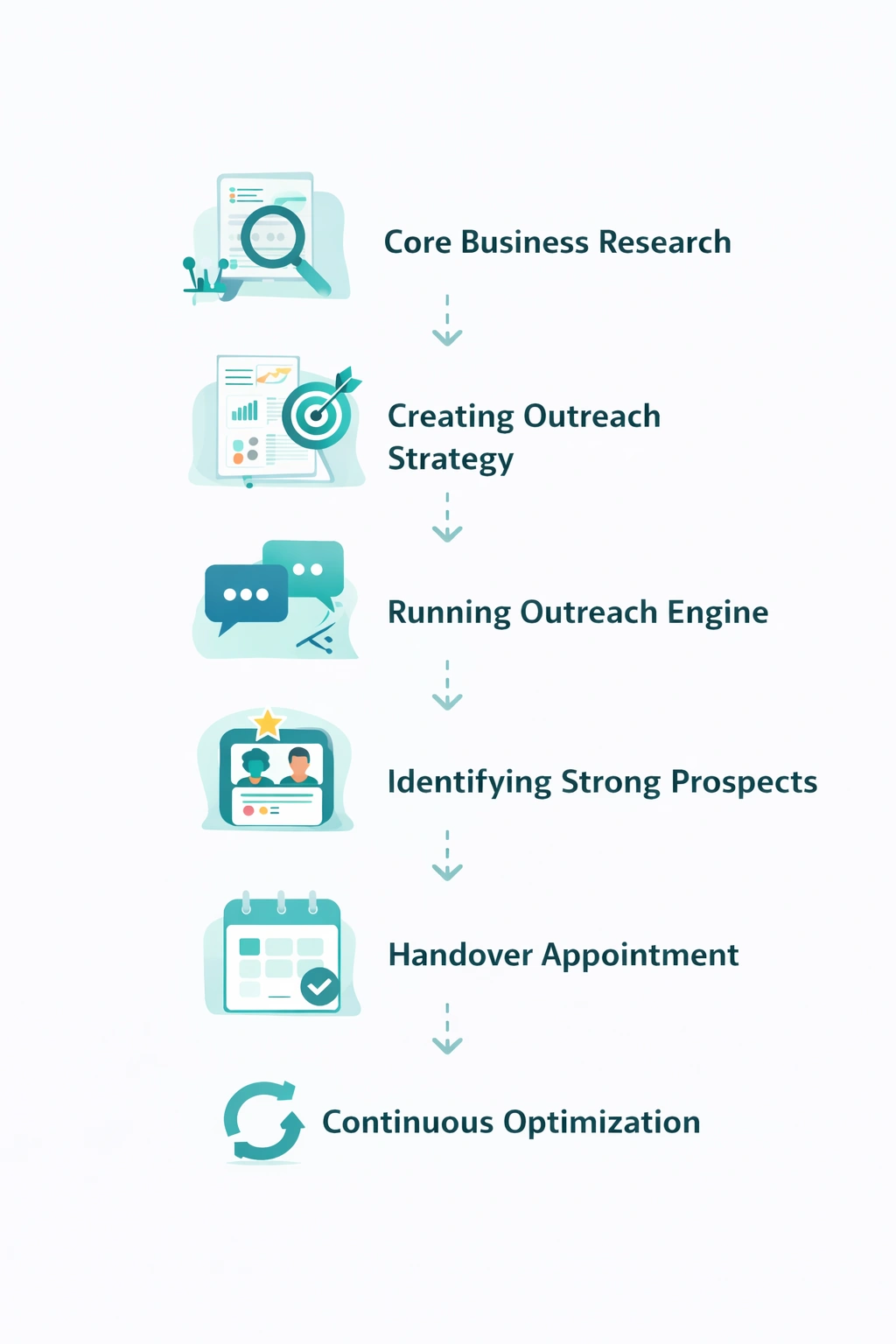
What LinkedoJet operationally provides: ICP and targeting setup, Sales Navigator prospect list building, AI-assisted personalization, LinkedIn outreach execution, reply handling and lead nurturing, warm lead tracking, appointment generation support, and campaign visibility via dashboards—plus ongoing refinement as we learn what your market responds to.
What happens after onboarding: we stand up your targeting system (headcount bands, industries, regions), build and save target accounts, then map 3–6 stakeholders per employer (approver + program owner + influencers like Procurement). We add a signal layer (open enrollment/renewals language, HR hiring, new People leadership, activity) so your team starts from a prioritized worklist instead of a raw export.
What you receive: an outreach-ready target set with persona tags, seniority, geo, intent/signal tags, and recommended angles. Then we help run the follow-up workflows—so replies don’t die in an inbox and warm leads get routed, tracked, and progressed into booked meetings.
How targeting and list building work: we use Sales Navigator account filters first (geo, headcount, industry, growth spotlights, keywords) to build a clean account universe, then lead filters inside those accounts (HR + Purchasing where needed, title contains Benefits/Total Rewards/Wellbeing, posted in last 30 days, changed jobs in past 90 days) to find the real owners.
How AI-assisted personalization is used: we don’t spray generic tokens. We use AI to draft first-pass personalization tied to the account’s signal (benefits cycle, hiring, leadership change, growth) and the lead’s likely scope, then apply guardrails so messaging stays human and on-brief.
How follow-up and nurturing operate: multi-touch sequences with decision-committee coverage, reply handling, and a clear nurture path for “not now” (timing-based follow-up around OE/renewals rather than hoping they remember you).
How warm leads and appointments are tracked: warm replies are tagged by intent, routed for next steps, and tracked through a simple dashboard so you always know what’s active, what’s stalled, and what’s converting.
Why this is different from ordinary LinkedIn automation tools: tools send messages. LinkedoJet builds the market, selects the right accounts, maps the buying committee, prioritizes by signals, and manages the operational follow-through so conversations turn into meetings—without your team living in filters all week.
Want a list of employers actively investing in wellbeing—right now?
Stop guessing. Get a prioritized account list, a mapped HR/Benefits committee, and signal tags your reps can work immediately—then consistent follow-up that turns interest into booked meetings. From identifying the right decision-makers to starting meaningful conversations and turning them into qualified appointments... LinkedoJet manages the entire outbound engine for your business.