
How to find leads for corporate gifting companies—using LinkedIn buyer signals, not spray-and-pray
Build segmented buyer lists (HR, Marketing/Events, Sales/RevOps, CS, Procurement), qualify for program-sized fulfillment, and trigger outreach when budgets actually activate: events, hiring, leadership changes, and funding.
If your pipeline only wakes up when someone posts “need swag ASAP,” you’re not selling programs—you’re selling emergencies.
The frustrating part is the good opportunities aren’t hidden. They’re telegraphed weeks earlier on LinkedIn: a Field Marketing leader announcing a booth, a People Ops team hiring across regions, a new CMO resetting vendors, a RevOps leader talking direct mail and gifting.
Miss that window and you don’t just miss the deal. You watch a competitor become the preferred supplier for the next 12 months while your team burns hours on 250-piece rush quotes that never turn into a store, an onboarding program, or a renewal motion.
- Find the right titles (the ones who own programs, not just “helping”).
- Qualify accounts that can sustain program-sized orders (multi-location, multi-SKU, deadlines, governance).
- Trigger outreach when gifting budgets activate (events, hiring velocity, new leaders, funding).
Why corporate gifting outbound fails: wrong titles, late timing, and getting trapped in one-off quote land
Most gifting outbound dies for one simple reason: the list doesn’t map to a real gifting program.
So you message “HR” and land with an Executive Assistant. You message “Marketing” and land with a coordinator who can’t commit to anything. Or worse—you finally reach Procurement when the lane is already set, and you’re being compared on unit price while the hard part (inventory, size runs, address collection, multi-ship, customs) is treated like an afterthought.
Then the seasonality story writes itself: big Q4 scramble, quiet Q1, random inbound drips, and constant pressure to discount because you’re positioned as a commodity swag vendor instead of an operational partner who can run a program.
The hidden tax shows up later:
- Feast-or-famine revenue because you only surface when someone has a fire.
- Low win rates because you’re entering after stakeholders have aligned without you.
- Deal collapse when multi-location shipping, inventory planning, and deadlines hit reality.
The fix isn’t “more volume.” It’s getting early to the internal owner of a time-bound project—events, onboarding, spiffs, advocacy, holiday—and leading with outcomes buyers actually defend internally: brand control, speed, logistics, reporting, and governance.
Who buys corporate gifting programs: 5 decision-maker tiles + the title list that actually maps to budgets
Program spend has owners. Your job is to stop selling “gifting” and start selling the program they’re responsible for.
| Role | Typical programs | What they care about | Proof-of-fit question |
|---|---|---|---|
| HR / People | Onboarding kits, engagement, anniversaries, employee appreciation | Employee experience, consistency, address collection, multi-ship, zero chaos | Are you onboarding 20+ people/month or managing remote teams? |
| Field Marketing / Events | Conference swag, VIP kits, customer dinners, webinar kits | Deadlines, brand impact, last-mile execution, “nothing arrives late” | Do you have events in the next 60–120 days? |
| Sales Enablement / RevOps | Deal acceleration, ABM gifting, spiffs, SKO kits | Speed, ROI language, governance, approvals, reporting | Are you running ABM/direct mail plays? |
| Customer Success / Advocacy | Renewal gifting, advocacy, NPS-driven surprise & delight | Repeatability, segmentation, sentiment, avoiding one-off ad hoc requests | Do you have advocacy/NPS programs? |
| Procurement / Sourcing | Preferred suppliers, vendor consolidation, RFPs | Compliance, pricing tiers, contracts, risk, global capability | Is procurement involved in marketing/HR spend? |
Title list that tends to convert (and why): You want people who own a program calendar or a budget category—not random “HR generalists.” Start with: Chief People Officer, VP People/HR, Head of People, Director/Manager People Ops, Employee Experience Manager, Culture & Engagement Manager, Internal Communications Manager; Head/Director of Field Marketing, Events Marketing Manager, Experiential Marketing Manager, ABM Manager, Partner Marketing Manager, Brand Marketing Director; Director/Head of Sales Enablement, RevOps Director, Sales Operations Manager, SDR Manager; VP/Director Customer Success, Customer Advocacy Manager, Head of Customer Marketing; Procurement Manager, Strategic Sourcing Manager, Category Manager (Marketing/HR), Vendor Manager. Office Manager / Workplace Manager / Chief of Staff can be useful in mid-market—treat them as access, not the end buyer.
Sales Navigator lead map: exact filters, saved searches, and account lists (plus a quick fit checklist)
This is the workflow that stops you from building a “nice-looking list” and starts producing accounts that can actually run programs—stores, kits, multi-ship, international, procurement-ready.
- Pick one use case first. Events/Field Marketing, HR onboarding, Sales Enablement/ABM, CS advocacy, or Procurement. Separate searches per use case so messaging stays tight.
- Set geography to your fulfillment reality. United States, Canada, United Kingdom, Ireland, Netherlands, Germany (adjust to where you can ship and clear customs).
- Split by headcount band. Create separate searches for 51–200, 201–500, 501–1000, 1001–5000. (200–5,000 is the sweet spot for recurring programs; 50–200 can be great for events and fast ABM.)
- Add industries that over-index on gifting. Computer Software, Information Technology & Services, Internet, Financial Services, Marketing & Advertising, Staffing & Recruiting, Hospital & Health Care, Management Consulting, Accounting, Real Estate, Insurance, Logistics & Supply Chain.
- Seniority + function. Manager, Director, VP, CXO. Functions: Human Resources, Marketing, Sales, Operations, Purchasing, Customer Success and Support (where available).
- Title keywords (keep it simple, then refine).
- HR: ("people" OR "human resources" OR "employee experience" OR "engagement" OR "culture" OR "internal communications")
- Marketing: ("field marketing" OR "events" OR "experiential" OR "demand gen" OR "ABM" OR "partner marketing")
- Sales: ("sales enablement" OR "revops" OR "revenue operations" OR "sales operations" OR "CRO")
- CS: ("customer success" OR "customer marketing" OR "advocacy" OR "CX")
- Procurement: ("procurement" OR "strategic sourcing" OR "category manager" OR "vendor")
- Spotlights for reachability and timing. Turn on: Posted on LinkedIn in past 30 days; Changed jobs in last 90 days. Those two alone change reply rates because you’re not talking to ghosts—and new leaders reset vendors quickly.
- Save searches + build account lists. Create account lists from conference exhibitor/sponsor pages, newly funded lists, fastest-growing lists, G2 category leaders, and competitor customer logo lists. Then filter buyers inside those accounts.
Quick company fit checklist (before you spend outreach)
- Growth signals: headcount trend up, multiple open roles, expansion posts
- Distributed reality: multi-office or remote-heavy teams (multi-ship is a feature, not a burden)
- Calendar pressure: events in 60–120 days, SKO/Q1 planning, customer roadshows
- Program language: “swag store,” “welcome kit,” “onboarding box,” “global shipping,” “kitting/fulfillment”
- Governance: procurement involvement, vendor consolidation, contract language
Get the Corporate Gifting Lead Map and we’ll turn this into saved searches + a prioritized account list you can actually work.
Buyer signals that predict budget: events, hiring/onboarding, leadership/funding, and direct mail/ABM (plus disqualifiers)
Corporate gifting isn’t a perpetual need. It’s a set of predictable moments. The teams you want announce those moments publicly—then procurement locks the lane.
1) Event signals (deadline-driven)
- Posts about attending/exhibiting/sponsoring (RSA, Dreamforce, SaaStr, Inbound, Money20/20, Web Summit, HIMSS, Shoptalk)
- Company page updates: booth numbers, speaking slots, roadshows, customer dinners
- New hires for Events/Field Marketing/Experiential
What it means: kits and swag are now a logistics project. If you can talk timelines, inventory planning, and multi-ship, you’re early and relevant.
2) Hiring & onboarding signals (recurring programs)
- Rapid hiring across regions, new office announcements
- Hiring for People Ops, Internal Comms, Talent Brand
- Leaders posting about onboarding experience or culture initiatives
What it means: they’re about to feel the pain of inconsistent welcome kits, sizing chaos, address collection, and shipping to dozens of locations. This is where stores + warehousing becomes an executive-relief valve.
3) Leadership change & funding (vendor reset)
- New CMO/CPO/CRO, VP Marketing, Head of People, VP CS
- Funding rounds, acquisitions, rebrands, international expansion
What it means: vendor lists get rewritten. Brand consistency becomes political. If you show up with a program POV (not a catalog), you get considered before the RFP.
4) Direct mail / ABM signals (already budgeted for gifting)
- Posts mentioning “direct mail,” “ABM gifting,” or tools like Sendoso/Alyce/Reachdesk
- RevOps and Demand Gen leaders talking about pipeline plays
What it means: they already believe in sending physical. The wedge is execution quality: personalization, governance, inventory, global shipping, and reporting.
If you want a practical next step, we can score your target market by these signals and hand you a “who to contact now” queue (not a list of guesses).
Speak to our Experts — include your fulfillment regions and which offers you want to push (swag store, kitting, holiday gifting, ABM).
How LinkedoJet works for corporate gifting: Segment → Signal-score → Convert
LinkedoJet is built for teams who can fulfill real programs and want an outbound engine that respects timing, roles, and operational constraints. Not generic blasting.
1) Segment
We set up your ICP and targeting rules by use case (Events, HR onboarding, Sales Enablement/ABM, CS advocacy, Procurement). Then we build Sales Navigator searches and account lists that match your fulfillment reality—multi-location shipping, international capability, kitting/warehousing, and program cadence.
2) Signal-score
We prioritize accounts based on what’s happening now: event timelines (60–120 days), hiring velocity, job changes in the buying seat, recent LinkedIn activity, funding/M&A, and program language (“swag store,” “welcome kit,” “direct mail,” “global shipping”).
3) Convert
Then we run the outreach and follow-up workflows with role-based talk tracks:
- Events: deadline planning, inventory buffers, multi-ship to hotels/booths, VIP kits
- HR: onboarding volume, remote distribution, address collection, brand consistency
- RevOps/Sales Enablement: governance, approval paths, reporting, speed-to-send
- CS/Advocacy: segmentation, repeatability, renewals moments, advocacy triggers
- Procurement: preferred supplier readiness, pricing tiers, compliance, contracts
What you get each week: curated lead lists, account notes, AI-assisted personalization prompts pulled from public LinkedIn and company context (posts, events, hiring, initiatives), plus a clear queue of who to contact now and why. Replies are handled and nurtured, warm leads are tracked, and booked meetings are visible in a dashboard so you’re not guessing what’s working.
When this is done well, the conversation changes. You stop being “the swag vendor” and start being the team that can run the program without drama.
Answers to the questions buyers ask before they commit
Which titles should I start with for the fastest wins?
Start with Field Marketing/Events and Sales Enablement/RevOps when you want faster cycles—those teams work against hard dates and active pipeline plays. Build HR/People in parallel for recurring onboarding and appreciation programs (slower to start, but stickier once live).
How far ahead should I prospect for holiday gifting programs?
For mid-market, plan 90–120 days ahead. For enterprise where procurement is involved early, assume 120–150 days. The best time to appear is when teams are still deciding whether it’s a store, a curated kit, or tiered gifting—before vendors are compared line-by-line.
What company size is best for recurring onboarding kit programs?
200+ employees is where onboarding volume and distributed teams usually justify a recurring program with warehousing, size runs, and reorders. 50–200 can still be strong if they’re hiring fast or expanding into new regions.
How do I avoid one-off low-budget swag requests and price shoppers?
Qualify for program language and constraints. Look for distributed teams, event calendars, onboarding velocity, procurement involvement, and posts about stores/kits/fulfillment. In outreach, lead with operational outcomes (deadlines, multi-ship, brand control, reporting). If the reply is “what’s your cheapest t-shirt,” you’ve learned enough to move on.
Can this work if we only ship in the US/Canada?
Yes. Tighten geography to US/Canada, deprioritize companies with heavy EU/APAC presence, and focus on signals like US-based events, North America hiring clusters, and domestic onboarding programs. You’ll win more by being honest about coverage than by chasing global accounts you can’t support.
Book a working session. Leave with a signal-scored buyer map you can run this month.
This isn’t a generic “strategy call.” We’ll pressure-test fit, build your initial lead map, and show you exactly how LinkedoJet runs targeting, personalization, outreach, and follow-up to produce qualified appointments for program-sized corporate gifting.
What LinkedoJet operationally provides: we set up your ICP and targeting system, build Sales Navigator prospect lists by use case (Events, HR Onboarding, Sales/RevOps, CS/Advocacy, Procurement), and run outreach workflows that are timed to buyer signals—not random cadence.
Targeting and list building: we create segmented searches and account lists (conference exhibitors/sponsors, newly funded, category leaders, fastest-growing). Then we pull the right decision-makers inside those accounts and attach context: which program they likely own, what signal triggered them, and what constraint to lead with (deadlines, multi-ship, governance, reporting).
AI-assisted personalization (without being creepy): we use public LinkedIn activity and company context to generate tight personalization prompts—referencing initiatives, events, hiring, and program language. No personal trivia. Just relevance.
Outreach execution + nurturing: LinkedoJet runs the LinkedIn outreach sequences, monitors replies, and supports follow-up workflows so warm leads don’t die in the inbox. We track warm conversations, handoffs, and booked meetings in a dashboard so you can see what’s working and where deals are getting stuck.
After onboarding, what you receive: a Corporate Gifting Lead Map, saved Sales Navigator searches, a signal-scored priority queue (“who to contact now”), message angles per segment, and ongoing campaign refinement based on replies, meetings, and pipeline quality.
Why this is different from ordinary LinkedIn tools: tools send messages. LinkedoJet runs the operating system—segmentation, signal detection, personalization support, execution, reply handling, nurturing, tracking, and appointment generation support—so your pipeline isn’t hostage to seasonality.
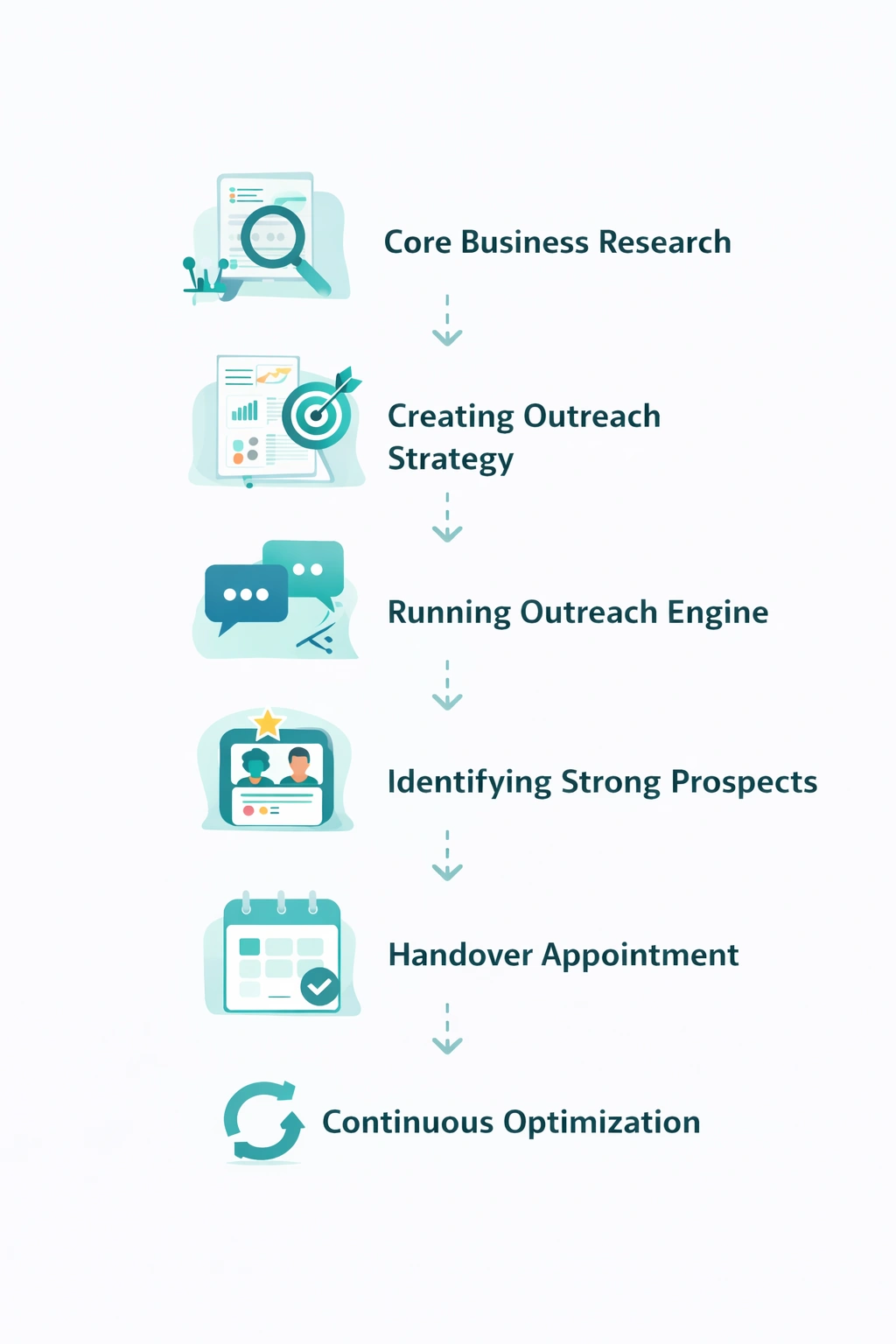
From identifying the right decision-makers to starting meaningful conversations and turning them into qualified appointments... LinkedoJet manages the entire outbound engine for your business.
If you can fulfill real programs, your lead gen should reflect that.
The outcome is straightforward: a prioritized list of corporate gifting buyers already showing intent, segmented by program owner (Events, HR, Sales/RevOps, CS, Procurement), with timing signals and talk tracks that get you in before procurement hardens the shortlist.