
Find architecture leads earlier—with timing, not guesswork
Referrals and RFPs aren’t a strategy—they’re the end of someone else’s process. The firms that stay busy spot projects while they’re forming, map the real buying committee, and reach out with a relevant trigger.
You can feel the month slipping when pipeline depends on “maybe” intros and late-stage bids. You can work hard, send a lot of notes, and still end up with the same outcome: a big list of names and very few conversations that turn into actual work.
LinkedIn can absolutely produce new opportunities in AEC. But only if you treat it like prospect intelligence: sector fit, decision-maker access, and project timing signals—not a volume exercise.
- Architecture firms selling services: identify owners/developers, GCs/design-builds, corporate real estate, and owner’s reps before the shortlist hardens.
- Vendors selling into architecture firms: get principal/partner and ops/BIM access when workload is shifting (hiring spikes, new practice leads, new markets), not when procurement is already “busy.”
Done right, you’re not “finding leads.” You’re finding projects-in-formation and the people who influence selection.
Speak to our Experts or Create my Roadmap to Success to get a tailored lead map with titles, filters, and timing signals for your sector and region.
Why your pipeline feels random: lumpy referrals, crowded RFPs, and the wrong contacts
You’re not short on effort. You’re short on early, winnable conversations.
- Referrals come in bursts—then go quiet.
- RFPs show up when selection thinking is already done.
- Lists are stale: wrong office, wrong region, wrong sector, wrong delivery method.
- You message “Director” titles who can’t pick a design team (or can’t introduce you to the person who can).
- No visibility into whether the organization has an active capital program—so you qualify after you’ve already spent the time.
The painful part is the false progress. You get replies that go nowhere. You take calls with people who sound engaged but have no upcoming work. You chase a bid only to learn the GC already has their architect partner… and your note arrived six months too late.
What changes outcomes in AEC is a simple combination most teams don’t operationalize:
Sector fit + timing + decision-maker access + credible personalization. Not long messages. Not more messages.
Who to target (and who not to): decision-maker maps that match how AEC buying actually works
AEC org charts look clean on paper and messy in real life. Selection influence often sits with precon, capital planning, owner’s reps, or a sector practice lead—not always the “VP” you searched for.
Path A: If you’re an architecture firm selling services
- Owners & developers: VP Real Estate Development, Head of Development, Development Manager, Director of Construction, VP Construction, Capital Projects Manager, Facilities Director, Program Manager, Owner’s Rep / Owner Representative, Director of Planning & Design (health systems), Campus Architect / University Architect.
- GC / design-build partners: Director of Preconstruction, Preconstruction Manager, Chief Estimator, VP Preconstruction, Design Manager, Project Executive, VDC Director (design-build heavy firms often route partner decisions through precon + design management).
- Corporate real estate & workplace: Head of Workplace, Director of Corporate Real Estate, Facilities / Capital Planning lead (often the early signal for rollouts, relocations, and TI programs).
- Property management (renovation/rollout work): Regional PM leadership, Director of Facilities, Construction Manager (renovation cadence is different—timing matters more than “brand”).
Path B: If you sell into architecture firms (products/services)
- Principal-level access: Principal, Partner, Managing Principal, Managing Partner (often final say on new vendors/consultants, especially if there’s risk).
- Operations & delivery: Director of Operations, Technical Director, QA/QC leadership (they feel the pain first when projects scale).
- BIM/VDC & digital practice: BIM Manager, VDC Manager, Digital Practice Leader (software, staffing, visualization, and consultant decisions often route here).
- Practice leaders by sector: Practice Leader (Healthcare/Workplace/Education/Industrial), Studio Director (they own pipeline and delivery outcomes).
- IT/software decision makers (when relevant): IT Director, CTO (rare), systems administrator with procurement influence in smaller firms.
Who not to start with (most of the time)
- Interns, junior designers, and “Marketing Coordinator” roles for selection conversations.
- General HR, recruiting, or generic admin unless it’s a sub-20-person firm where admin is the gatekeeper.
- Procurement-only inboxes when the org clearly routes everything through a portal (still track the org, but change the approach).
Sales Navigator setup you can copy: filters, title lists, and qualification rules
The goal isn’t a giant list. The goal is a list where most people are plausibly tied to an active pipeline, in your sector, in your geography, with real selection influence.
| Filter block | Copyable setup | Why it matters in AEC |
|---|---|---|
| Geography | [Target metros/states] + consider adjacent commuter markets | Owners/developers may be HQ’d elsewhere; verify project region in posts/news before disqualifying. |
| Company industries (start point) | Architecture & Planning; Construction; Commercial Real Estate; Real Estate; Civil Engineering; Design; Facilities Services; Hospital & Health Care; Education Management; Government Administration | Industry gets you in the neighborhood. Keywords + qualification decide if it’s real. |
| Company headcount | Architecture targets: 11–50 (boutique), 51–200, 201–500. Owner orgs: 500+ often for workplace/healthcare/education. | Headcount is a proxy for complexity and process (and who actually influences selection). |
| Seniority | Owner, Partner, CXO, VP, Director, Manager | PMs and Managers matter in capital programs; principals matter in vendor adoption. |
| Spotlights | Posted on LinkedIn in past 30 days; Changed jobs in past 90 days; Mentioned in the news | Activity is a practical “warmth” filter. New leaders are more open to changing rosters. |
Paste-ready title examples (mix and match by segment)
- Owner/developer side: VP Real Estate Development, Director of Real Estate Development, Development Manager, Head of Development, Director of Construction, VP Construction, Capital Projects Manager, Facilities Director, Program Manager, Owner’s Rep, Construction Manager, Director of Workplace, Director of Corporate Real Estate, Director of Planning & Design
- GC / design-build side: Director of Preconstruction, Preconstruction Manager, Chief Estimator, VP Preconstruction, Design Manager, Project Executive, VDC Director
- Architecture firm side (for vendors): Managing Principal, Principal, Partner, Director of Operations, Studio Director, Practice Leader (Healthcare/Workplace/Education/Industrial), Technical Director, Director of Design, BIM Manager, VDC Manager, Digital Practice Leader, IT Director, Office Manager (smaller firms)
Keywords that signal timing (company + profile)
RFP, RFQ, issued for bid, groundbreaking, permit, entitlements, schematic design, design development, tenant improvement, TI, fit-out, rollout, capital plan, renovation, campus master plan, owner’s rep, design-build, GMP, CMAR, LEED, net zero, mass timber, life science, data center, multifamily, senior living, behavioral health, K-12, higher ed, hospitality.
Company qualification checklist (use this before you message)
- Sector fit: do they actually build what you’re built for (healthcare vs multifamily vs industrial vs education)?
- Project type: new build vs renovation/TI vs rollout programs.
- Delivery method: design-bid-build vs design-build vs CMAR/GMP (changes who controls partner selection).
- Geography/licensing: can you deliver where the work is?
- Typical project size: don’t pitch a $2M TI playbook to a $200M hospital expansion team.
- Active pipeline proof: press releases, permits, acquisitions, hiring for development/construction, tenant announcements.
Speak to our Experts and we’ll return a lead map with titles, Sales Navigator filters, and timing signals tailored to your sector and region.
Buying signals that matter in AEC (and the outreach angle that doesn’t feel generic)
Most LinkedIn messages fail in AEC because they pretend timing doesn’t exist. The buyer can smell that you don’t know what’s happening in their world.
1) Project formation signals
- Permits & entitlements: planning commission agendas, zoning approvals, permit filings
- Capital events: land acquisition, funding announcements, bond measures, portfolio expansion
- Tenant/lease signals: relocations, new anchor tenants, multi-site rollouts
Outreach angle: “Saw the [permit/entitlement/tenant] movement in [city]. If you’re assembling the team, I can share 2–3 comparable [sector] projects and how we typically support schedules/approvals. Worth a 10-minute fit check?”
2) Organizational change signals
- New VP Development, new Facilities Director, new capital projects lead
- M&A, new regions, new service lines, new delivery model (design-build push)
Outreach angle: acknowledge the change and keep it operational: “When a new leader comes in, rosters get reset. If you’re reviewing partners for [sector], happy to send a one-page capability fit and relevant references.”
3) Workload signals (the most overlooked)
- Owners/developers hiring: Development Manager, Construction Manager, Facilities Project Manager, Director of Capital Projects
- GCs hiring precon/VDC: signals earlier project flow and partner formation
- Architecture firms hiring: BIM Manager, Project Architect, Job Captain, Specification Writer, QA/QC (work is landing, delivery is stretching)
Outreach angle: “Hiring for [role] usually means volume is moving. If it’s helpful, I can share how teams like yours handle [BIM bandwidth / spec load / visualization throughput] without disrupting standards.”
Also track negative signals. If they’re posting about project pauses, layoffs, or “on hold,” you tag it and move on. It’s not personal. It’s timing.
The LinkedoJet system: segmented lists, profile intelligence, timing tags, and sequencing (not a blast tool)
LinkedoJet is built for the reality you’re dealing with: messy titles, long cycles, and projects that are decided quietly before they’re ever bid publicly.
LinkedoJet is not a blast tool. It’s a system to decide who to contact, when, and why—then run the outreach and follow-up with full visibility.
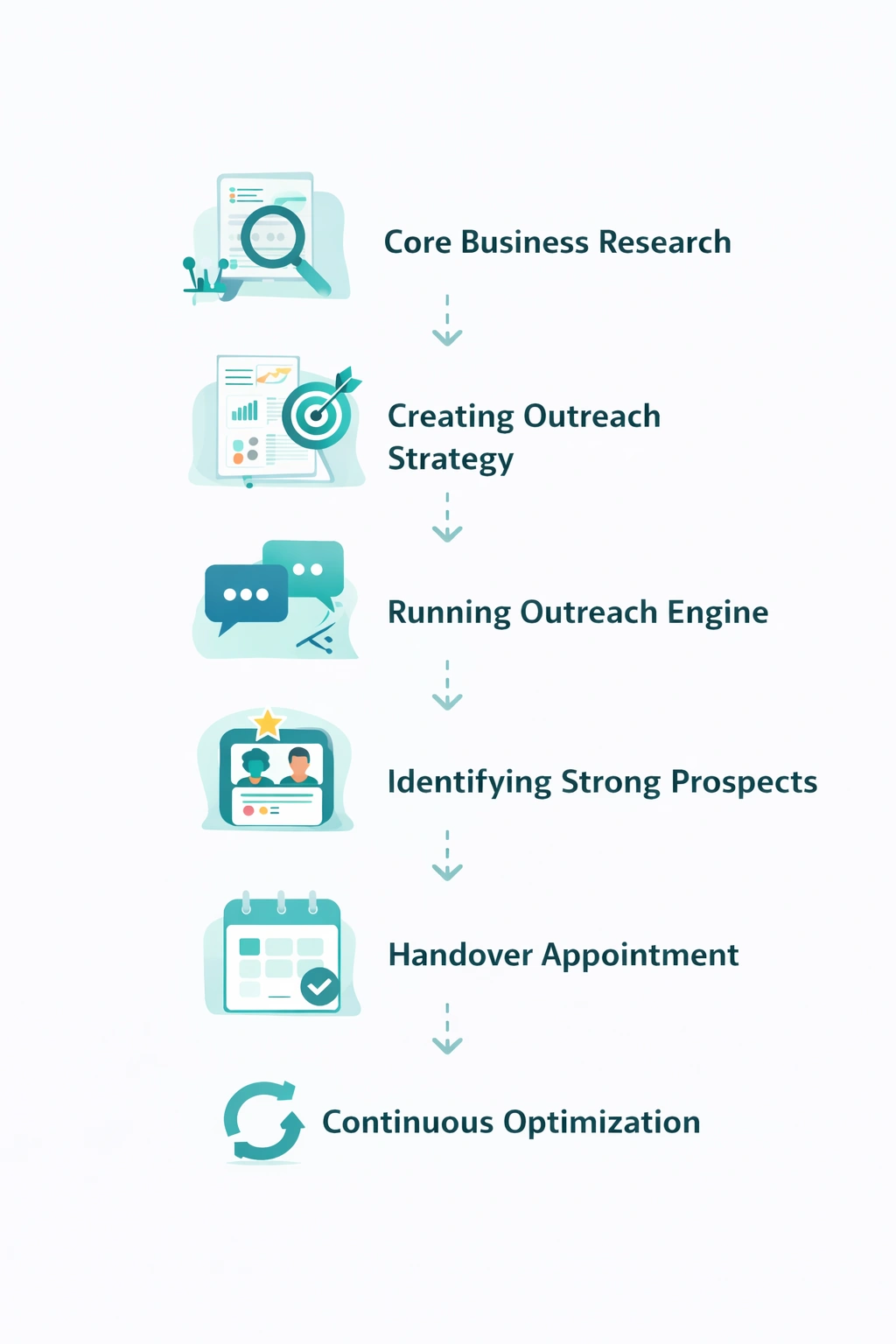
How it works operationally
- Define ICP with AEC constraints: sector + geography + typical project size + delivery method + “must-have” qualifiers (and explicit negatives).
- Build segmented Sales Navigator searches: separate lists for Developers/Owners, Owner’s Reps, GCs/Design-Build, Corporate Real Estate/Facilities, Property Management—and a separate path for Architecture firms when you sell into them.
- Add prospect intelligence: we read profiles to confirm scope (sector responsibility, region, selection influence), note credibility hooks (AIA/LEED, NAIOP/ULI/IFMA/ASHE/A4LE), and map the internal committee.
- Tag timing: “0–3 months,” “3–6,” “6–12” based on signals (permits, hiring, news, groundbreakings, expansion posts). This changes the message and the follow-up rhythm.
- AI-assisted personalization (used with restraint): short, specific openers tied to a real trigger (not fake flattery), aligned to your sector proof and delivery method.
- Outreach + nurturing: multi-touch sequences that handle non-response, “not now,” and referral routing without burning the relationship.
- Tracking + iteration: reply reasons, objection patterns, meeting outcomes, and list refinement—so month two is smarter than month one.
If you’ve been burned by LinkedIn “automation,” this is the difference: we’re not trying to send more messages. We’re trying to send the right message to the right person at the right moment—and then manage the follow-through until an actual conversation happens.
Speak to our Experts and we’ll build your sector-and-region lead map, then run the outbound engine with dashboards so you can see who’s being contacted, what’s working, and where appointments are coming from.
FAQ
Can this work in public sector and other RFP-heavy markets?
Yes—but the goal shifts. You’re not trying to “beat the RFP.” You’re building relationships upstream with capital planning, facilities, program management, and owner’s reps so you’re known before procurement formalizes. We also tag accounts by procurement style (portal-only vs stakeholder-accessible) so effort matches reality.
How do you avoid contacting the wrong titles (or people with no selection influence)?
We don’t trust titles alone. LinkedoJet adds profile-level scope checks (look for phrases like “select consultants,” “capital projects,” “preconstruction,” “development pipeline”) and maps the likely committee: development + construction + facilities/capital planning on the owner side; precon + design management on design-build; principal + ops + BIM/practice lead inside architecture firms.
How do you spot projects before the RFP is out and the shortlist is set?
We watch formation signals: permits/entitlements, land acquisition, funding, tenant announcements, expansion posts, and hiring for development/construction/capital projects. Then we tag timing (0–3 / 3–6 / 6–12 months) and reach out with a reason tied to that signal—not a generic introduction.
Does this work for specific sectors like healthcare, education, multifamily, industrial, or workplace?
Yes—sector specificity is the point. Filters, keywords, and title targets change by sector (e.g., ASHE signals on healthcare, bond programs for K-12, precon intensity in industrial, workplace/CRE titles for TI and rollouts). We build separate lists and sequences per sector so your message sounds like you belong in that room.
What company sizes does this fit—for architecture firms and for vendors selling into them?
For architecture firms, it works from boutique specialists (11–50) up through mid-market and multi-office practices—assuming you’re clear on sector and geography. For vendors, we typically target firms with enough technical staff and project volume to feel the pain (often 51+), but we also run a separate motion for smaller firms where office manager/ops is the real gatekeeper.
Book a demo session and we’ll build your AEC lead map—then run the outbound engine
This isn’t a vague “strategy call.” You’ll see how we turn sector targeting + timing signals into consistent, qualified conversations—whether you’re an architecture firm pursuing projects or a vendor pursuing principals.
What LinkedoJet provides (operationally): ICP and targeting setup, Sales Navigator prospect list building, AI-assisted personalization, LinkedIn outreach execution, reply handling and nurturing, warm lead tracking, appointment generation support, and campaign visibility through dashboards—with ongoing refinement as we learn what your market responds to.
What happens after onboarding: we stand up segmented lists by sector + geography (and by buyer path), apply qualification rules, then tag leads by project timing (0–3 / 3–6 / 6–12 months). Outreach is routed into sequences that match the trigger—permits, hiring, funding, expansions, groundbreakings, “issued for bid,” or leadership changes.
What you receive: a working lead map (titles + filters + keywords), live segmented lists inside Sales Navigator logic, message sequences tied to AEC signals, and a dashboard view of outreach activity, replies, warm leads, and booked appointments.
How targeting and list building works: we don’t run one giant search. We build separate paths—developers/owners, owner’s reps, GCs/design-build, CRE/facilities, property management (renovation/rollouts), and architecture firms (for vendors). We also account for HQ vs project region, so you don’t miss teams building in your market from elsewhere.
How AI-assisted personalization is used: to draft tight first lines and relevance hooks based on real signals (a posted role, a permit move, a project announcement, a portfolio clue like mass timber or net zero). It’s edited to stay credible and specific—not fluffy.
How nurturing and follow-up works: we manage non-response, “not now,” and referral routing with a calm cadence. Warm leads get tracked with next steps and timing tags, so you’re not re-qualifying the same accounts every month.
Why this is different from ordinary LinkedIn automation tools: tools send messages. LinkedoJet runs a decision system—who to contact, why now, what to say, how to follow up, and how to measure outcomes—so you get fewer dead-end conversations and more meetings with people who can actually move a project forward.
From identifying the right decision-makers to starting meaningful conversations and turning them into qualified appointments... LinkedoJet manages the entire outbound engine for your business.
Next step: get a tailored lead map for your sector and region
If you want LinkedIn to produce real AEC conversations, the win isn’t volume. It’s precision targeting, timing signals, and decision-maker mapping—run consistently with visibility.
We’ll return a lead map with the exact titles, Sales Navigator filters, qualification rules, and AEC timing signals to watch—then we can manage the outreach, replies, nurturing, and appointment support end-to-end.