
Build a qualified ESG/CSRD pipeline from LinkedIn (without guessing who’s in scope)
Referrals feel great—until they’re your only engine. CSRD, Scope 3 and assurance pressure are forcing buyers to act, but most consultants still approach LinkedIn like a name generator, not an account intelligence system.
You can feel the window closing when you’re still doing manual searches at night, sending careful messages to the wrong people, and then spending your real workday on “interesting calls” that never turn into scoped, budgeted programs.
The brutal part: you’re not losing because your delivery is weak. You’re losing because the buying group is forming without you—Sustainability is coordinating, Finance is guarding assurance and reporting risk, Procurement is panicking about supplier data, and IT/Data is quietly selecting tools.
LinkedIn can absolutely feed ESG/CSRD work. But only if you stop treating it like a single-threaded outreach channel and start using it to answer three questions fast:
- Scope: Is this company likely CSRD-in-scope (or exposed through EU footprint, customers, or PE owner expectations)?
- Trigger: What’s active right now—double materiality, assurance readiness, supplier data collection, system selection, IFRS S1/S2 alignment?
- Committee: Who are the 4–6 stakeholders that need to agree before a project exists?
When you can answer those consistently, outreach stops feeling like hope. It becomes a repeatable pipeline motion.
Why ESG prospecting breaks: wrong scope, wrong stakeholder, wrong timing
Low reply rates aren’t the verdict. They’re the symptom.
Most ESG consultants prospect as if CSRD readiness is a simple “Sustainability wants help” service sale. So they search for Sustainability Manager, send a generic CSRD pitch, and then judge the market by how many people respond.
That’s how you end up with a calendar full of polite conversations and thin opportunities:
- You chase companies that aren’t in CSRD scope (or aren’t feeling the pressure yet).
- You talk to a Sustainability lead who agrees there’s a problem, but can’t sponsor budget with Finance/Controllership.
- You show up too early (no internal mobilization) or too late (assurance partner and platform decision already made).
And because you’re not filtering hard enough, you waste hours on the worst culprits: consultancies, audit firms, ESG software vendors, NGOs, universities, and micro companies that love the topic but will never buy a serious program.
The hidden constraint isn’t messaging. It’s account intelligence—knowing who’s in scope, what’s happening inside the org, and who owns the budget when ESG moves from “initiative” to “disclosure risk.”
Stakeholder map: who actually buys CSRD, Scope 3, and reporting programs
If you only message Sustainability, you’re voluntarily walking into budgetless meetings.
CSRD and Scope 3 programs behave like cross-functional change. Even when Sustainability starts it, Finance and Risk decide how “real” it gets, and Procurement/IT determine whether data collection is possible.
| Sustainability owners | Finance & risk owners | Supply chain & data owners |
|---|---|---|
|
Own the narrative and program direction. CSO, VP Sustainability, Head/Director of Sustainability, ESG Director, Director Sustainability Reporting, Head of Non-Financial Reporting, ESG Reporting Manager, Head of Climate/Decarbonization. |
Own disclosure risk, assurance readiness, and budget scrutiny. CFO, Controller/Group Financial Controller, Head of FP&A, Chief Risk Officer, Head of Risk/ERM, Climate Risk Lead, Head of Compliance/Regulatory Reporting, General Counsel, Internal Audit Director. |
Own the bottlenecks: supplier data + systems. Procurement Director/Head of Procurement, VP Supply Chain, Supplier Sustainability Manager, Responsible Sourcing Lead, IT Director, Data/BI Director, ESG Data/Reporting Manager, Finance Transformation lead, Carbon Accounting lead. |
Most ESG projects are cross-functional—win by multi-threading. Practically, that means building account lists where each company has a Sustainability owner and a Finance/Risk counterpart and a Supply Chain/Data pathway before you ever send the first message.
Three Sales Navigator searches ESG consultants can run today (with exclusions baked in)
You’re not trying to find “people who care about sustainability.” You’re trying to find in-scope accounts and the committee that can actually fund the work.
1) CSRD / ESG reporting readiness (EU/UK)
- Geography: EU countries + UK + Switzerland + Norway
- Company headcount: 251–1,000; 1,001–5,000; 5,001–10,000
- Industries (pick your lanes): Manufacturing, Chemicals, Automotive, Logistics & Supply Chain, Construction, Real Estate, Consumer Goods, Food Production, Utilities, Financial Services
- Seniority: CXO, VP, Director, Manager
- Functions: Sustainability, Finance, Risk, Legal, Procurement, Operations
- Title contains (OR): Sustainability, ESG, Non-Financial, Reporting, Integrated Reporting, Disclosure, Corporate Responsibility, Climate, Decarbonization, Carbon, Risk
- Spotlights: Posted on LinkedIn in past 30 days; Changed jobs in past 90 days
2) Scope 3 / supplier emissions programs
- Industries: Retail, Apparel, Food & Beverage, Consumer Goods, Electronics, Automotive, Logistics
- Functions: Procurement, Supply Chain, Sustainability
- Titles: Head of Procurement, Procurement Director, Supply Chain Director, Supplier Sustainability, Responsible Sourcing, Sustainable Procurement, ESG Supply Chain
- Spotlights: Hiring on LinkedIn; Posted recently; Changed jobs
3) Carbon accounting / ESG data platform implementation
- Functions: IT, Data/Analytics, Finance Transformation, Sustainability
- Titles: ESG Data, Sustainability Data, Carbon Accounting, ESG Systems, Business Intelligence, Finance Transformation
- Keywords on profile: CSRD, EU Taxonomy, GHG Protocol, Scope 1, Scope 2, Scope 3, TCFD, IFRS S1, IFRS S2, SBTi, Double Materiality, Assurance, GRI, SASB
- Spotlights: Hiring; Headcount growth; Leadership changes
Speak to our Experts if you want us to turn these into clean, repeatable lists with stakeholder coverage per account (not just a pile of profiles).
Intent signals that predict active ESG budgets (hiring, posts, reporting-cycle triggers)
The best accounts don’t “respond better.” They’re simply in motion.
ESG work converts when a company is actively mobilizing. LinkedIn is noisy, but the buying signals are there if you look for patterns across people and accounts.
LinkedIn activity signals
- Posts about CSRD readiness, double materiality, EU Taxonomy, GHG inventory, assurance readiness, IFRS S1/S2, sustainability report timelines
- Reposts or commentary on regulator/industry updates (that’s often internal alignment work leaking into public)
- Engagement with carbon accounting, supplier emissions, or reporting system content
Hiring signals
- Open roles: ESG Reporting Manager, Sustainability Analyst, Carbon Accounting Specialist, Climate Risk Manager, ESG Data Manager, Sustainability Program Manager, Responsible Sourcing Manager, EU Taxonomy specialist
- A hiring surge across Sustainability + Finance Transformation + Data is usually budget approval, not “nice to have” exploration
- Recent job changes (30–120 days): a new sustainability/reporting leader often triggers advisor selection fast
Corporate signals
- Net-zero announcement or SBTi commitment (especially when followed by supplier language)
- First sustainability report or a redesign of reporting approach
- Mentions of tool selection/implementation or assurance partner involvement
- Financial calendar pressure: public company cycles, FY-end timing, board-level reporting windows
Fast-track rule: prioritize accounts showing two or more signal types (for example, hiring + posting, or leadership change + tool signals). That’s where your reply rate becomes a non-issue.
A simple scoring rubric for CSRD/Scope 3 fit + timing
Your calendar is a profit center. Treat it that way.
This is the difference between “we do lots of outreach” and “we generate qualified discovery.” Use a lightweight score that forces you to earn the meeting.
- +2 EU/UK footprint + 250+ employees (or CSRD thresholds likely: €40M+ turnover and/or €20M+ assets)
- +2 Sustainability or ESG reporting leadership change in last 90 days
- +1 Active hiring for ESG reporting/data/carbon accounting roles
- +1 Recent posts mentioning CSRD, double materiality, Scope 3, assurance, EU Taxonomy, IFRS S1/S2
- +1 Multiple stakeholders clearly identifiable on LinkedIn (Sustainability + Finance/Risk + Procurement/IT)
- -3 They’re a consulting firm, audit firm, ESG software vendor, NGO, or university (unless you explicitly sell to them)
- -1 No EU exposure, no activity, no hiring signals, very small headcount (<50)
Score it, sort it, and only then write messages. This is how you stop spending two weeks chasing companies that were never going to buy CSRD readiness this quarter.
Message angles that actually match the trigger
- “Saw you’re hiring an ESG Reporting Manager—often a sign CSRD timelines are getting real. Are you already aligned on assurance readiness and the data owners?”
- “Noticed the team posting about double materiality. If cross-functional alignment is the bottleneck, we can share a workshop structure that reduces Finance vs Sustainability friction.”
- “If suppliers are asking for emissions data, Scope 3 collection is usually where programs stall. We help teams set up the supplier workflow without blowing up procurement.”
- “EU Taxonomy screening tends to get stuck in data + interpretation. We’ve got a way to de-risk it so reporting doesn’t become a last-minute fire drill.”
- “When Finance starts owning ESG reporting, the question becomes auditability, not ambition. We can help you get from ‘data patchwork’ to assurance-ready.”
How LinkedoJet runs the system end-to-end (target → qualify → prioritize → convert)
LinkedoJet isn’t “automation.” It’s the operating system for a consultative outbound motion where scope and timing matter.
Most tools will send more messages. That’s not your constraint. Your constraint is building a steady flow of in-scope accounts, with stakeholder coverage, contacted at the right moment, with follow-up that doesn’t die after message one.
1) Target
We set up ICP and targeting rules for the work you actually sell—CSRD readiness, double materiality, EU Taxonomy alignment, GHG inventory (Scope 1–3), carbon accounting software implementation, SBTi support, climate risk/TCFD/IFRS S1-S2, supplier emissions programs, decarbonization roadmaps—then build Sales Navigator searches that reflect regulatory exposure (EU/UK/Nordics focus, plus US where disclosure pressure exists).
2) Qualify
Each account gets a regulatory driver hypothesis (why they’re likely in scope), plus a stakeholder map: Sustainability owner + Finance/Controller + Risk/Legal + Procurement/Supply Chain + IT/Data. We capture proof points from profiles—tenure, prior reporting/audit background, CSRD/GHG Protocol keywords, recent activity.
3) Prioritize
We score and rank accounts using intent signals (hiring, posting, leadership changes, tool/assurance hints) so your team spends time where budgets are already forming.
4) Convert
We run AI-assisted personalization that’s grounded in the account’s trigger (assurance readiness, double materiality friction, supplier data bottlenecks, carbon accounting implementation). Outreach execution is managed, replies are handled with a nurturing workflow, warm leads are tracked, and appointment generation support keeps the motion moving instead of stalling after the first response.
Speak to our Experts if you want this built and managed as an outbound engine, not a side project.
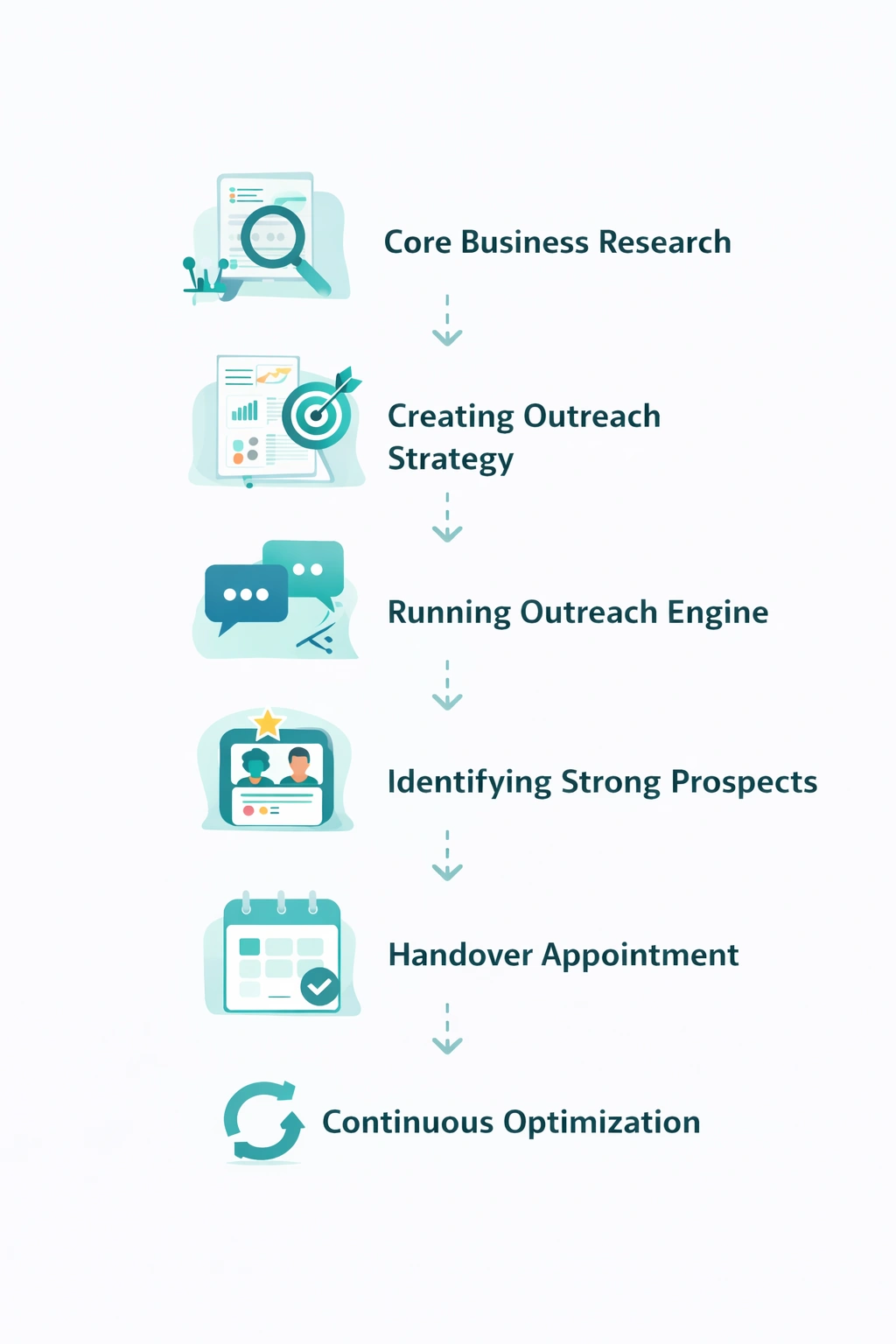
From identifying the right decision-makers to starting meaningful conversations and turning them into qualified appointments... LinkedoJet manages the entire outbound engine for your business.
Common questions from ESG/CSRD consulting firms
Does LinkedoJet spam on LinkedIn or automate outreach without control?
No. We run a controlled, intelligence-first outbound process. Targeting is built around in-scope accounts and active triggers, personalization is tied to real signals, and follow-up is managed like a professional sales motion. You maintain oversight of messaging direction and guardrails; the goal is qualified conversations, not volume.
How do you identify companies likely in CSRD scope (or exposed via EU footprint/revenue)?
We combine geography and size filters (EU/UK footprint, 250+ employees and threshold proxies) with industry fit and public/PE ownership patterns, then validate timing using intent signals: sustainability/reporting hiring, leadership changes, posts about CSRD/double materiality/assurance, and reporting-cycle activity. We also flag fast-growing 100–249 employee firms when EU exposure and customer pressure make CSRD/Scope 3 urgent.
Can this work if my buyer is Finance (CFO/Controller/Finance Transformation) instead of Sustainability?
Yes—and in many CSRD and assurance-readiness projects, Finance is where budget discipline and decision rights sit. We build stakeholder lists that include CFO/Controller/FP&A/Finance Transformation alongside Sustainability, then tailor angles to auditability, data controls, and reporting risk—not “sustainability ambition.”
Can I build multi-stakeholder contact lists per account (Sustainability + Finance + Procurement + IT/Data)?
That’s the default. We map the committee per account so you’re not trapped with a single champion. Typical coverage includes CSO/ESG reporting, Controller/CFO or Risk, Procurement/Supply Chain for supplier data, plus IT/Data leaders for carbon accounting and reporting systems.
What if I only target specific industries like manufacturing, chemicals, or financial services?
Perfect. We narrow searches by industry and then adapt the triggers and angles: manufacturing and chemicals often center on EHS data, product footprint, and supplier emissions; financial services often centers on climate risk, disclosure governance, and assurance. The system stays the same—only the filters, signals, and messaging hypotheses change.
See what your ESG outbound engine looks like when it’s run like an operator
This isn’t a vague “strategy chat.” We’ll show you exactly how LinkedoJet would build and run a CSRD/Scope 3 prospecting system for your firm—and what you get after onboarding.
On the session, we’ll walk through:
- Your service mix (CSRD readiness, double materiality, EU Taxonomy, GHG inventory/Scope 3, carbon accounting implementation, SBTi support, climate risk/IFRS S1-S2) and the industries/geographies where you win.
- How we build Sales Navigator searches that find in-scope accounts (with exclusions baked in so your list isn’t polluted by vendors, consultancies, or low-fit orgs).
- How we map the stakeholder committee per account (Sustainability + Finance/Controller + Risk/Legal + Procurement/Supply Chain + IT/Data) so you can multi-thread from day one.
- How intent signals are tracked (hiring, leadership change, posting, reporting-cycle activity) and how accounts are scored and prioritized.
After onboarding, LinkedoJet operationally provides:
- ICP and targeting setup with repeatable list-building rules inside Sales Navigator.
- Prospect list building (accounts + contacts) with stakeholder coverage and captured proof points.
- AI-assisted personalization that uses each account’s trigger (assurance readiness, supplier data bottlenecks, double materiality alignment, EU Taxonomy screening, system selection) to write relevant openers—without sounding templated.
- LinkedIn outreach execution with controlled sequencing and consistent follow-up.
- Lead reply handling and nurturing so warm conversations don’t stall after “sounds interesting.”
- Warm lead and appointment tracking so you know what’s moving, what’s stuck, and what to do next.
- Campaign visibility via dashboards (what’s being sent, what’s converting, where quality is coming from).
- Ongoing campaign refinement as you learn which industries, triggers, and stakeholders convert into real scopes.
The key difference versus ordinary LinkedIn automation tools: we don’t sell “more messages.” We run the full prospect intelligence + outreach + follow-up workflow so your team spends time on qualified discovery and paid work, not list building and dead-end chasing.
Turn LinkedIn into a predictable source of CSRD/Scope 3 opportunities
You should walk into discovery already knowing: they’re likely in scope, a trigger is active, and you’re speaking to the right committee—not just the nicest person with “Sustainability” in their title.
From identifying the right decision-makers to starting meaningful conversations and turning them into qualified appointments... LinkedoJet manages the entire outbound engine for your business.